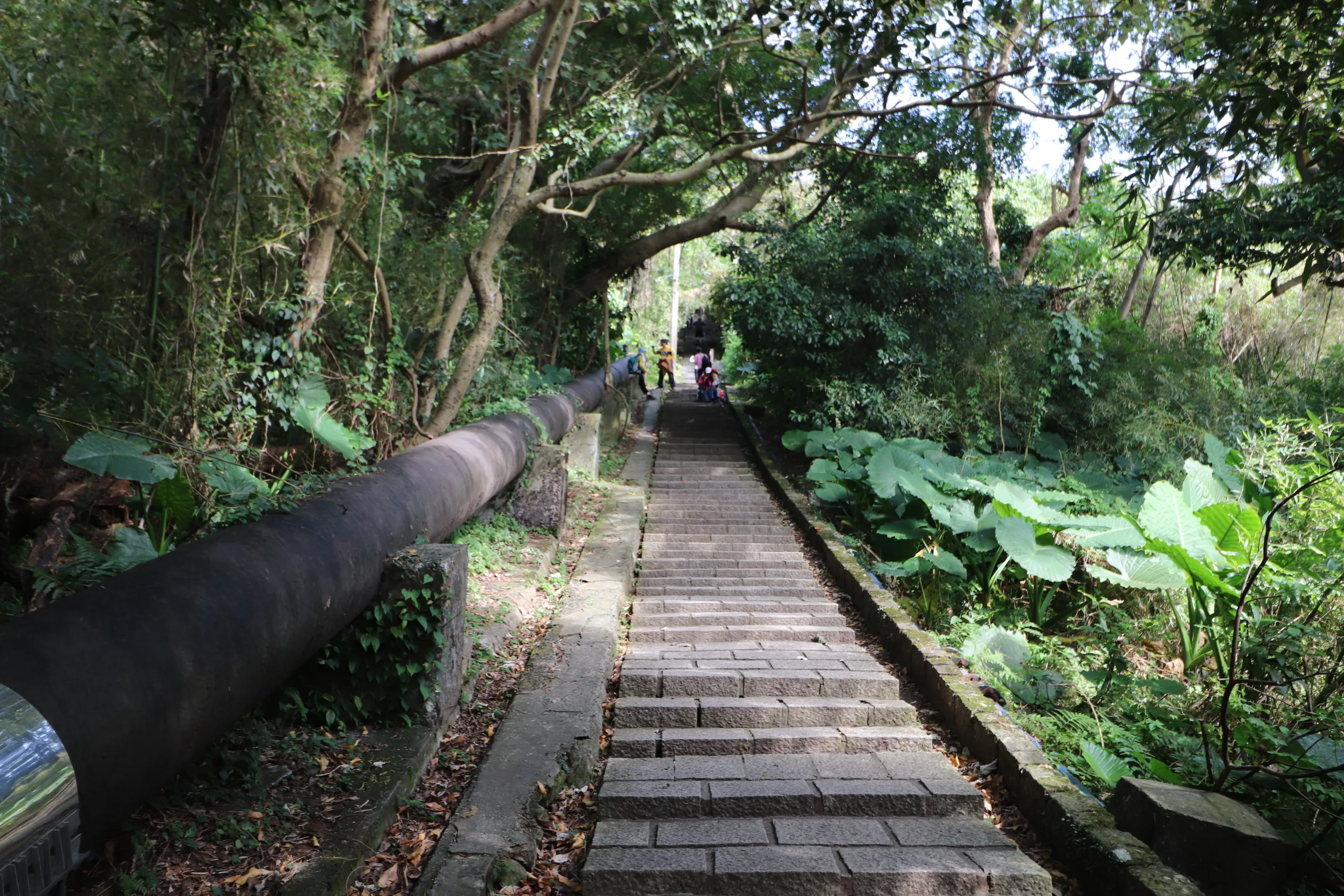
Tianmu Historic Trail (aka water pipe road trail 水管路步道) is a short, fun hike with great views of the surrounding area. The trail was originally built by the Japanese to provide fresh water to residents below, and still includes a large Japanese-era water pipe and water station. Now it is a popular hike for locals who want to connect with nature.
🏯 Planning your trip to Taipei? 🏮
Here are some top travel tips for you:
- Best time to visit: March-May, and October – November when the temperatures are nice and there is not as much rain
- You can buy tickets to Taipei’s Science Museum for a discount on Klook here
- How to get there: Taiwan High Speed Railway and Inter-City Bus
- Best places to stay: Yuanshan Grand Hotel or Fu Chang Hotel
- Book tours and activities in Taipei on Klook
- Stay connected with a local SIM
- Rent a car to explore distant sights
Historical Background:
Shuiguan Road Trail (Tianmu Historic Trail) is a popular hiking path connecting Tianmu in Taipei’s Shilin District with the Yangmingshan area. The trail follows the route of the large water pipes that form part of the historic Caoshan Water Supply System, giving the trail its name. Originally constructed during the Japanese colonial period, the path was created to allow workers to maintain the pipelines that transported clean spring water from the Yangmingshan region to Taipei and to the former Sankakupu Hydroelectric Power Plant. Today, the trail is known for its steep stone stairways, lush forest scenery, and panoramic views over Taipei. Hikers can often spot groups of wild Formosan macaques near the section below Chinese Culture University, while enjoying views of Mount Shamao and the surrounding volcanic landscape. Because of its historical importance and scenic beauty, the trail has been incorporated into Taipei’s Tianmu Historic Trail network and remains one of the city’s most popular urban mountain hikes, combining natural scenery, cultural heritage, and remnants of Taipei’s early water infrastructure.
Hours:
24/7
Price:
Free.
Difficulty:
Moderate – there are some steep parts, and over 1300 stair steps.
180 Meter elevation gain.
Length:
2.8 KM one way
Takes about 2-3 hours.
Where to stay:
We recommend Fullon Hotel, which has locations in Tamsui and Fulong near the beach (book on Booking.com here, Tripadvisor here, Agoda here, or Hotels.com here).
We have stayed at and recommend Gold Mountain Ranch, which is a horse ranch and glamping destination in Jinshan. You can book a night at Gold Mountain Ranch on Klook here. You can also check out our full blog on the ranch here.
We have also stayed at and recommend Hai Xia Your Home, which is right in front of Fulong Beach (book on Booking.com here, Tripadvisor here, Agoda here, or Hotels.com here).
Activities in Taipei:
There are many activities available to enjoy in Taipei, such as kayaking, canoeing, snorkeling, SUP / paddle boarding, water biking, and more activities, which you can book on Klook here or KKday here.
How to get there:
By Car/Scooter: From Tianmu, take Tianmu North Road until you reach Tianmu Park. The trailhead is in an alleyway on the east side of the park. There is limited paid parking nearby.
Looking for scooter rental in Taipei? You can search on Klook here or KKday here to search for options. You can also check out our scooter rental guide here.
If you are looking for car rentals, you can also search Qeeq here, Klook here, or KKday here. You can also check out our car rental guide here.
By MRT/Bus: Bus M11 stops at Tianmu Park, which is a short walk from the trail. You can also book an MRT travel pass on Klook here.
By Bicycle:
Cycling is the best way to enjoy Taiwan’s landscapes if you have the time and energy. Looking for bicycle rentals in Taiwan? You can use Taiwan’s many Youbike sharing stations, or search for rentals on KKday here, and search for tours on Klook here. You can also check out our Taiwan cycling guide here. You can also book a Sunset Riverside Bike Ride and Historical Tour, 4 Hour Cycling in Taipei, Ultimate 8-Hour Cycling City Tour, or Taipei City Bike Tour with Night Market Experience on TripAdvisor here.
For more information, check out our Taiwan transportation guide here.
Map:
Please see below:
Check out the map above.
Our Journey:
We have hiked Tianmu Historic Trail once. It is a fun hike that is not too hard, even for little kids. It also has great views and interesting historical sites along the way.
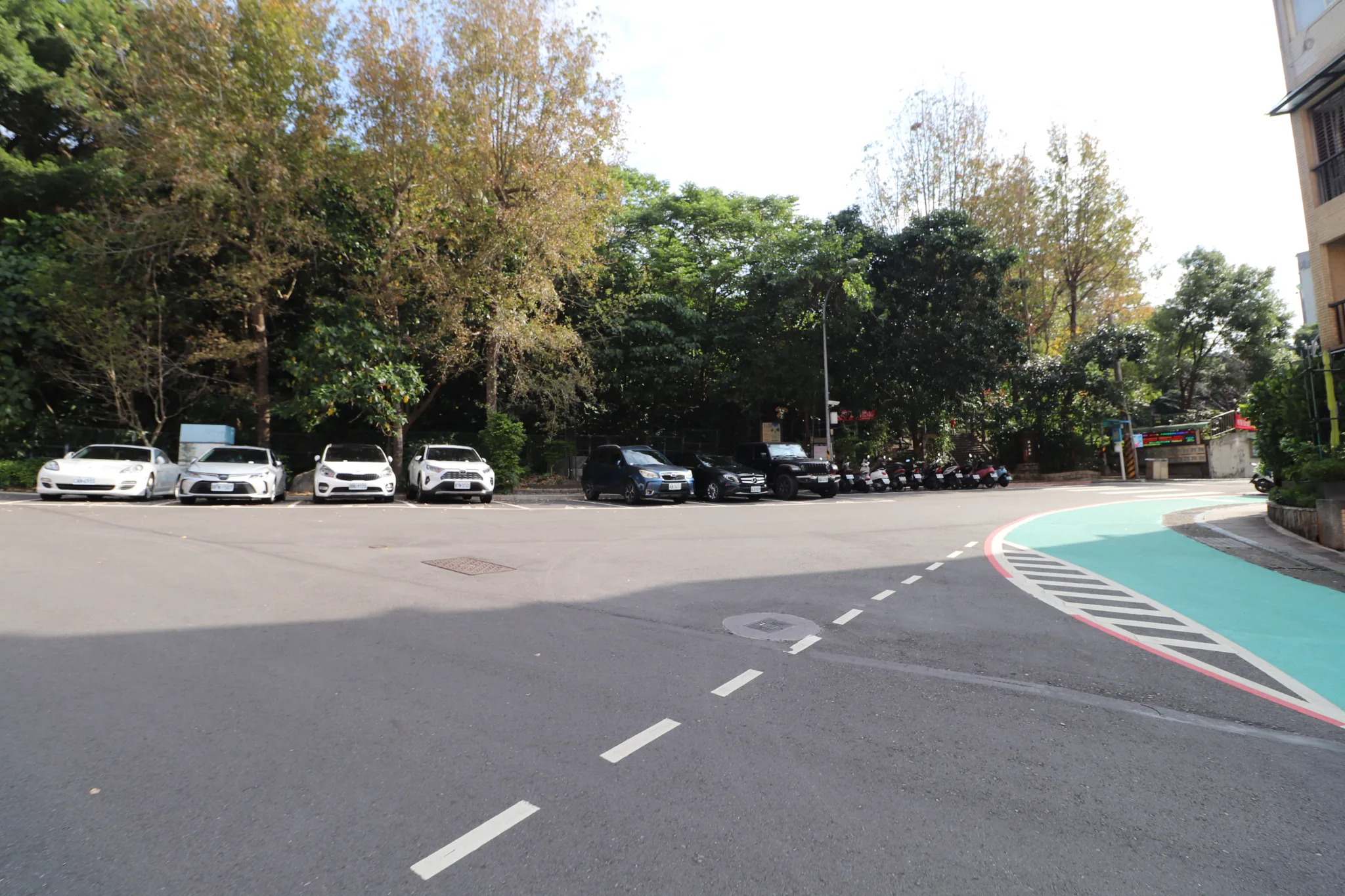
The entrance to the trail has some parking spaces. There is a chance you will find a space here even on a weekday.
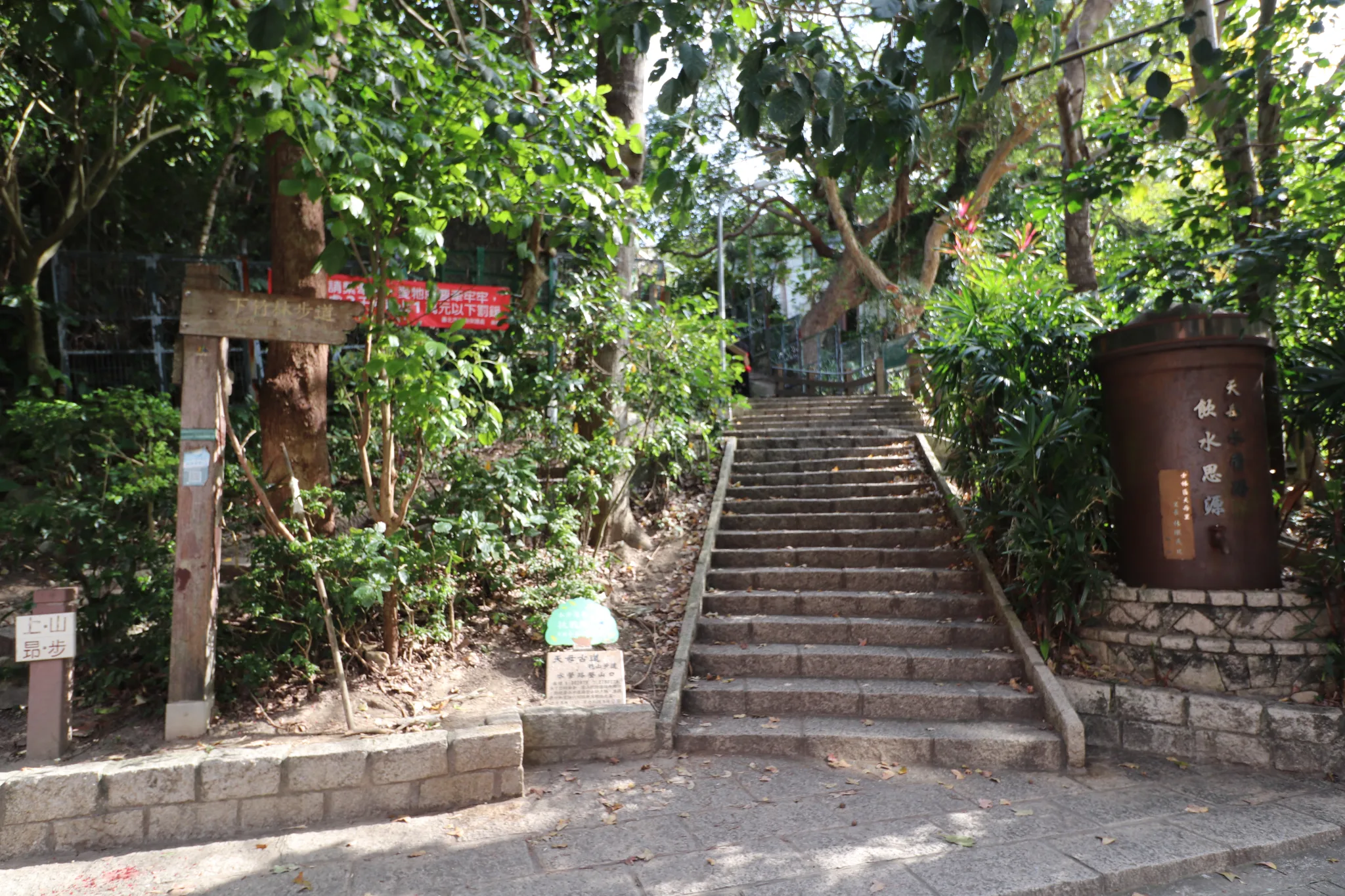
This is the trailhead. Most of the trail is made of nice brick steps like this.
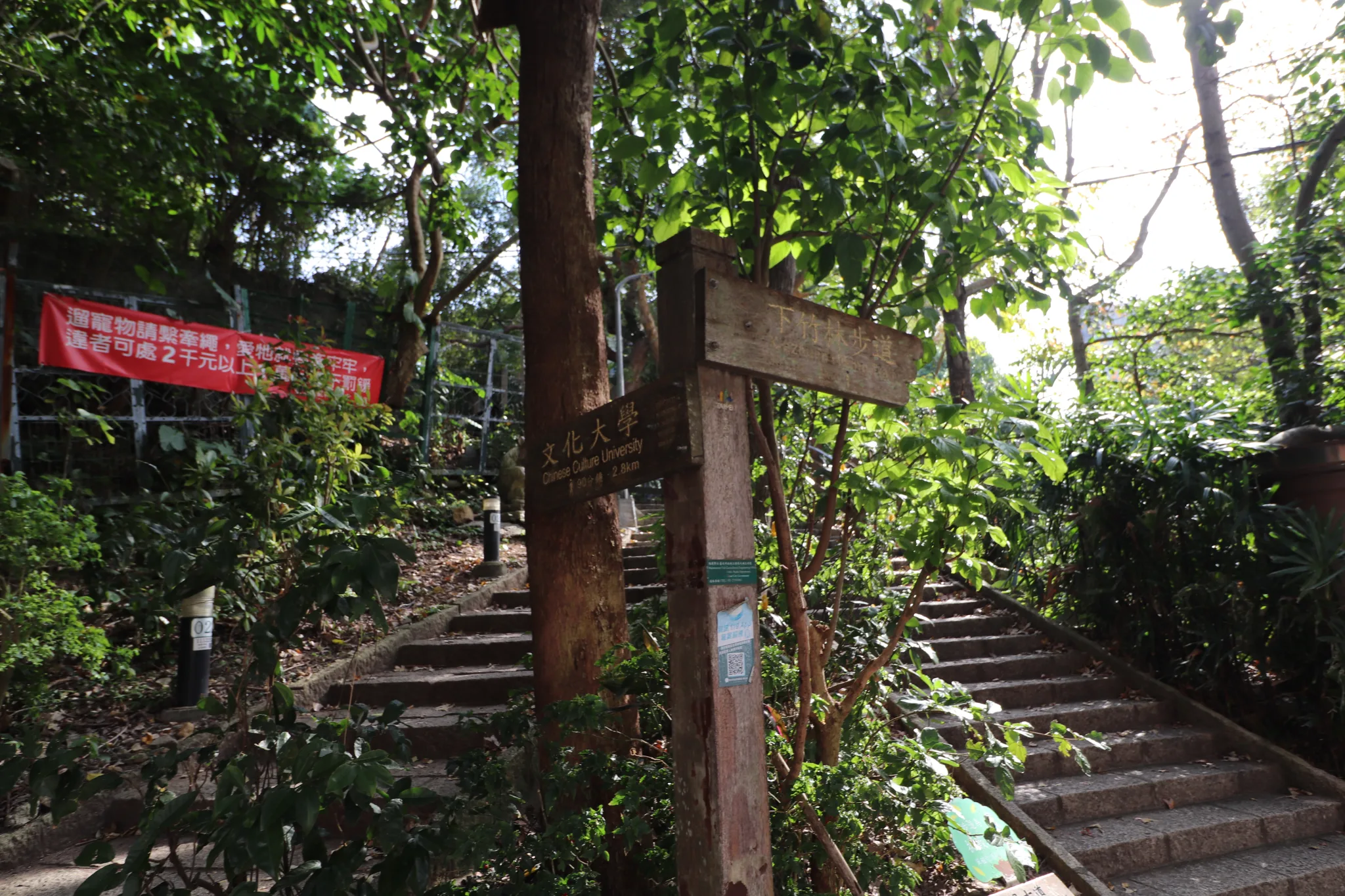
Both of the paths lead to the same place.
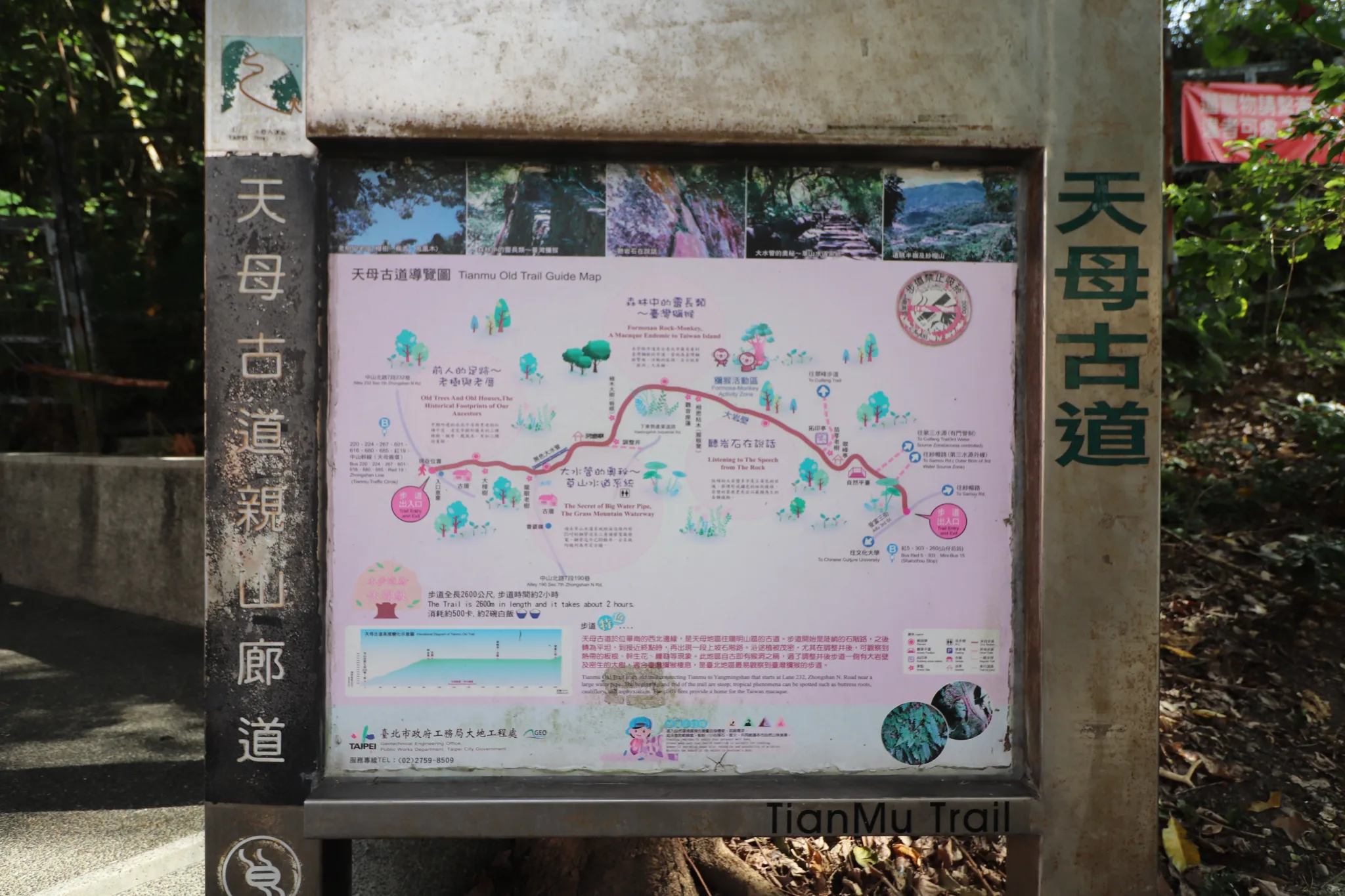
Map of the trail.
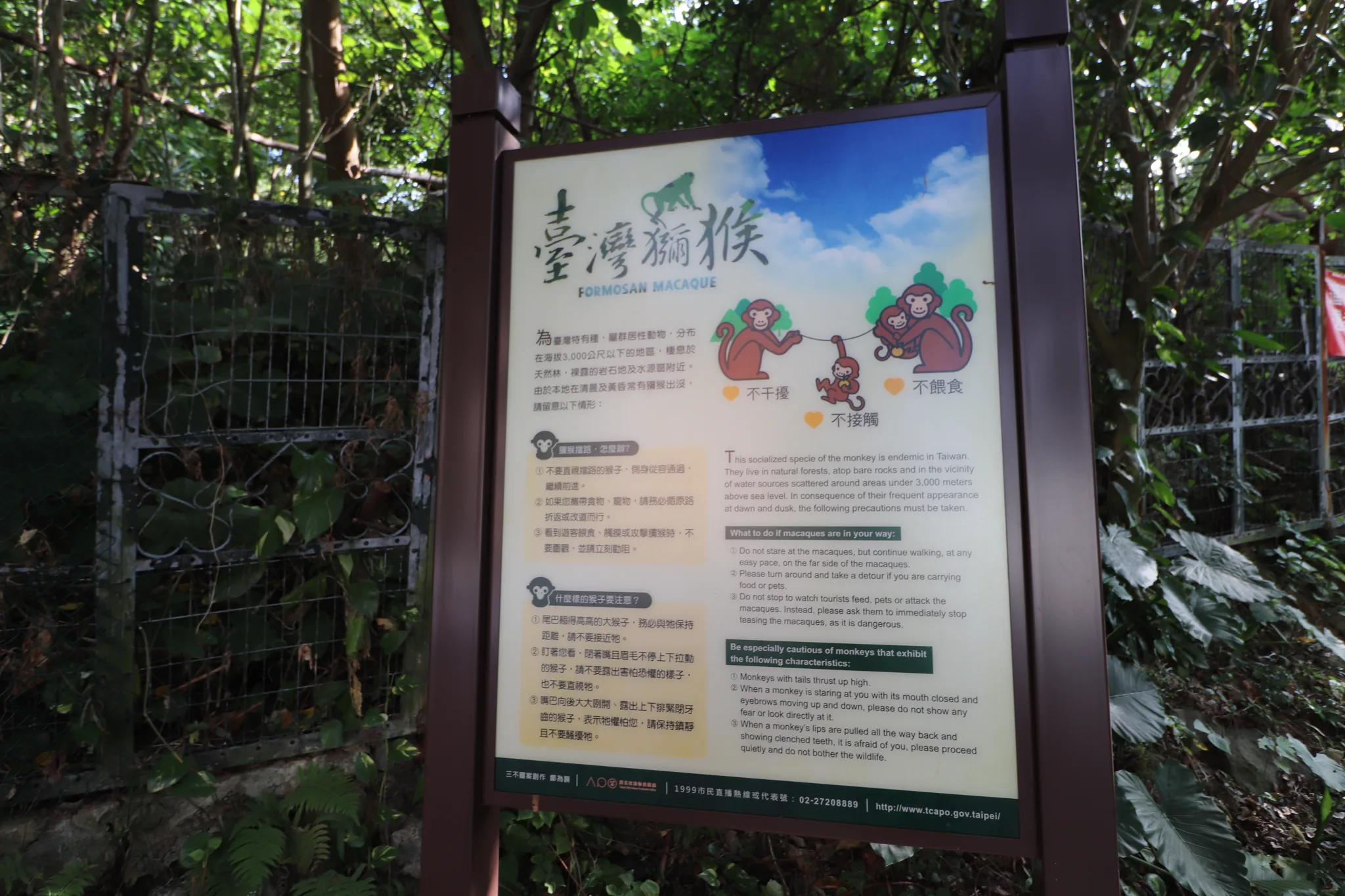
Appearently you can see Formosan Macaques while you are here, but we did not see any.
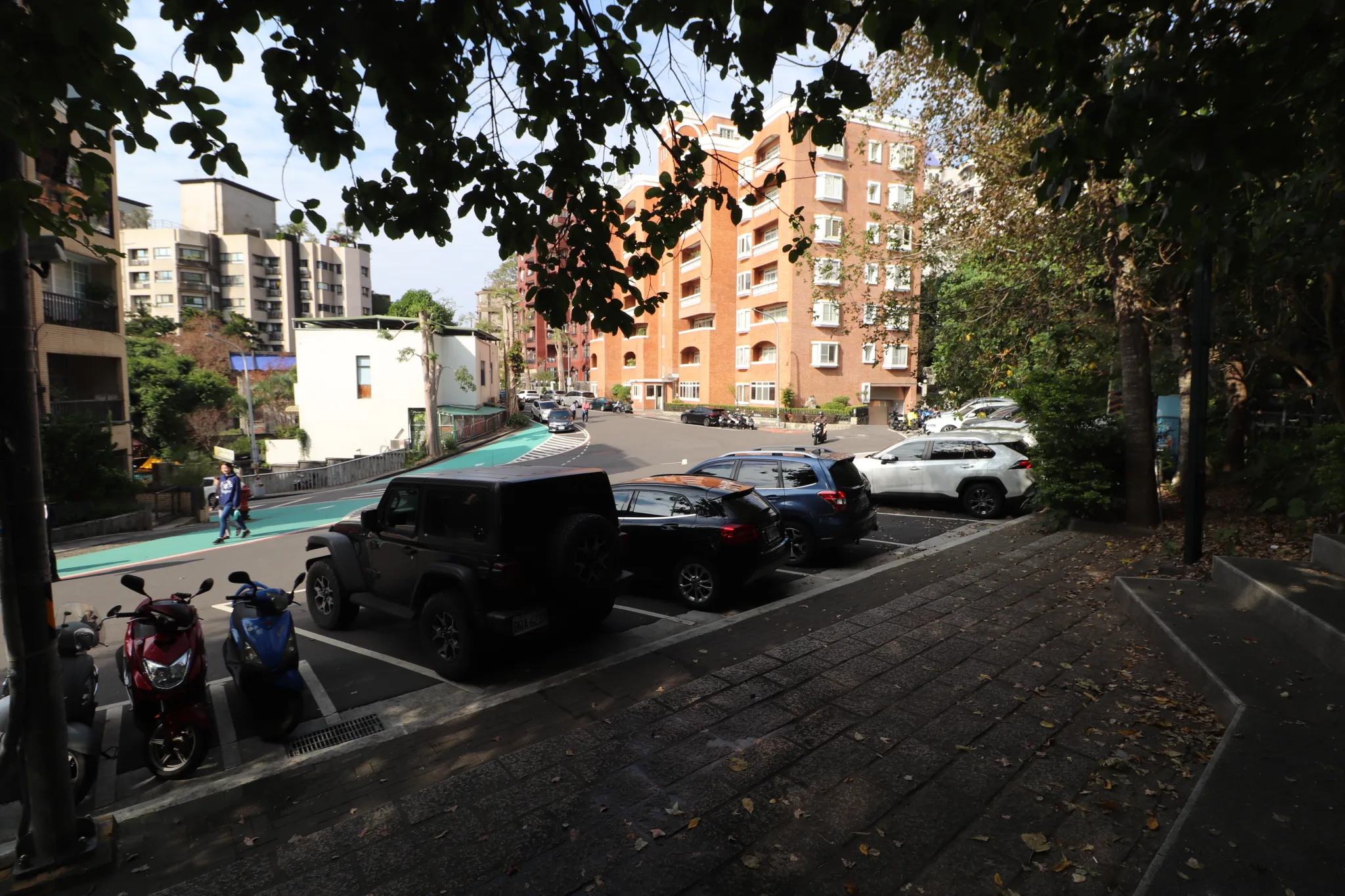
View looking back at the parking lot.
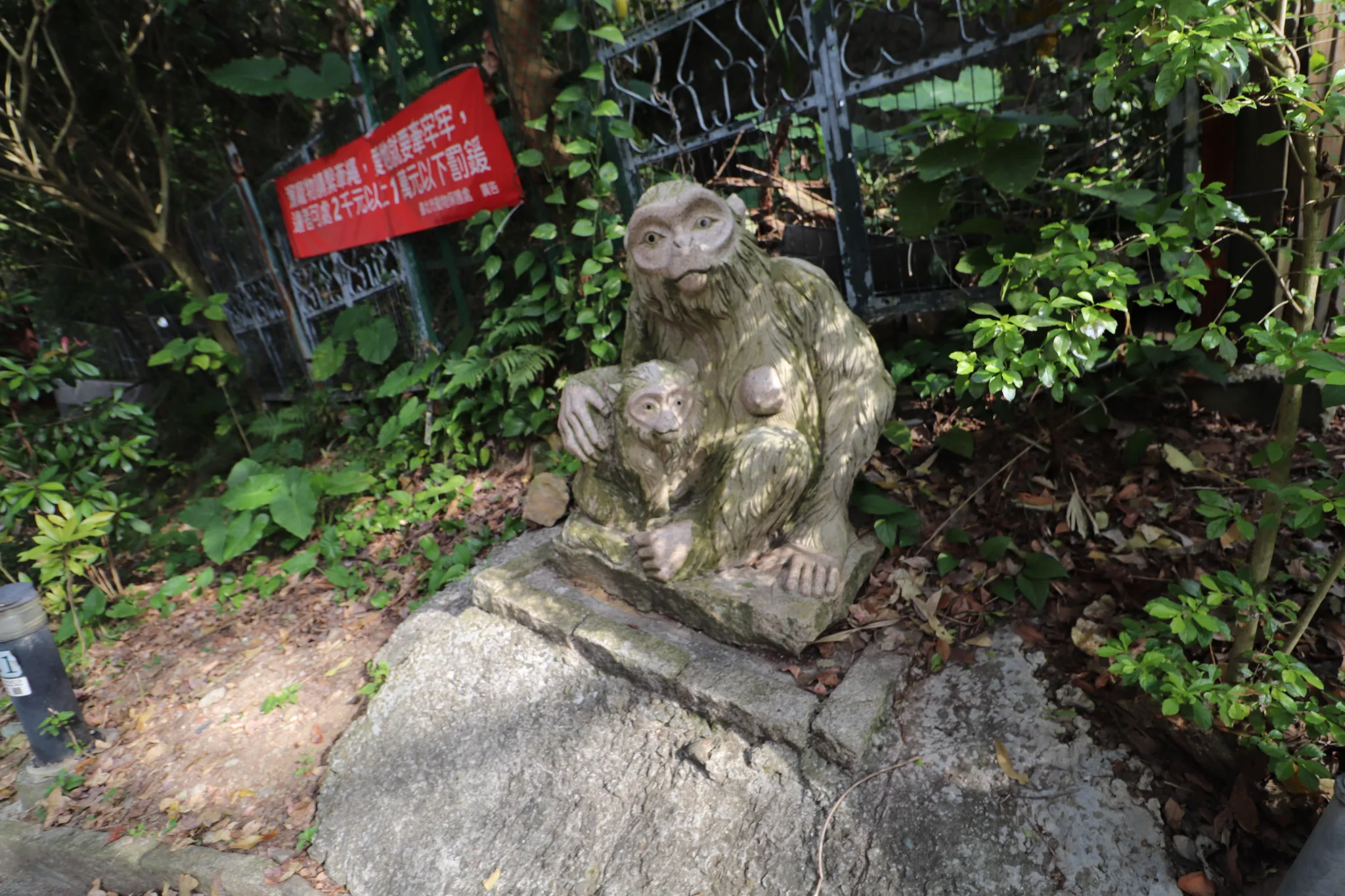
Monkey statue.
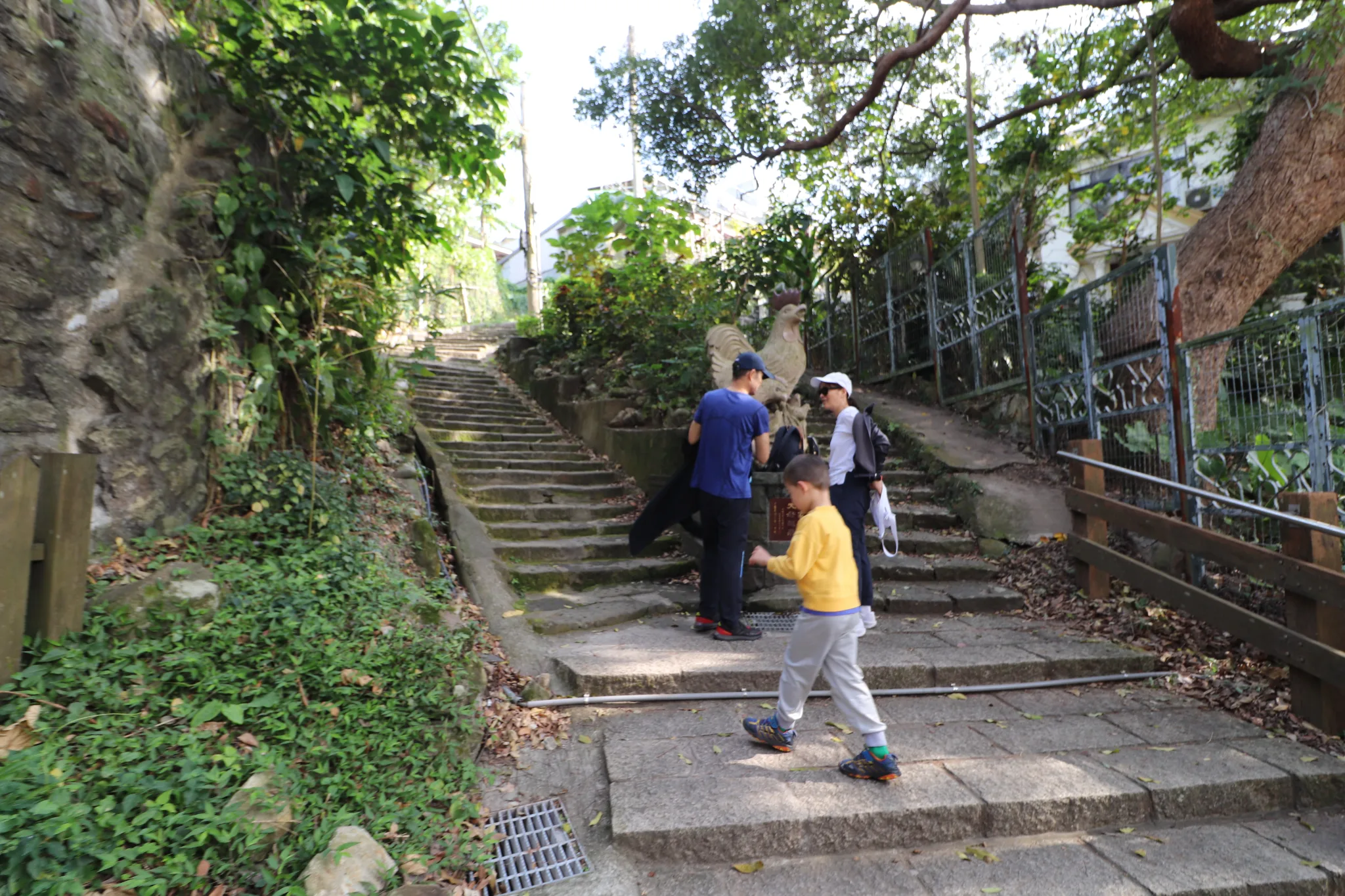
Chicken statue.
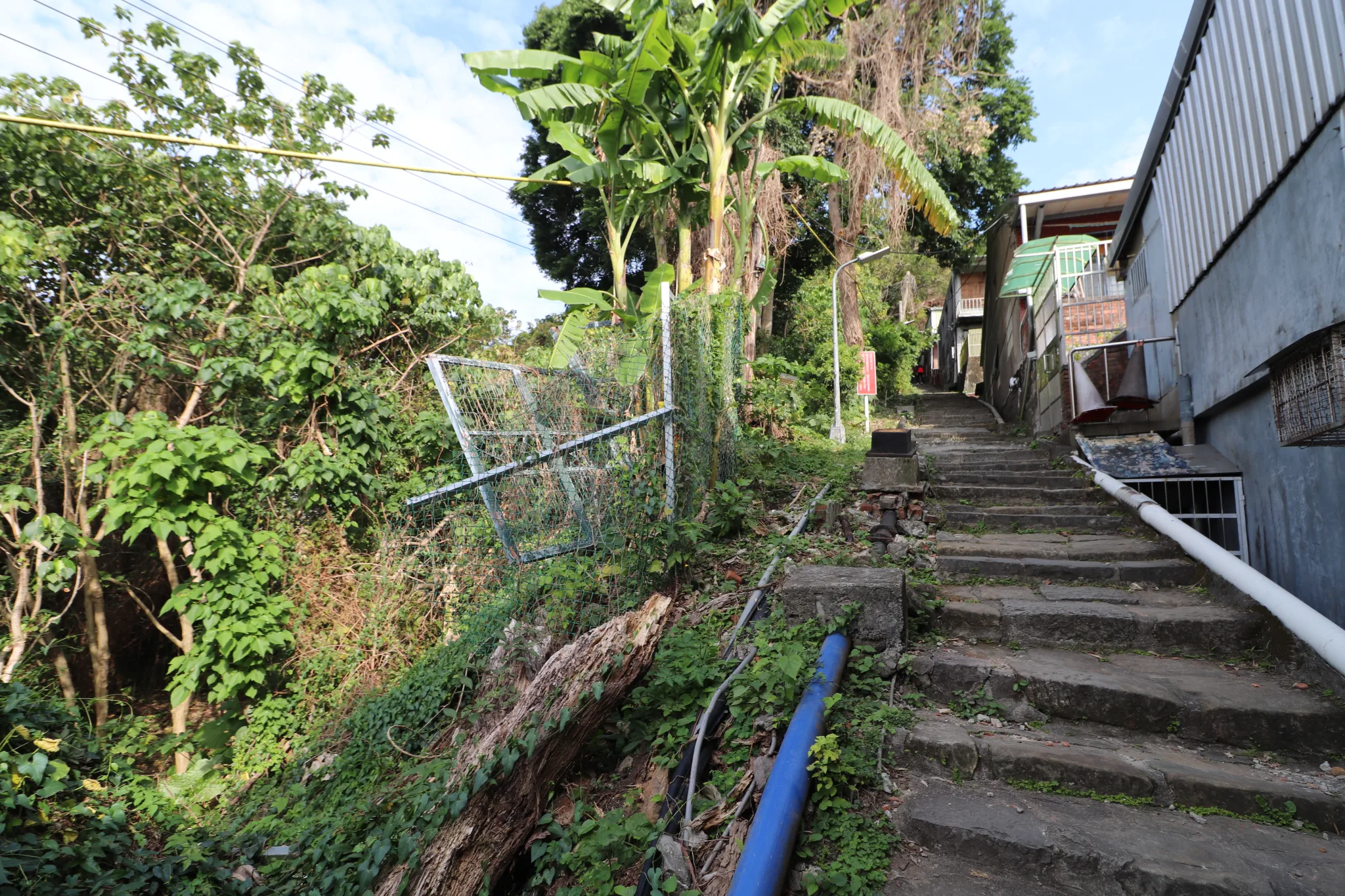
The trail follows this historic water pipe.
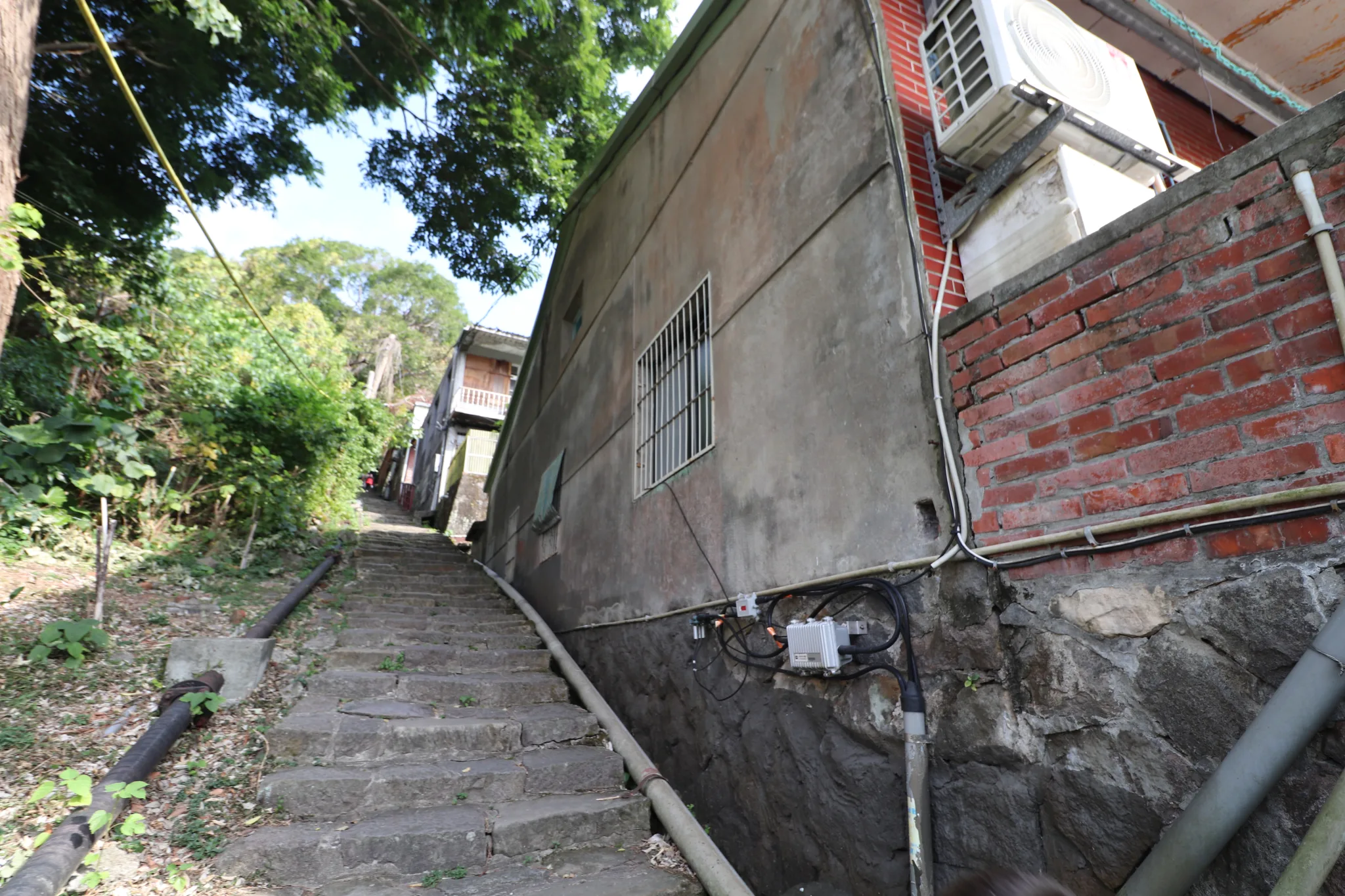
Along the first part of the trail, you can see a lot of old houses along the trail. I think back in the day, this was the only road available to get to these houses.
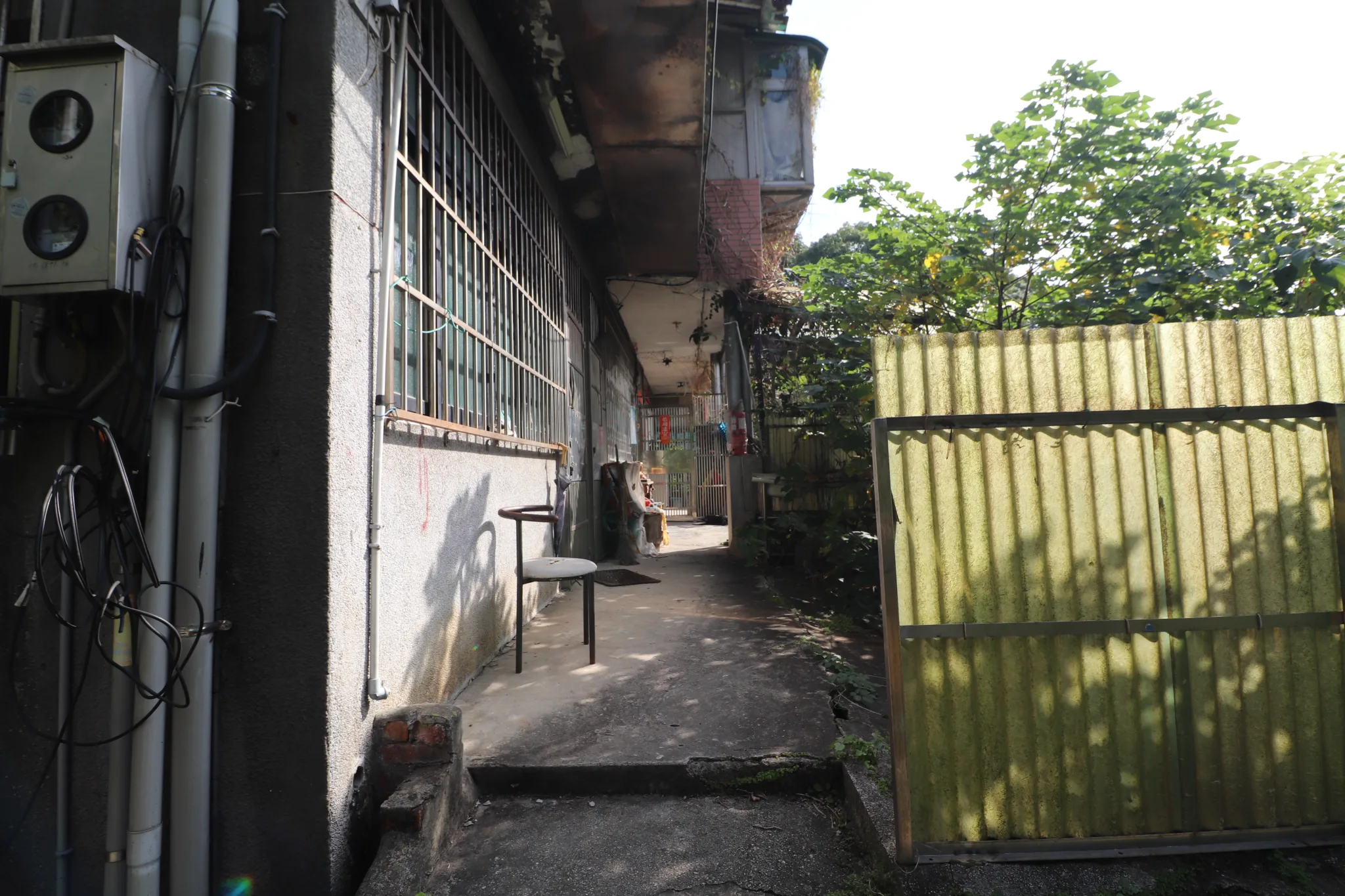
A view of someone’s porch.
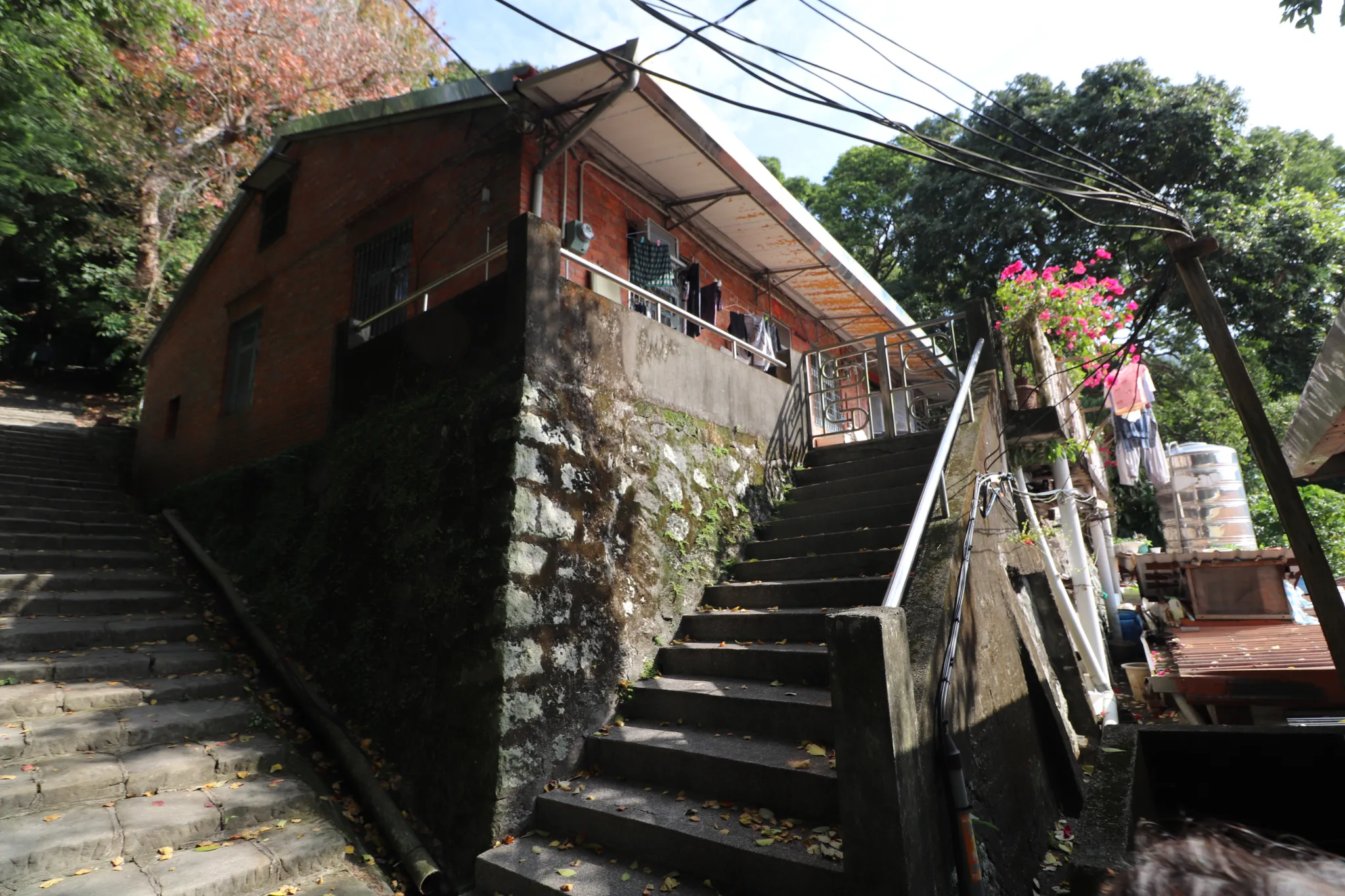
Another hilldside house.
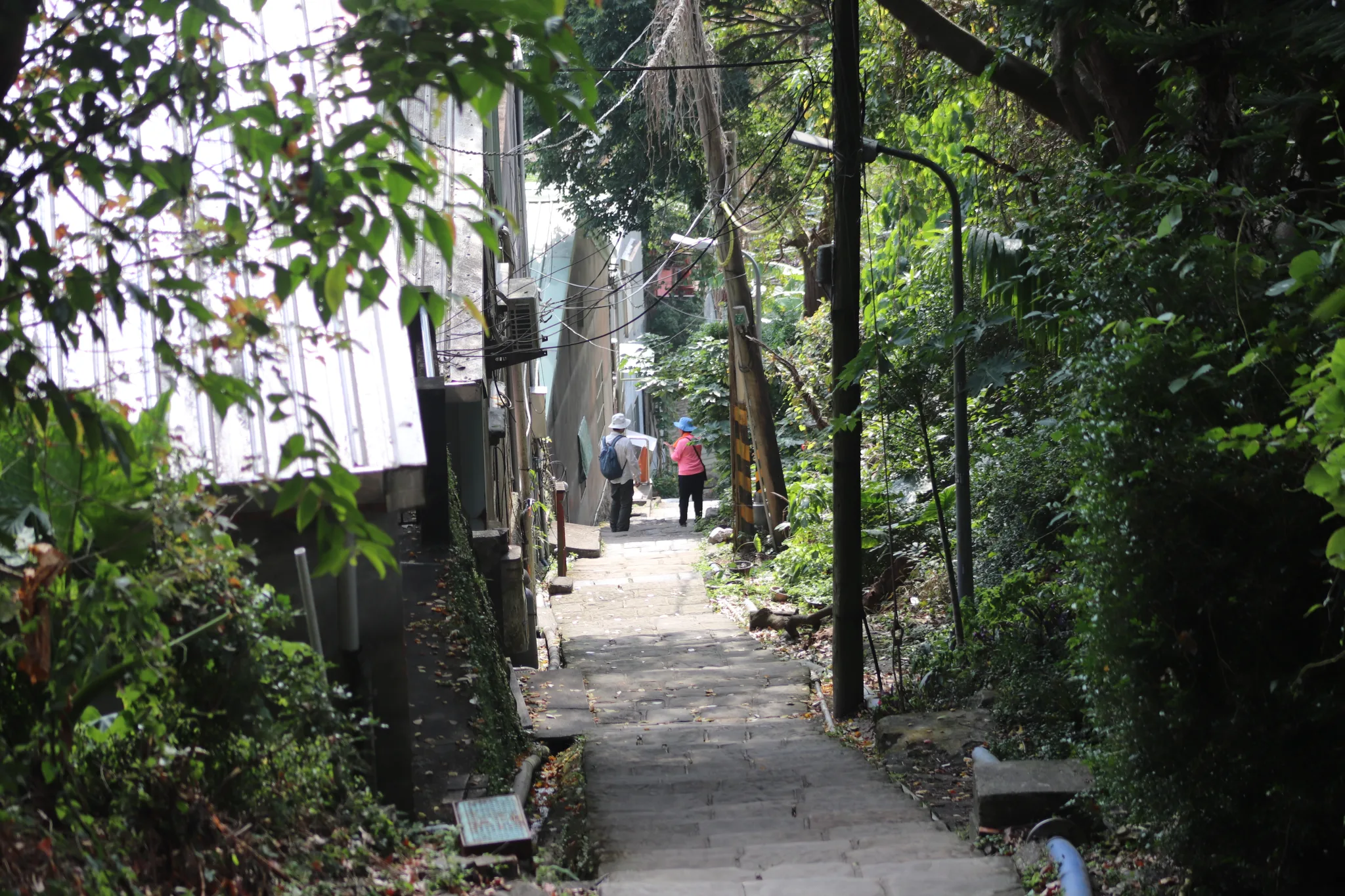
View looking back down the trail.
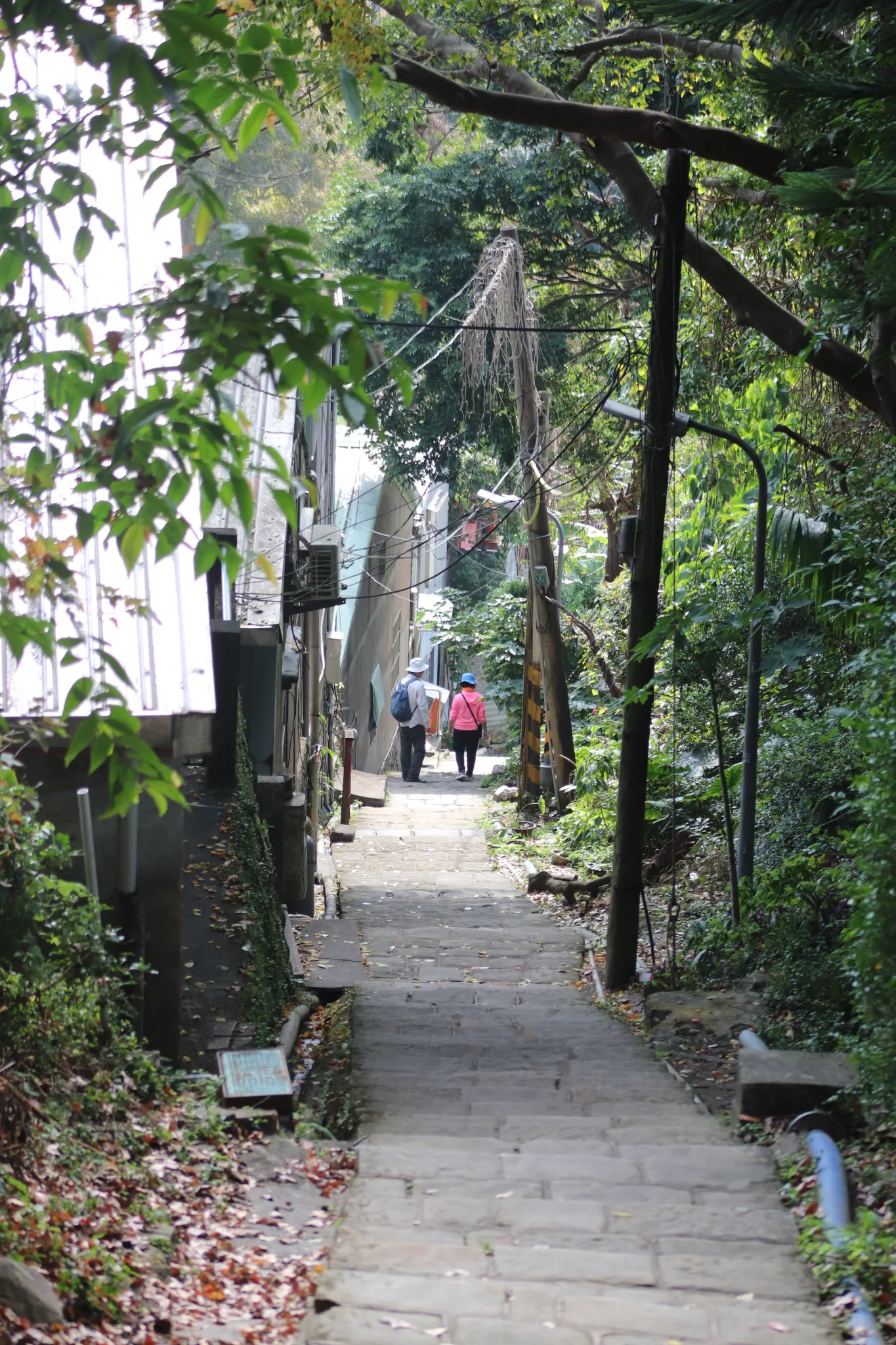
Verticle shot.
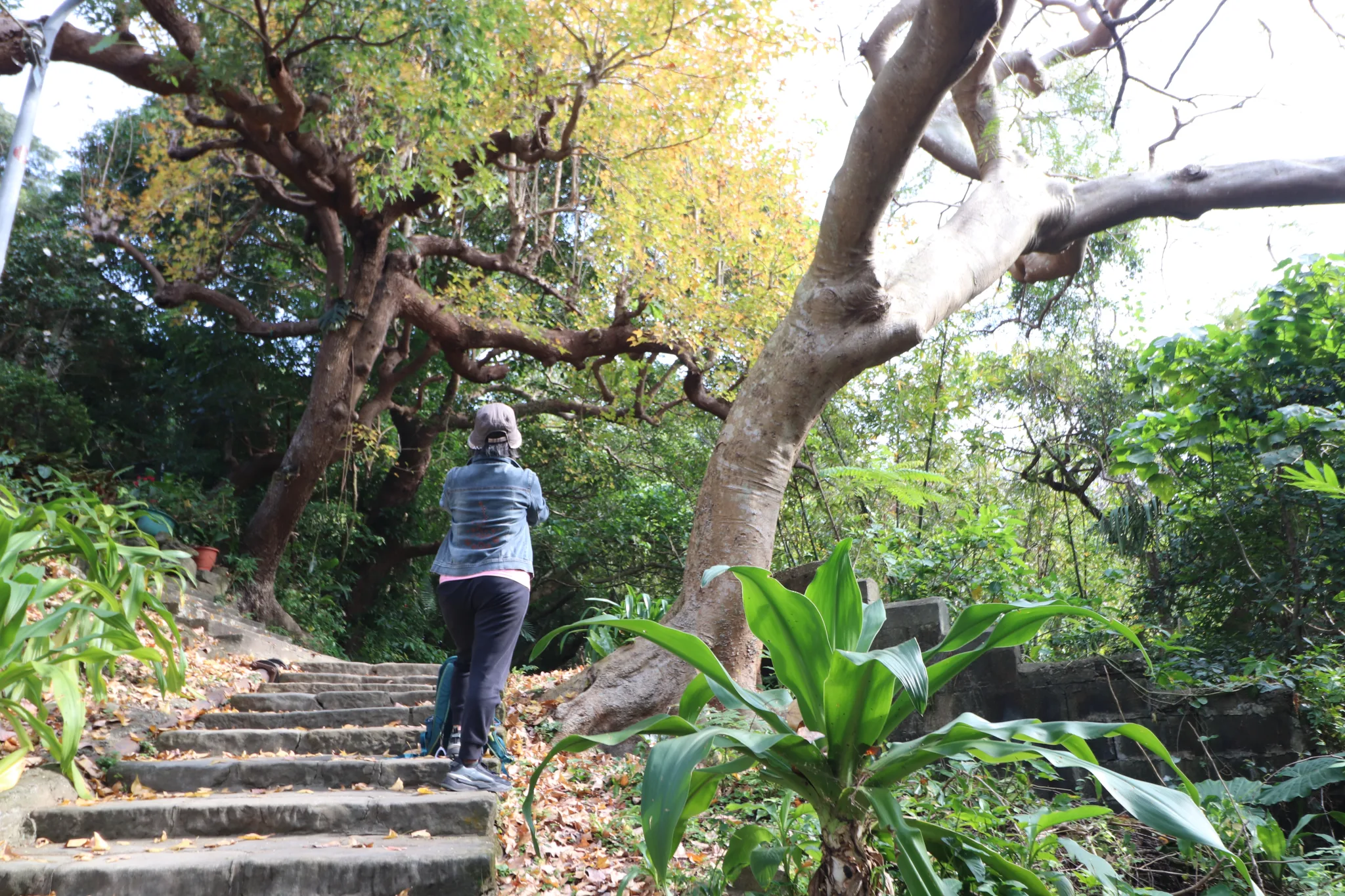
View up the trail from the same location.
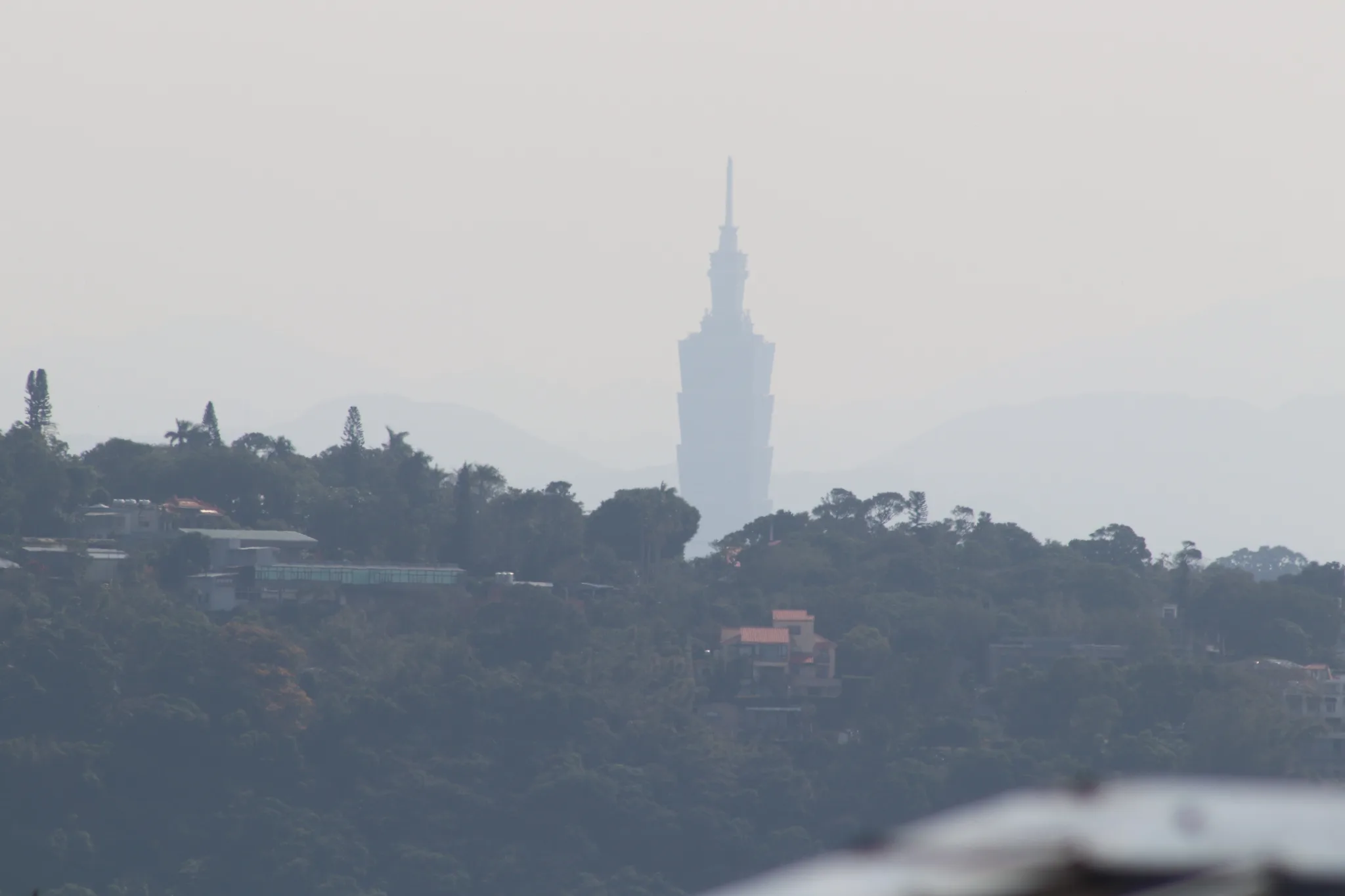
View of the Taipei 101 on a hazy day.
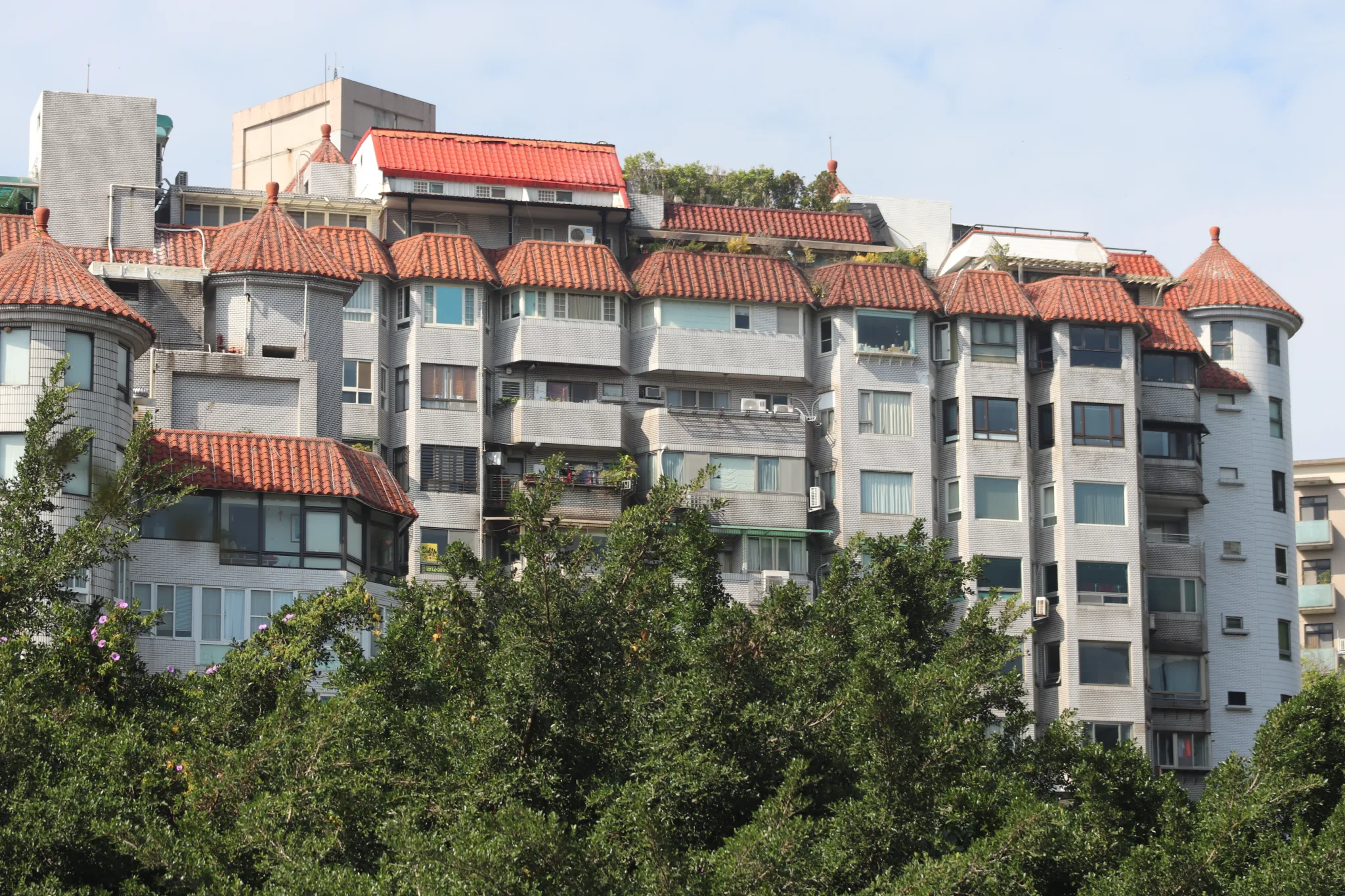
Nearby apartment complex.
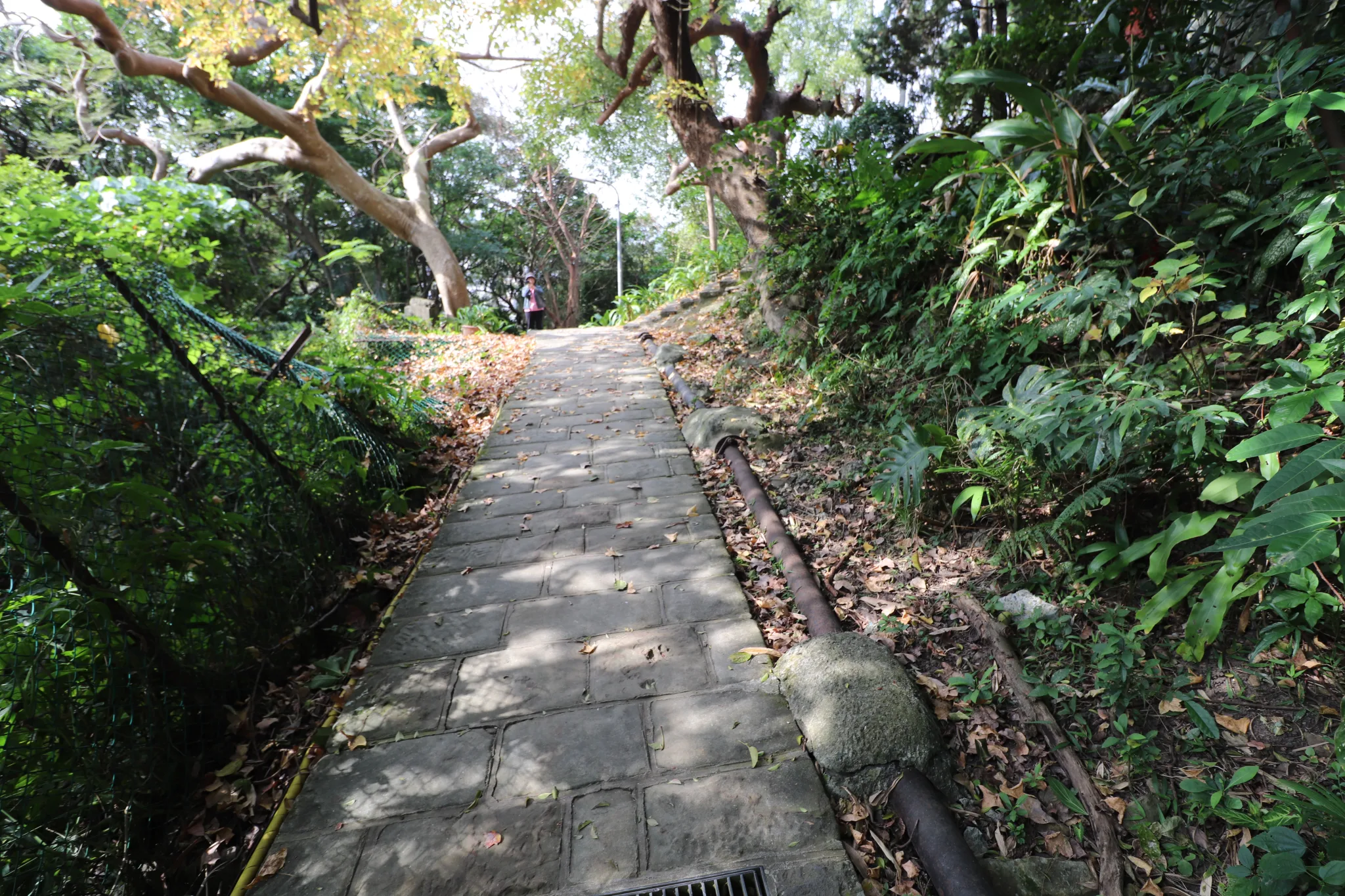
The water road trail continues onward.
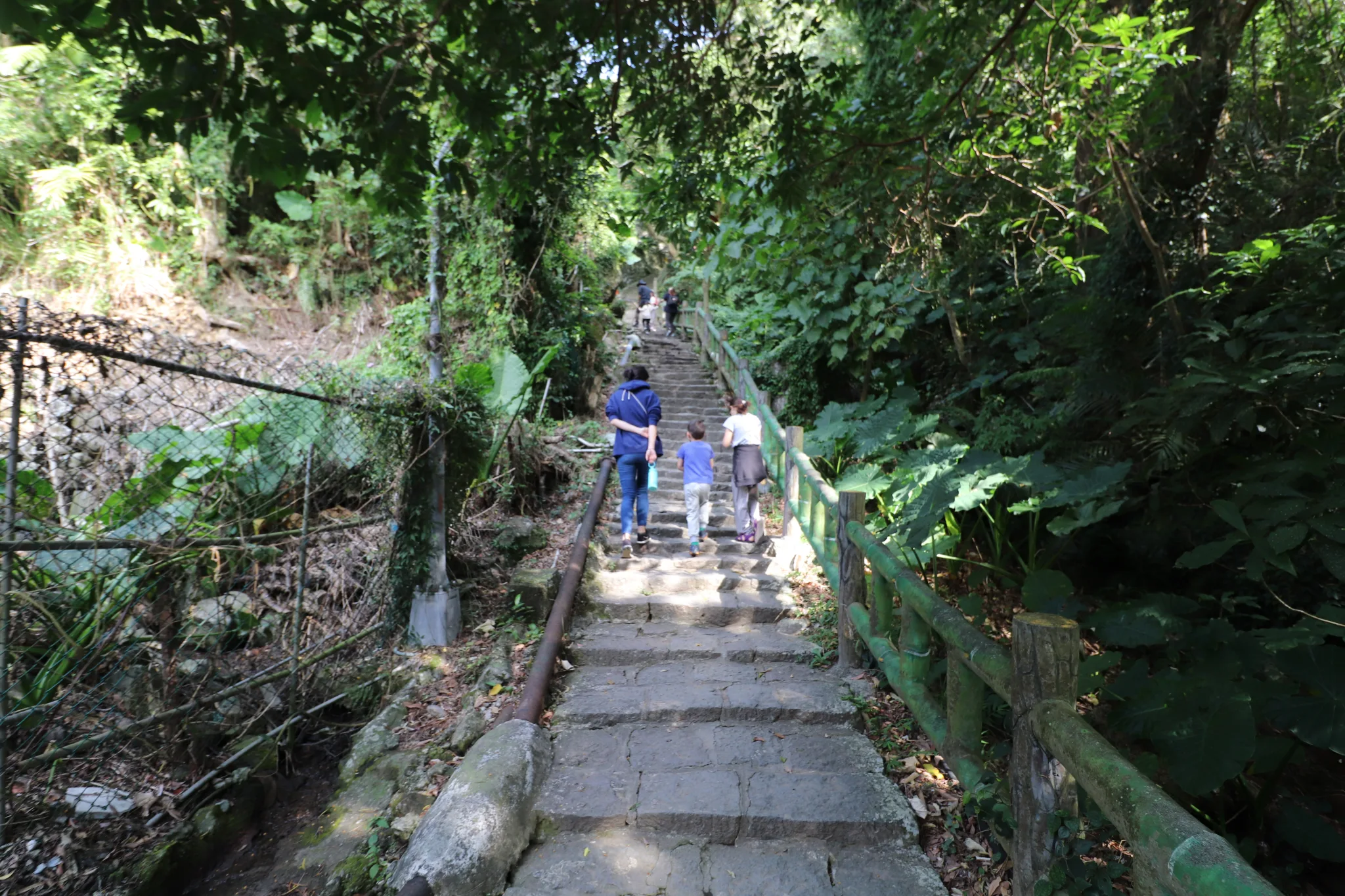
And the steep steps continue.
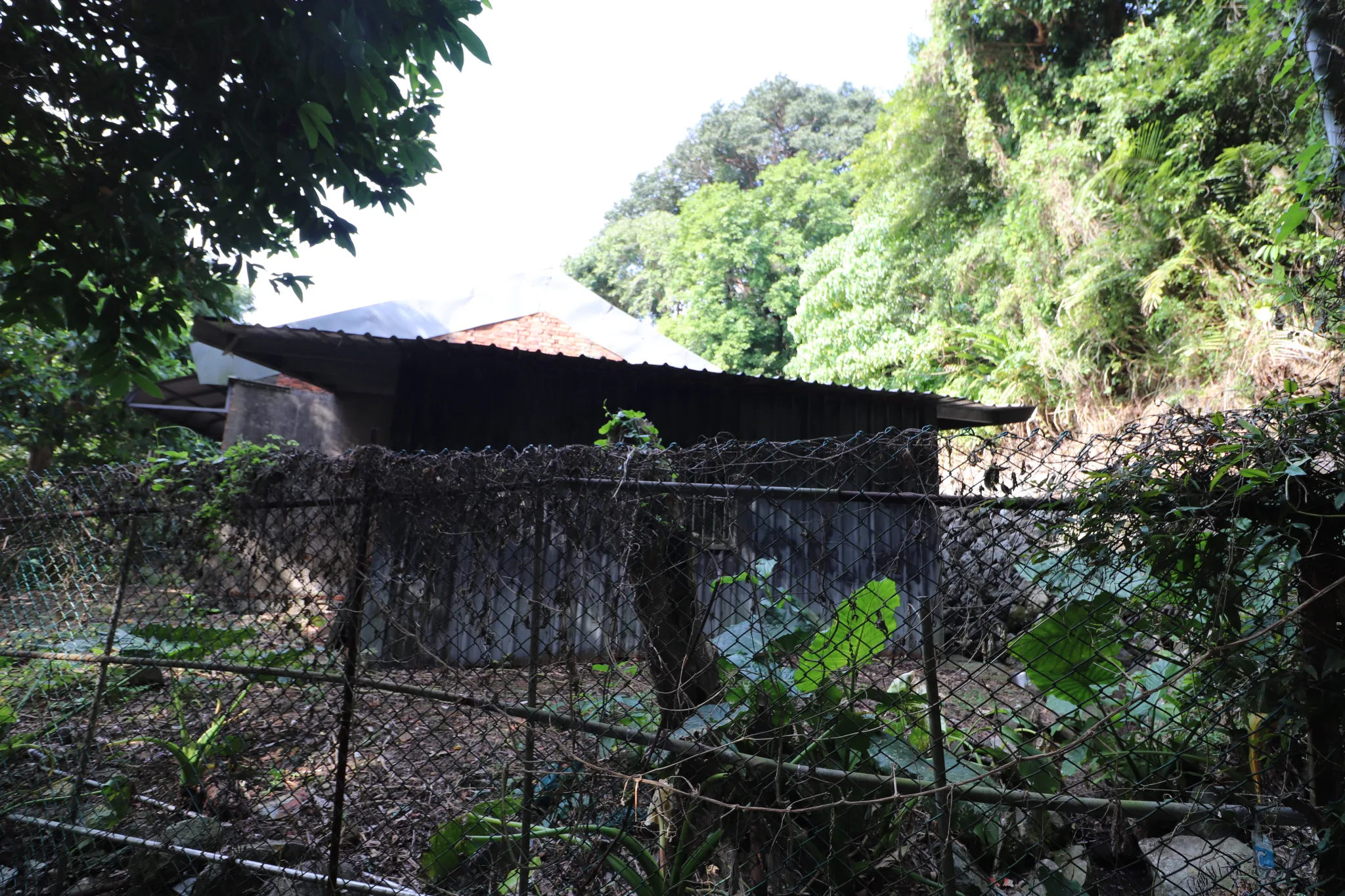
What looks like an old abandoned house.
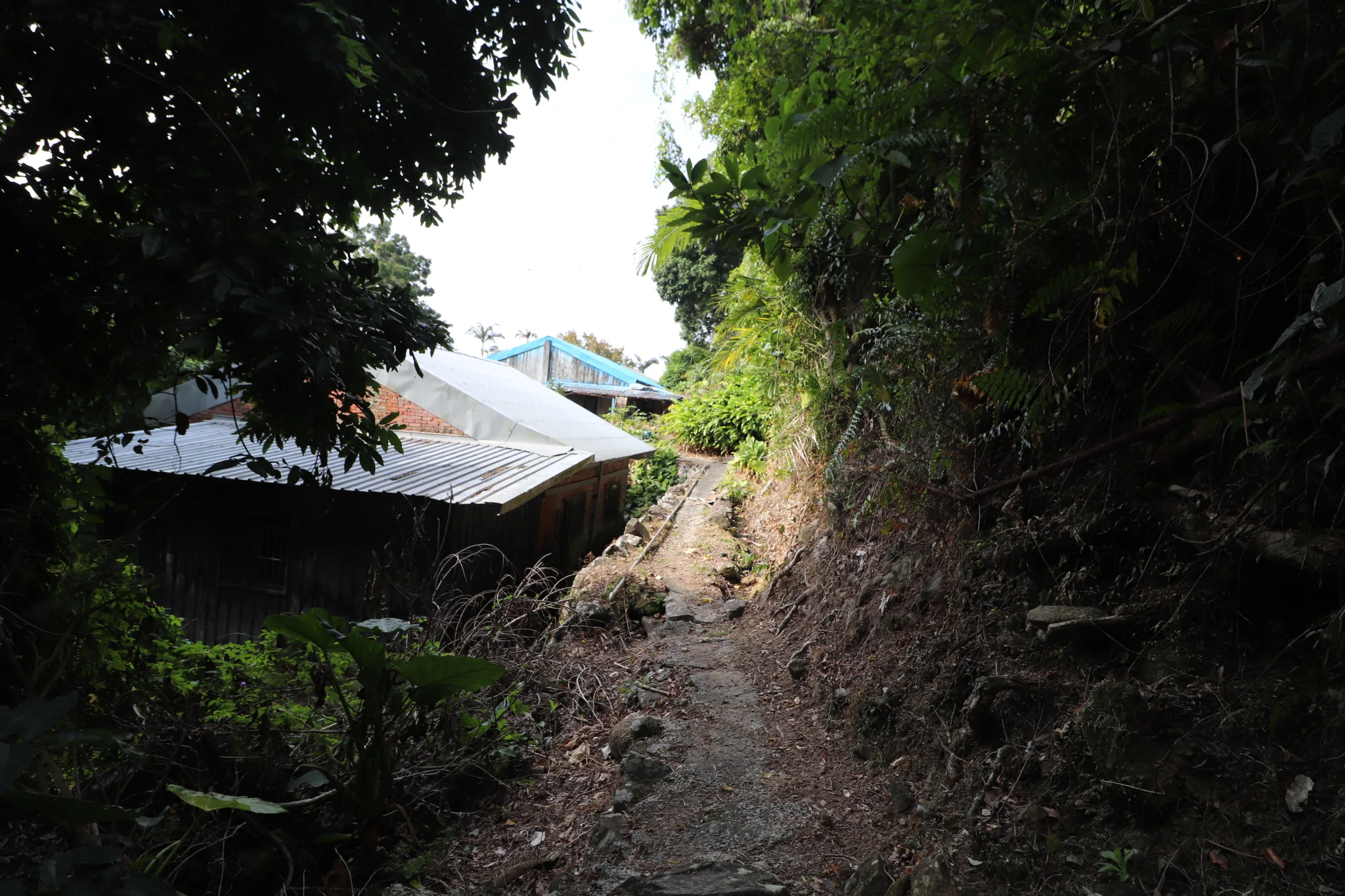
Path behind the abandoned house.
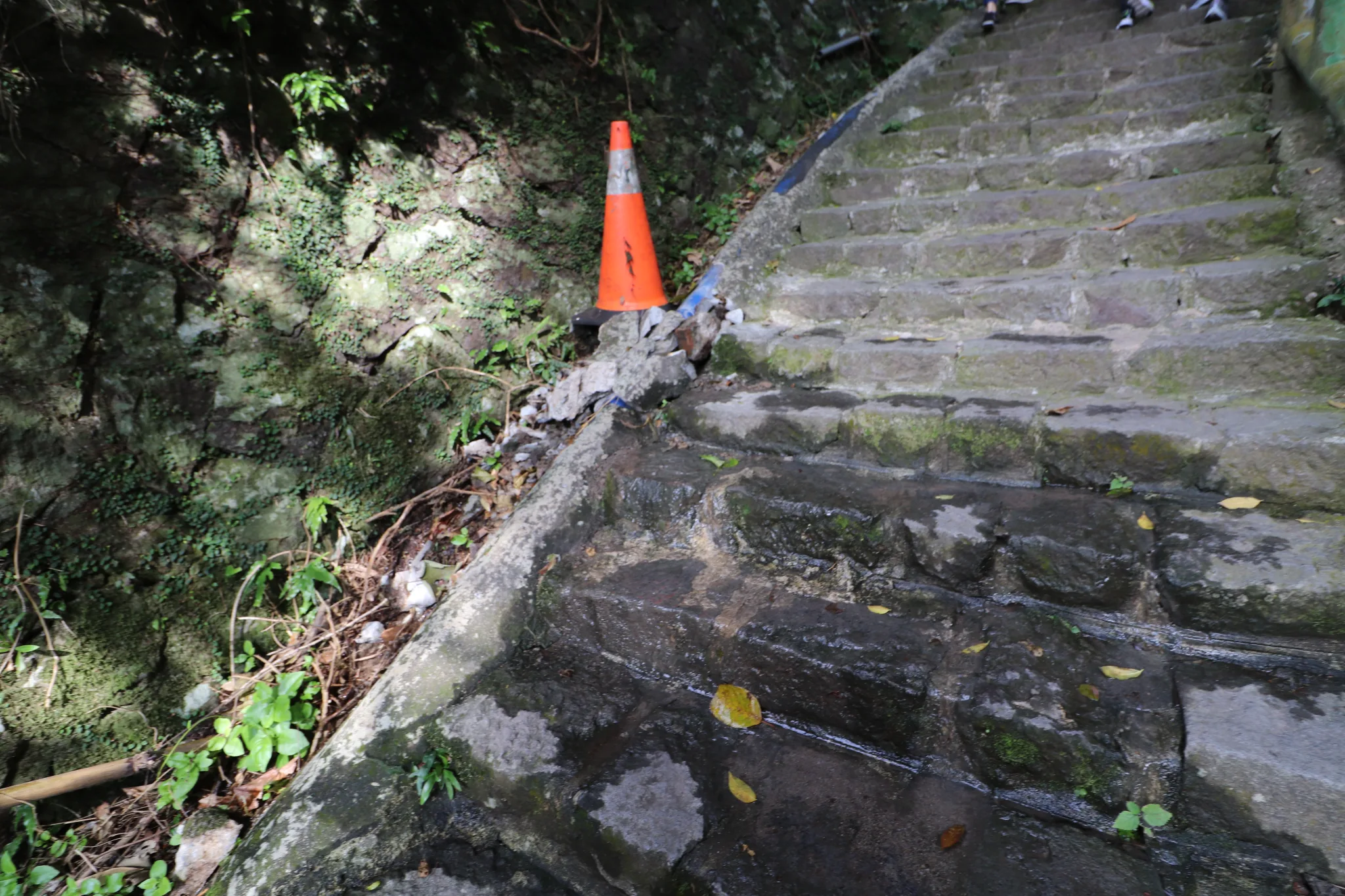
The water pipe looks like it has sprung a leak here.
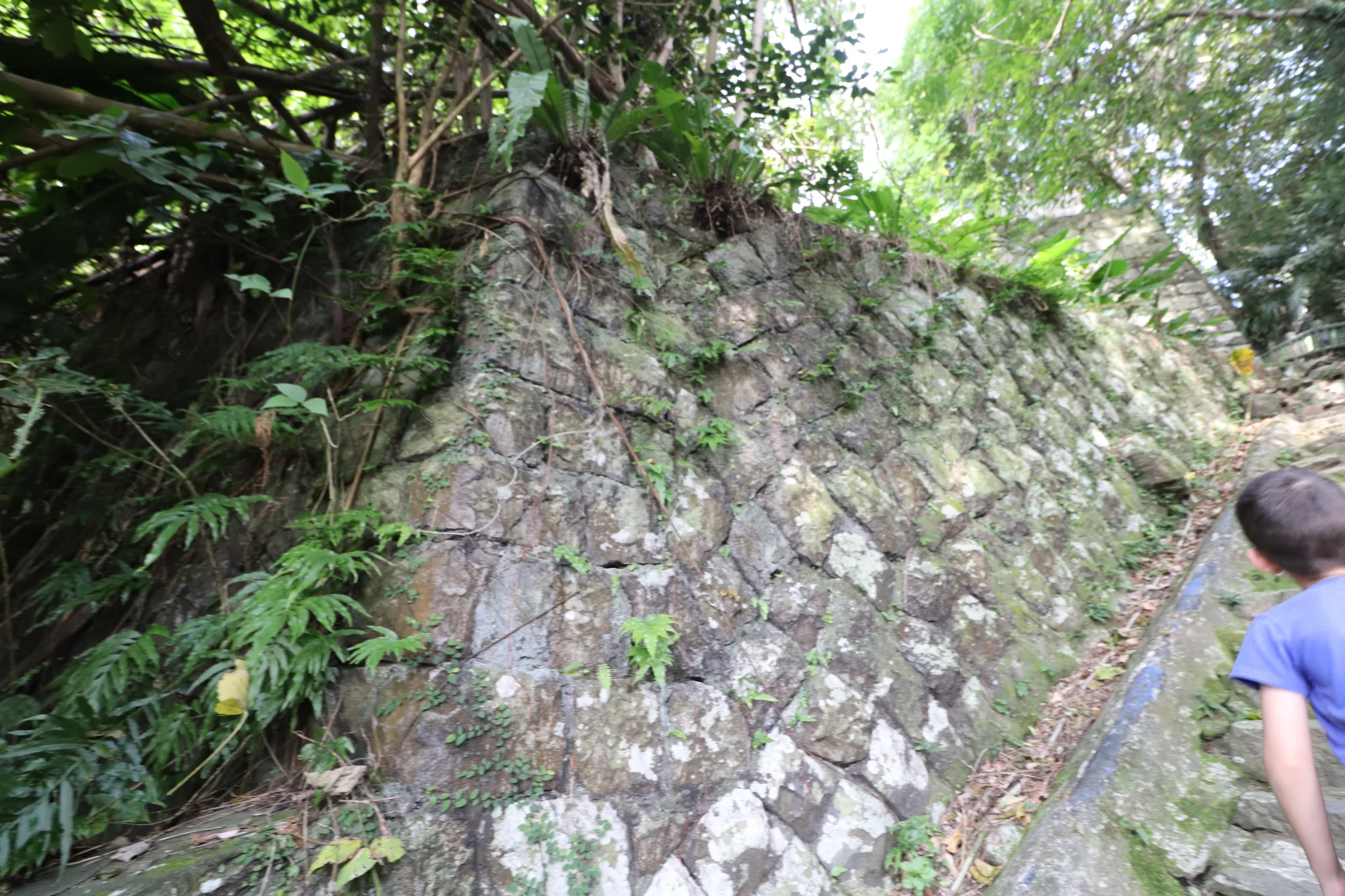
Old rock wall.
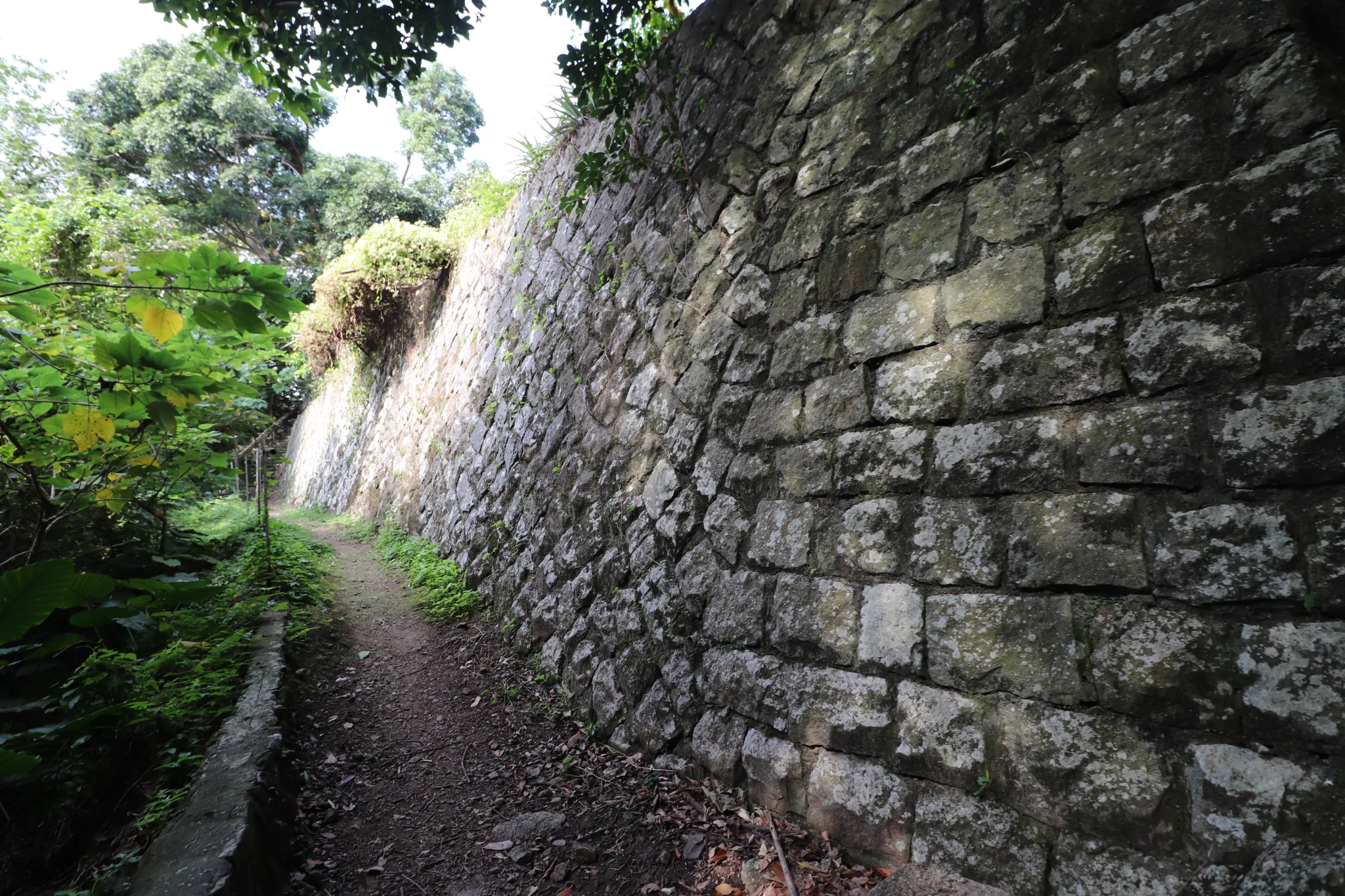
Another view of the old rock wall.
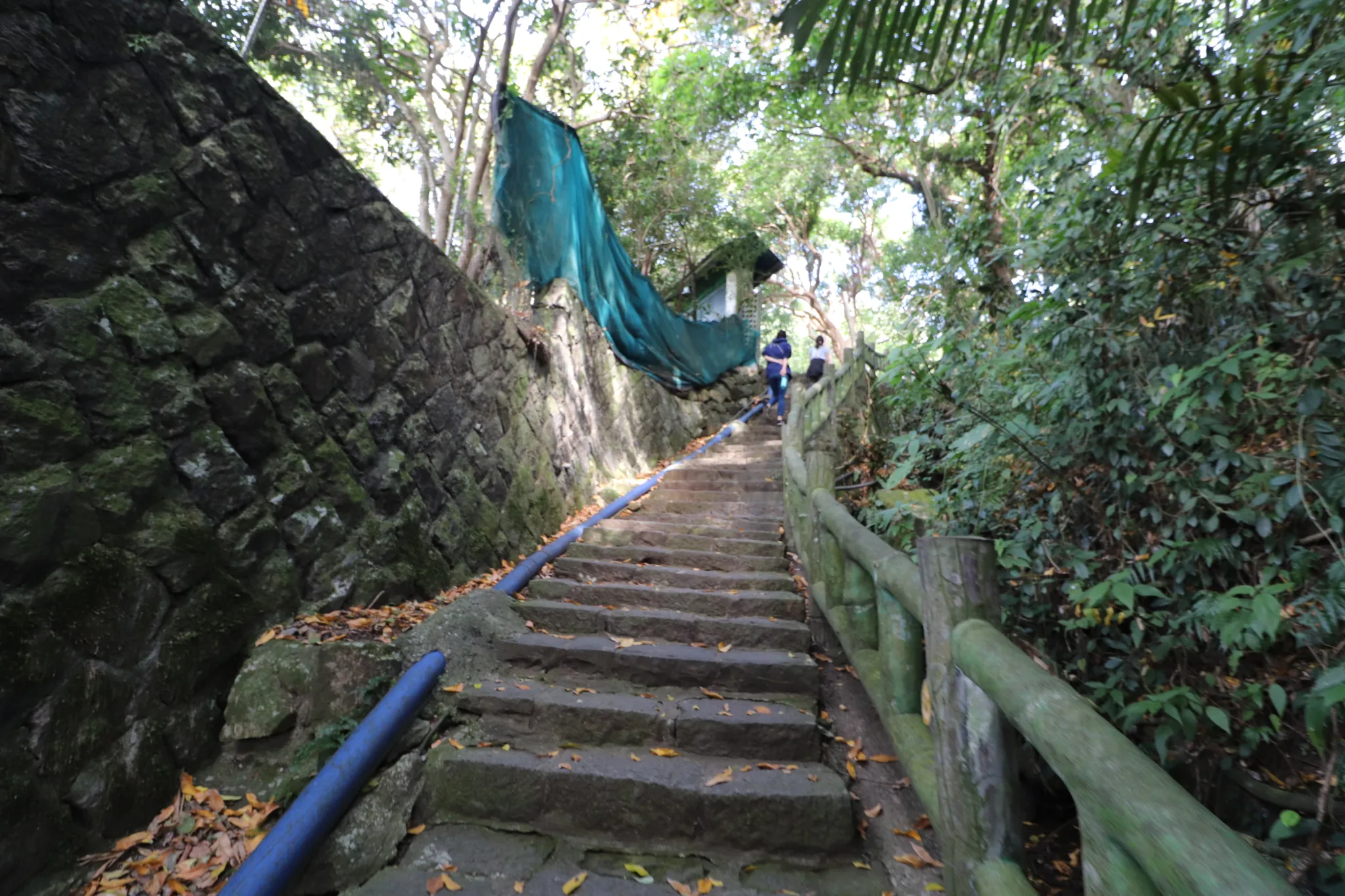
The old trail continues.
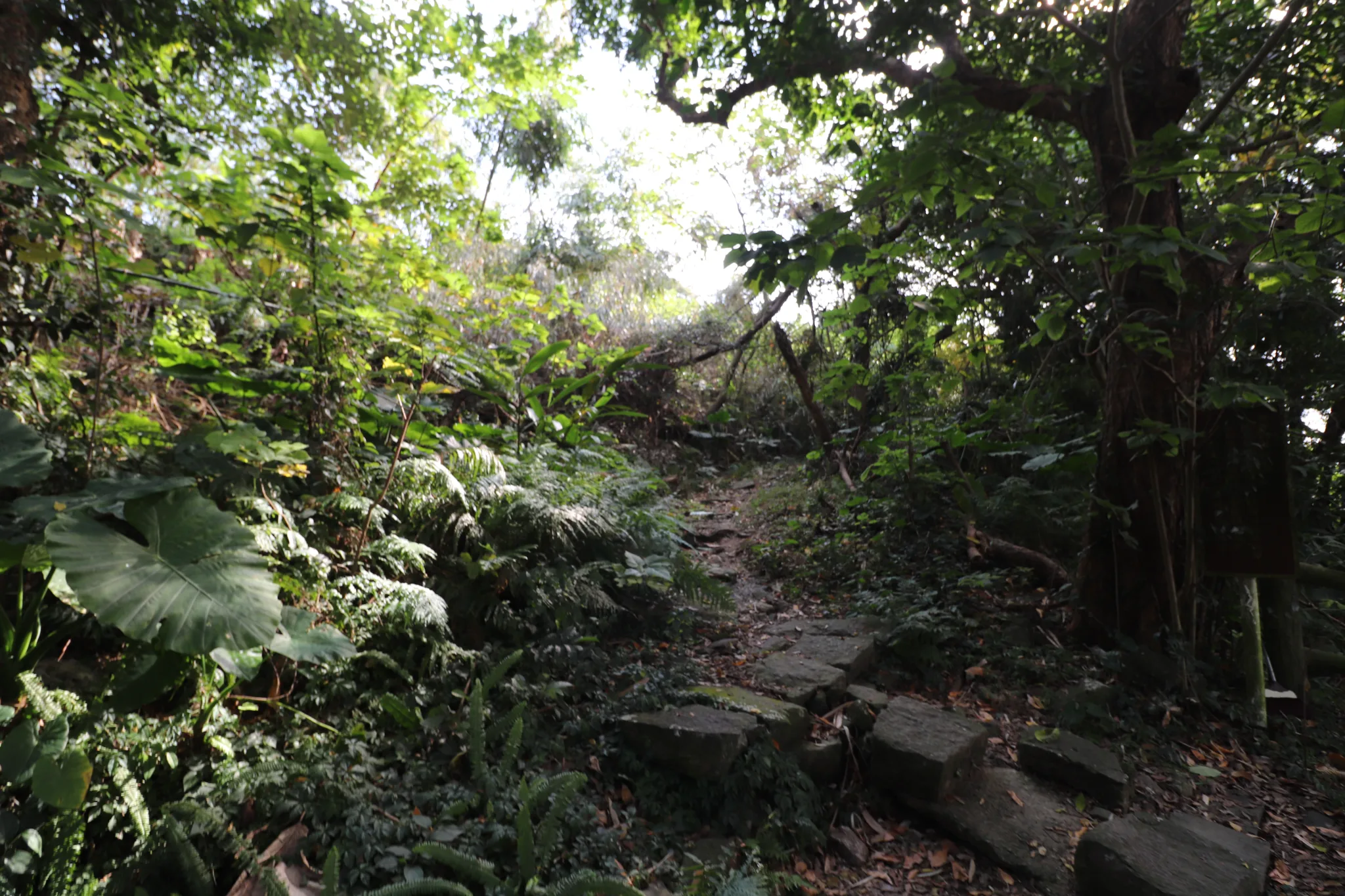
Here I spotted a side trail through the woods.
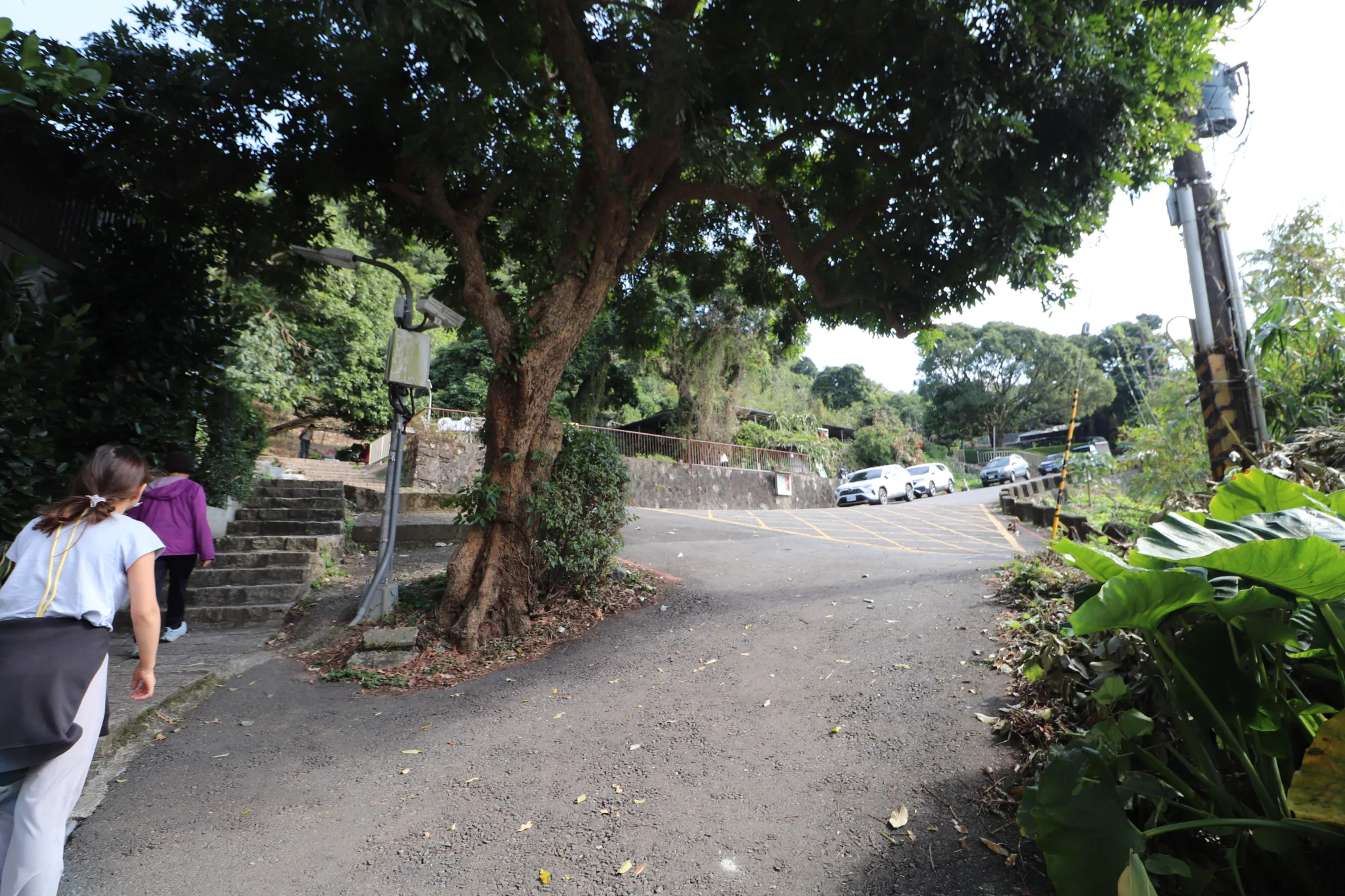
Here, the trail crosses a road.
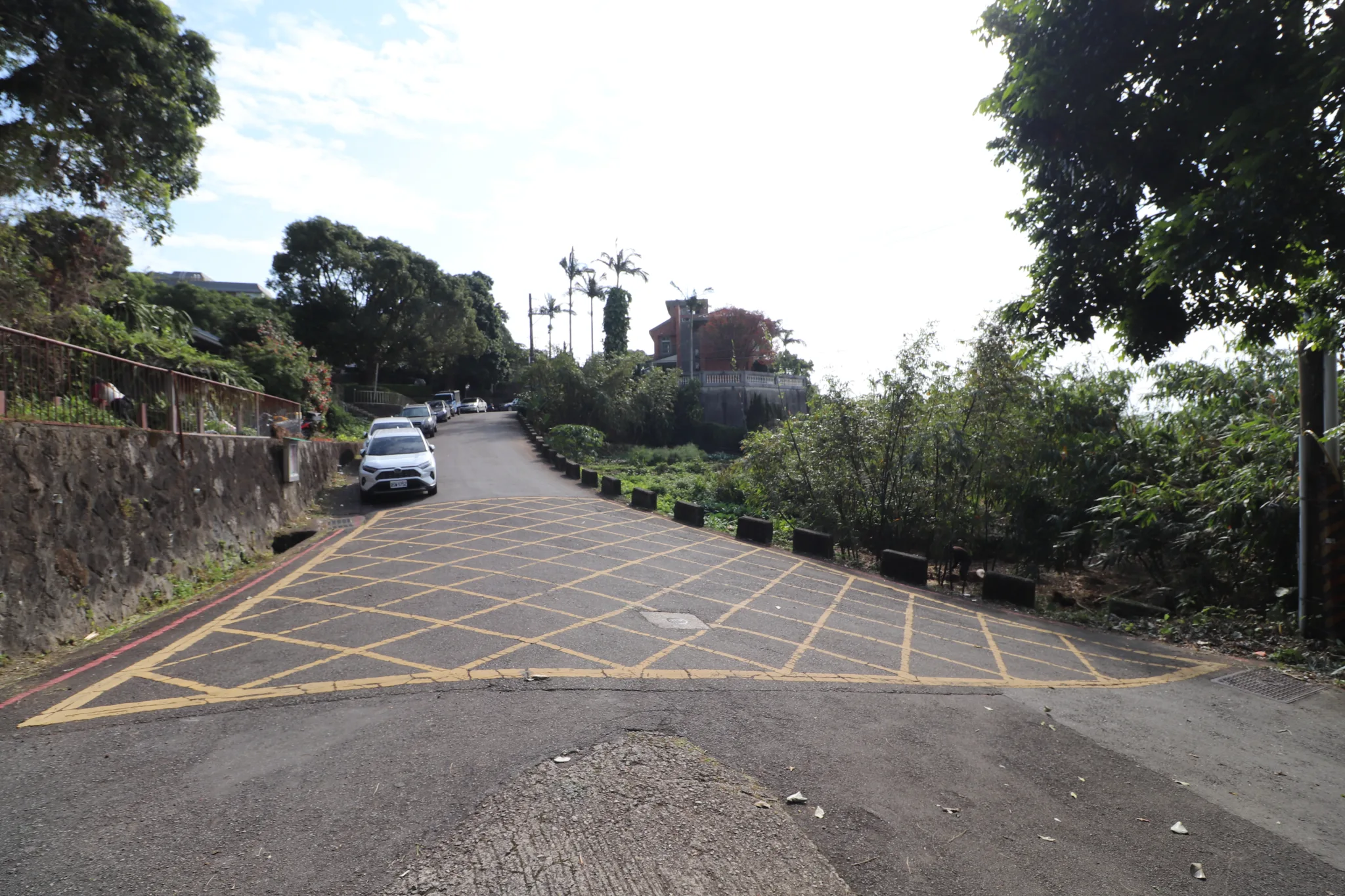
View looking up the road.
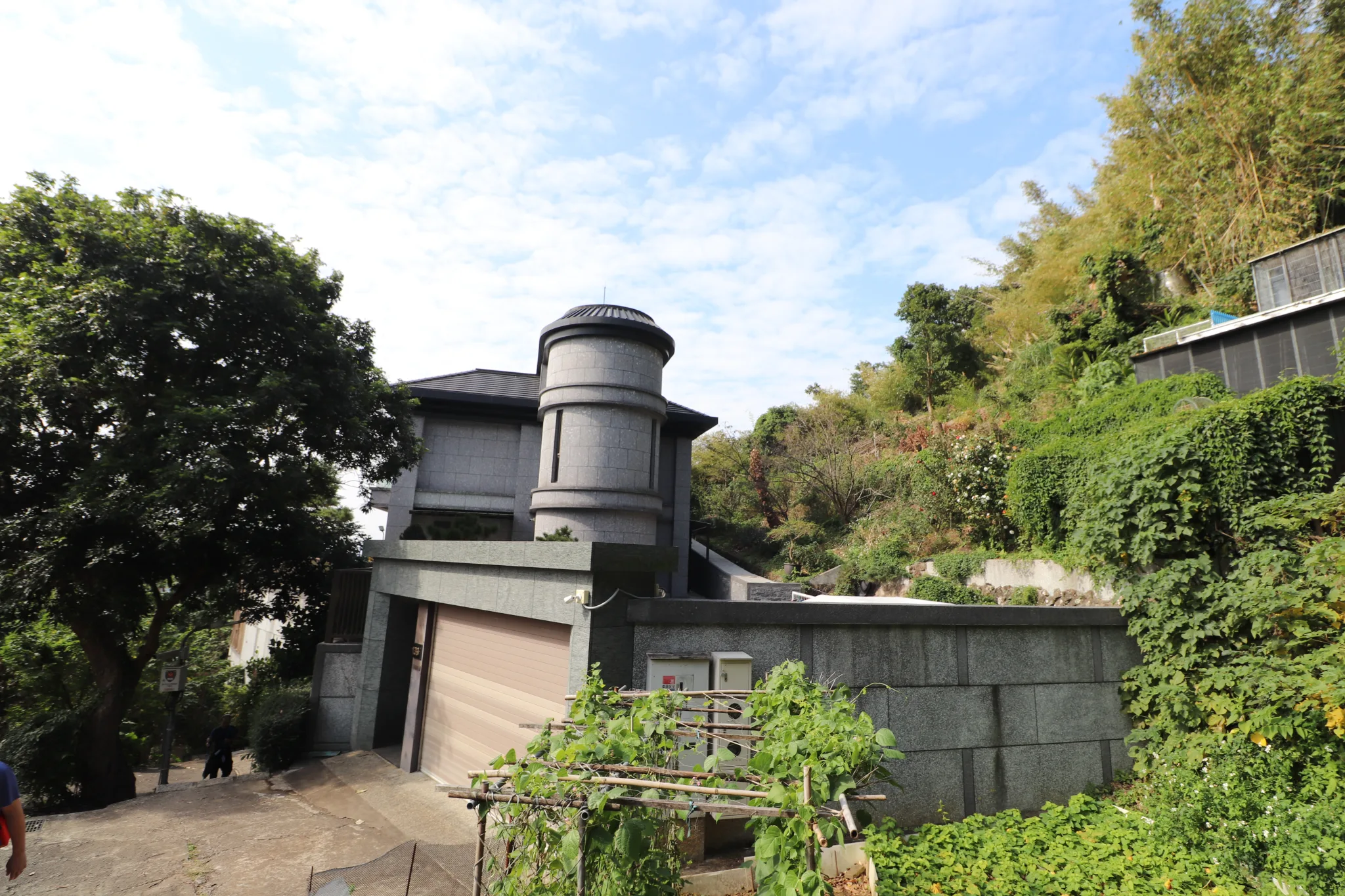
Someone has a fanct house up here.
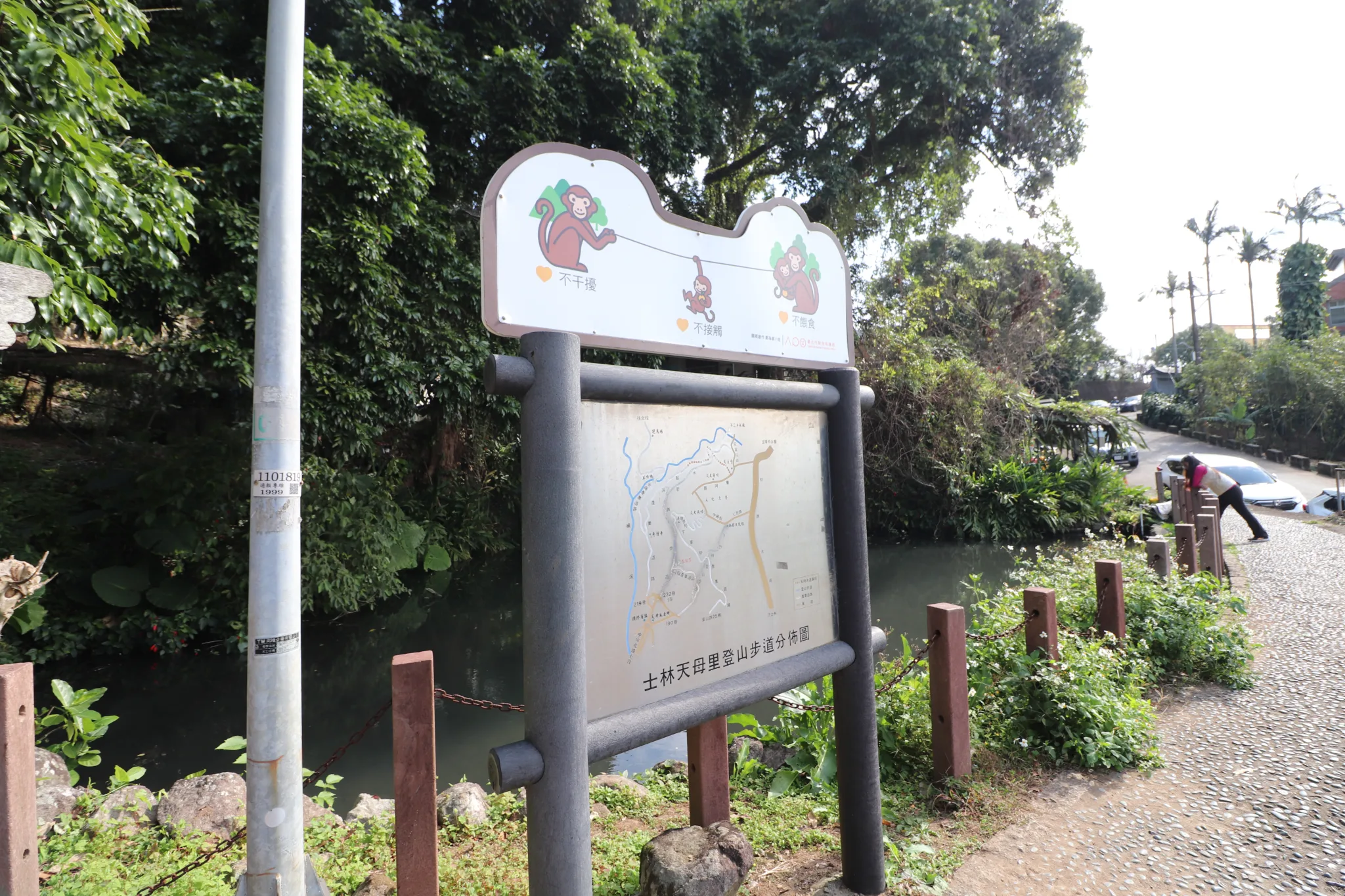
Another map of the trail.
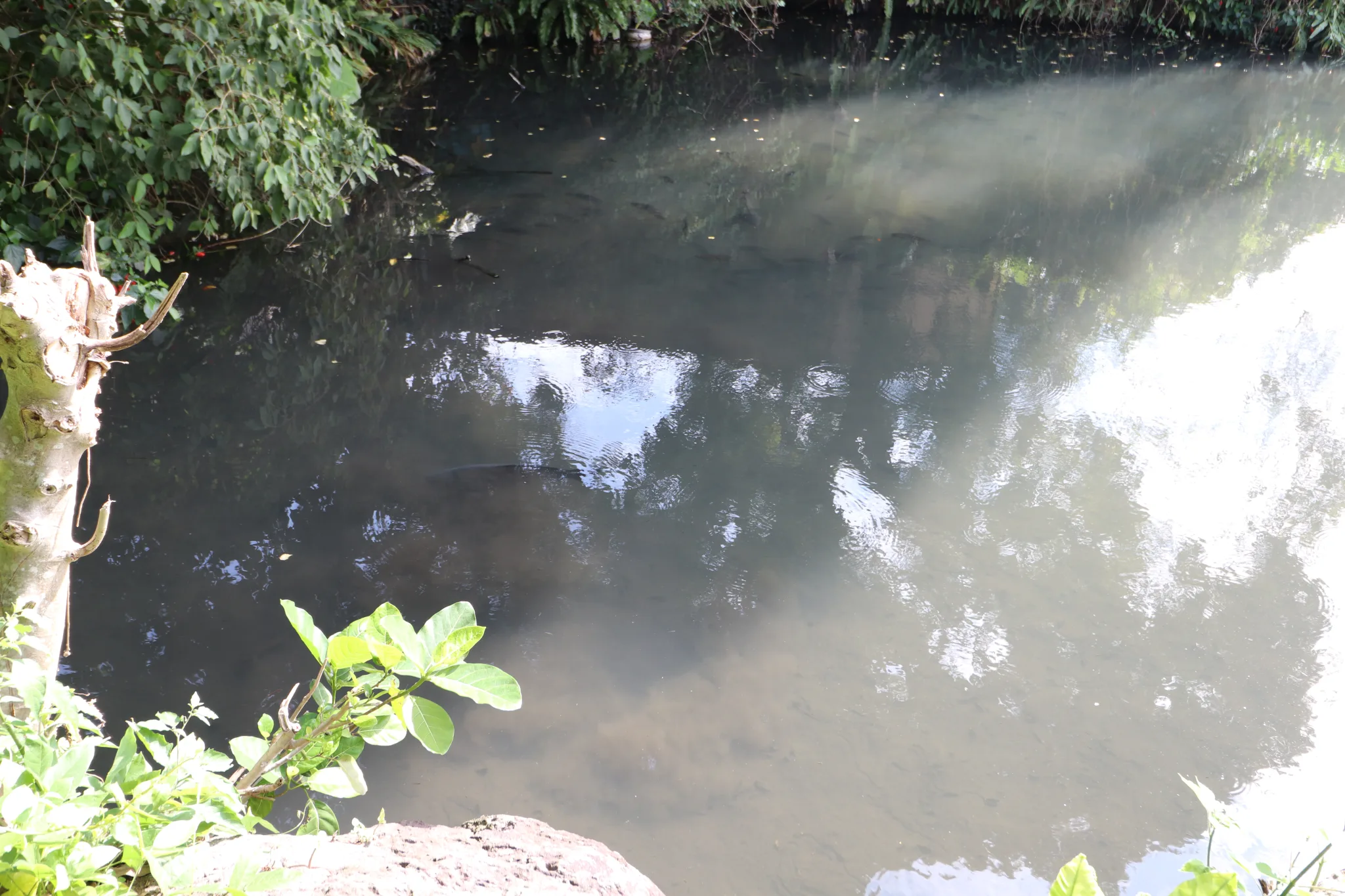
There is a little fish pond here.
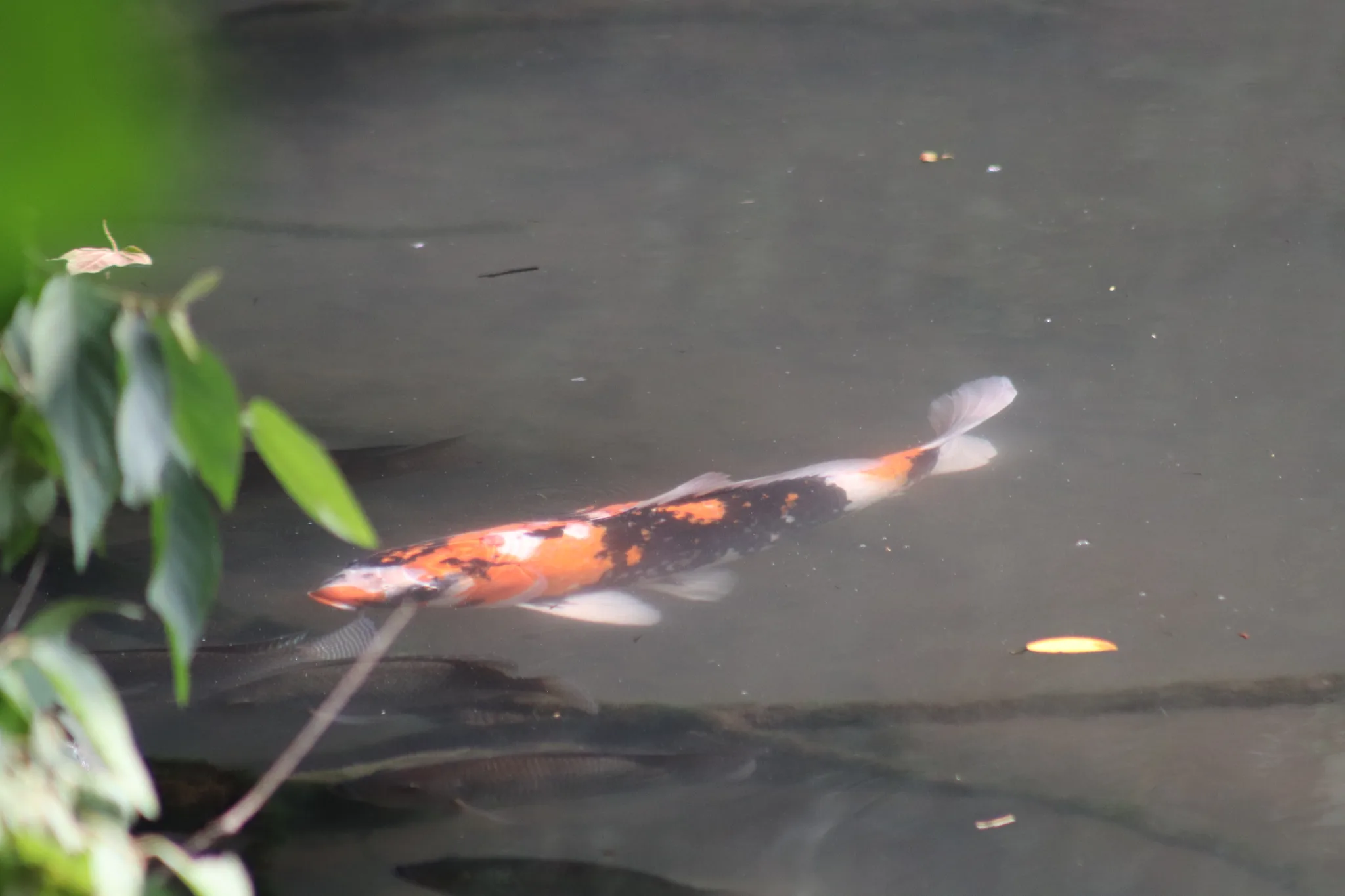
You can see lots of coi fish in the water.
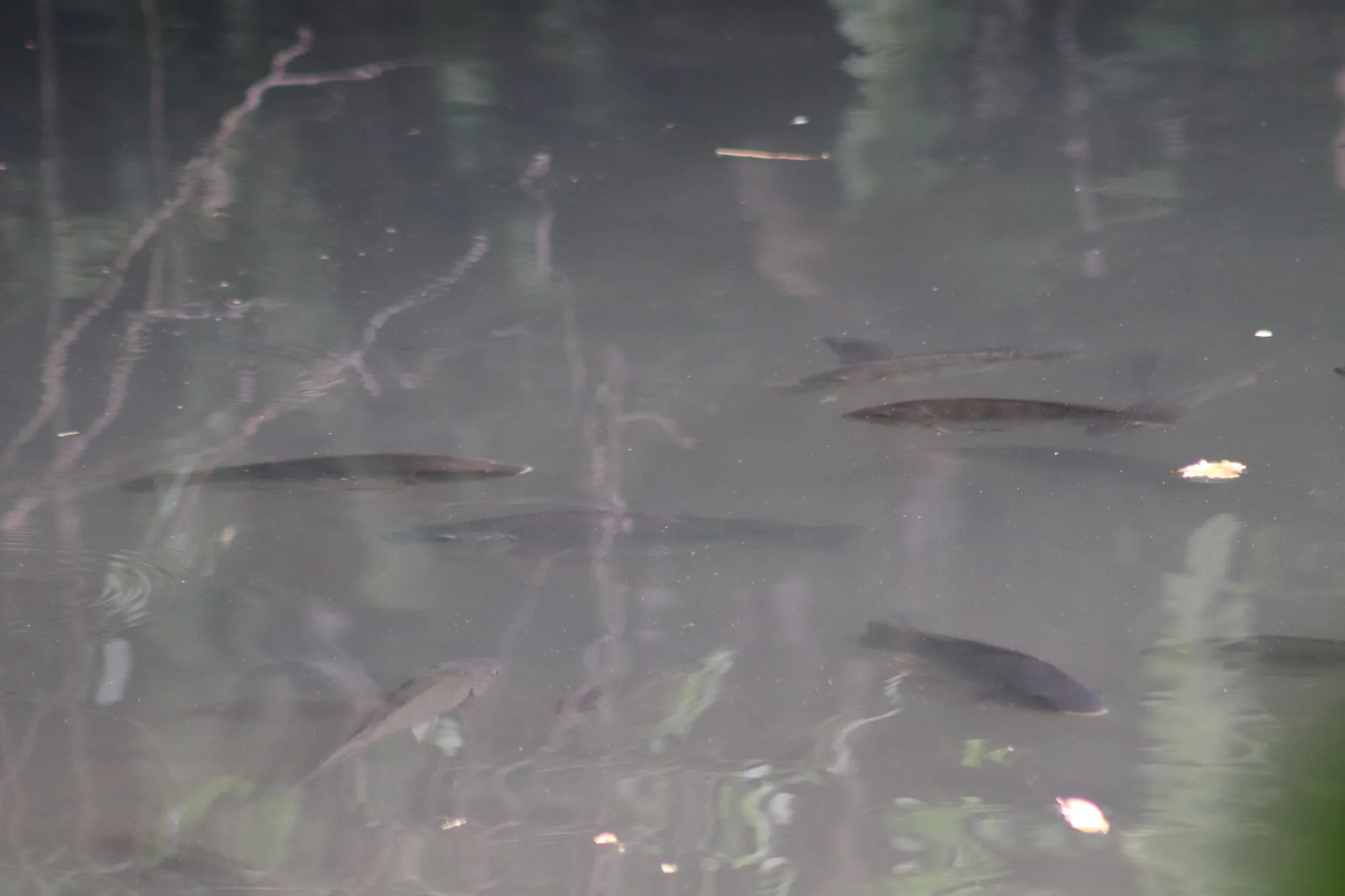
More fish.
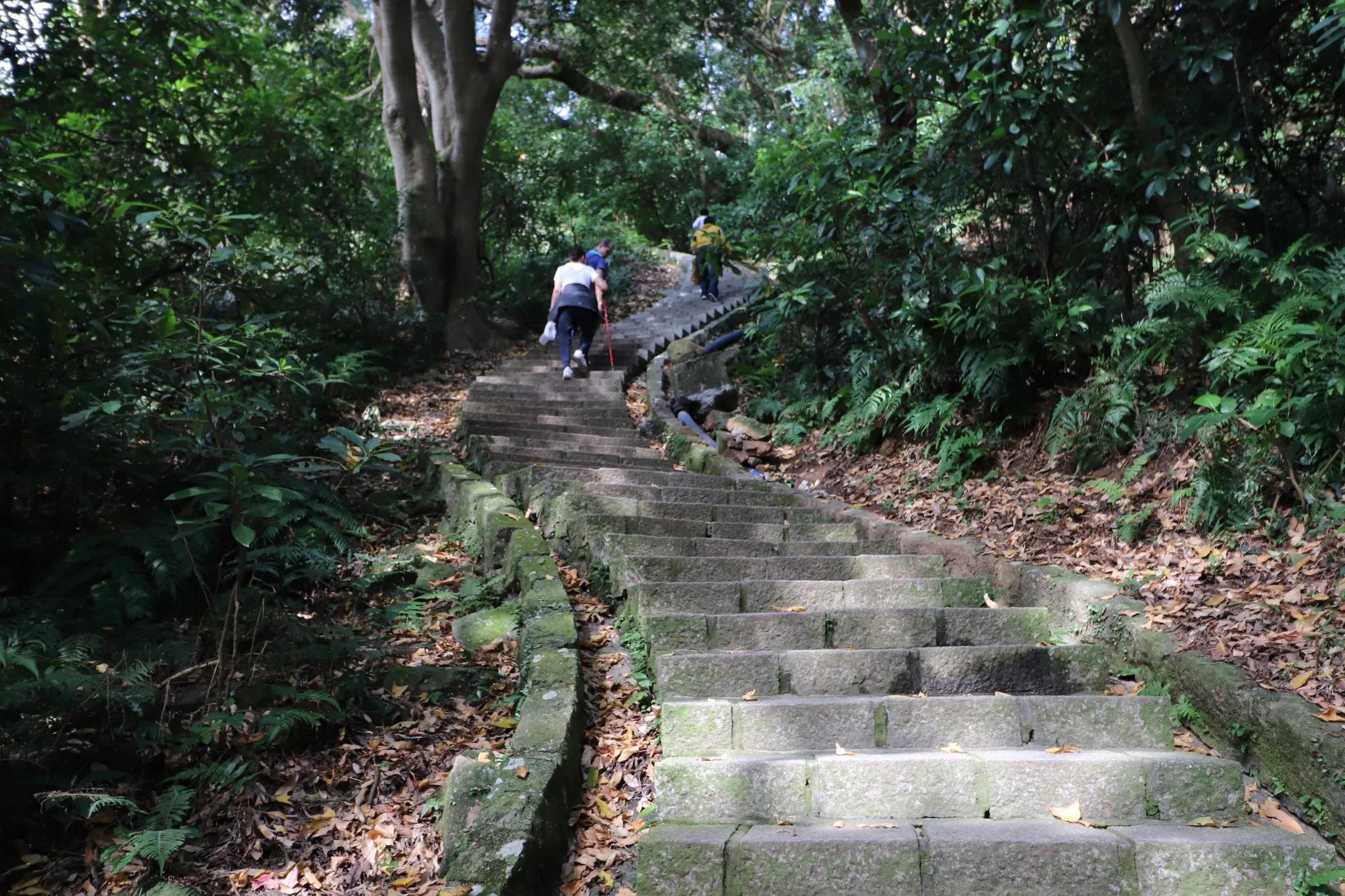
The trail then snakes higher up the mountain.
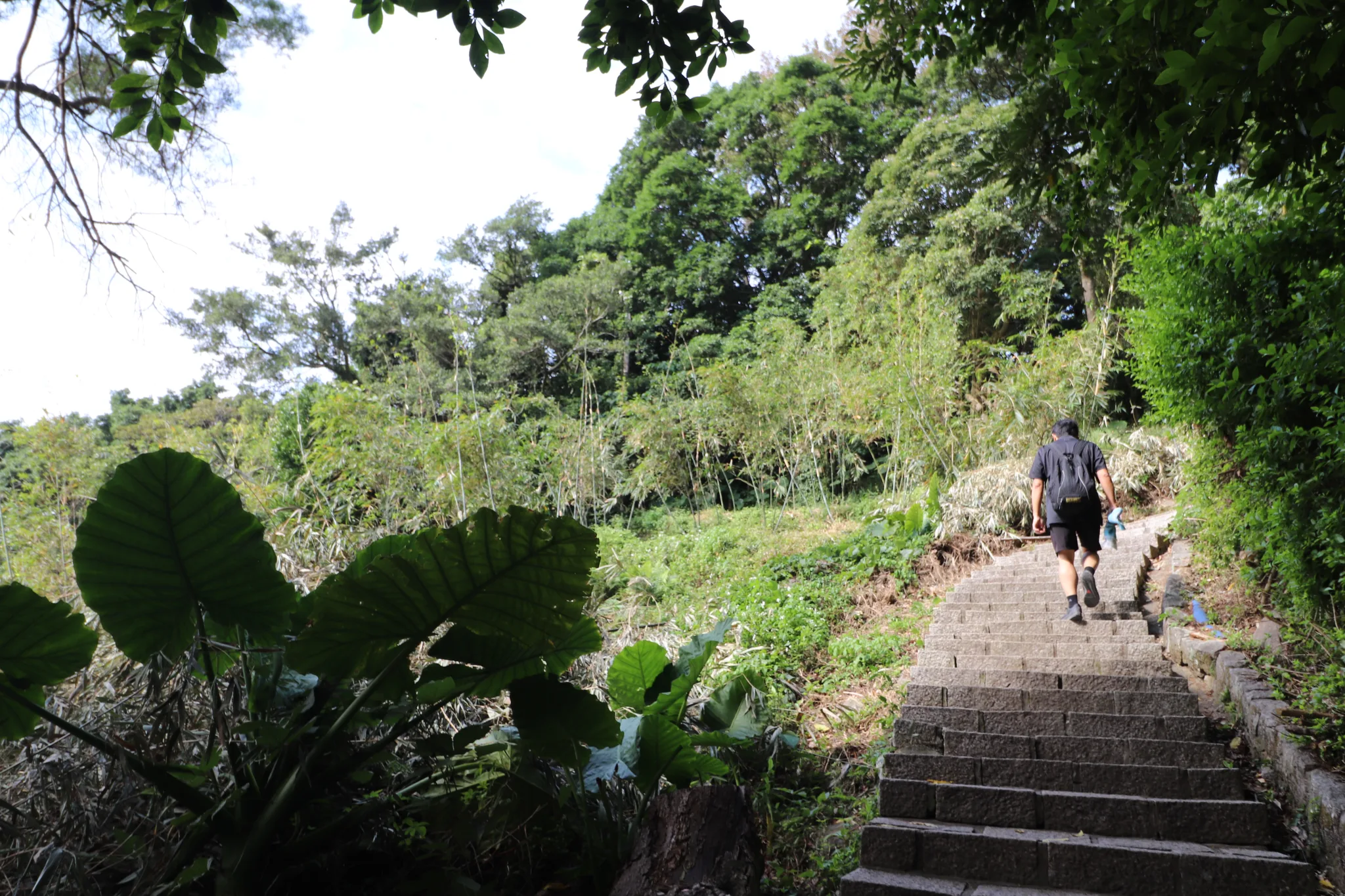
Here there is a break in the foliage.
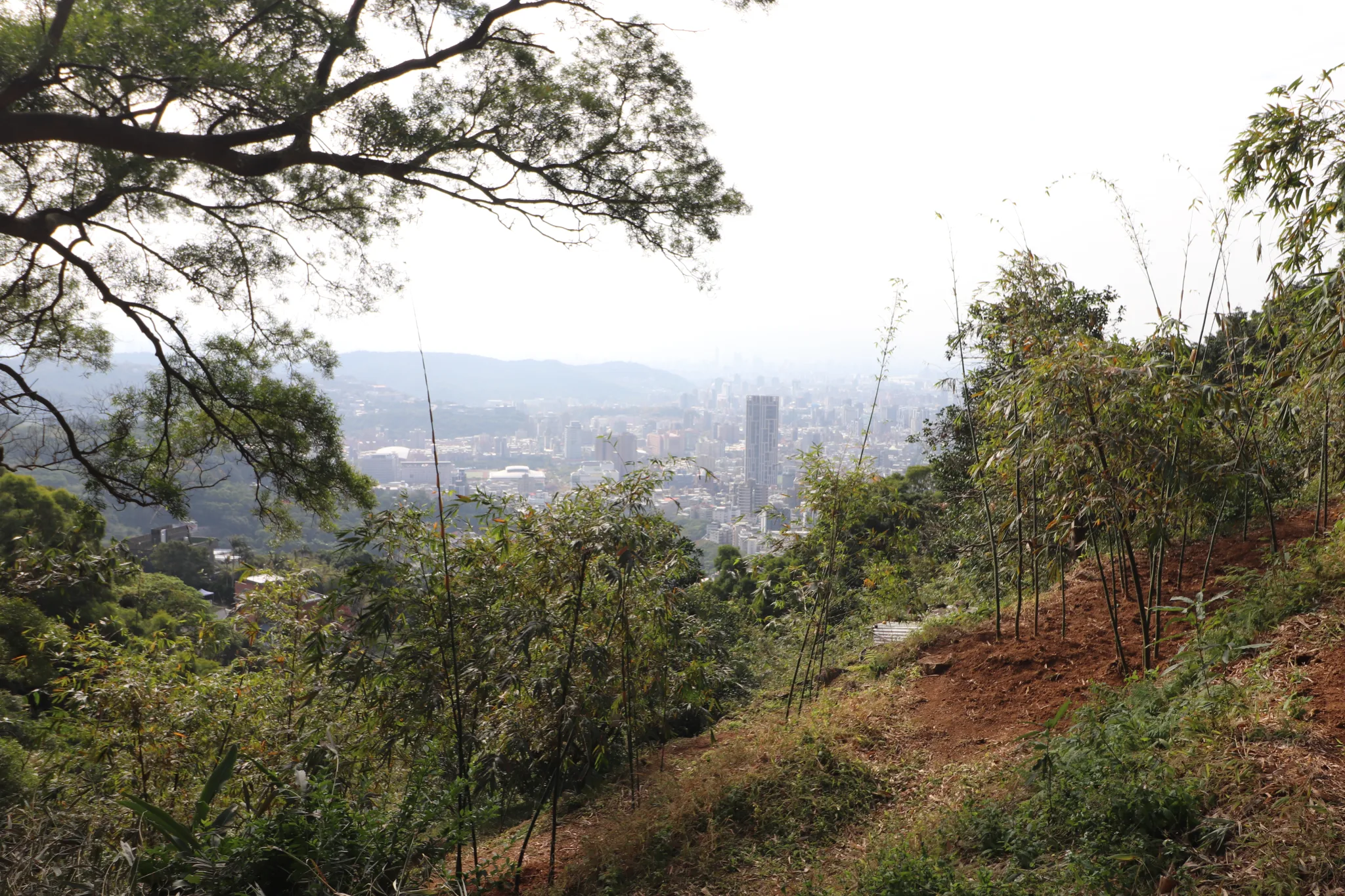
You can get a decent view of Tianmu and Beitou from up here.
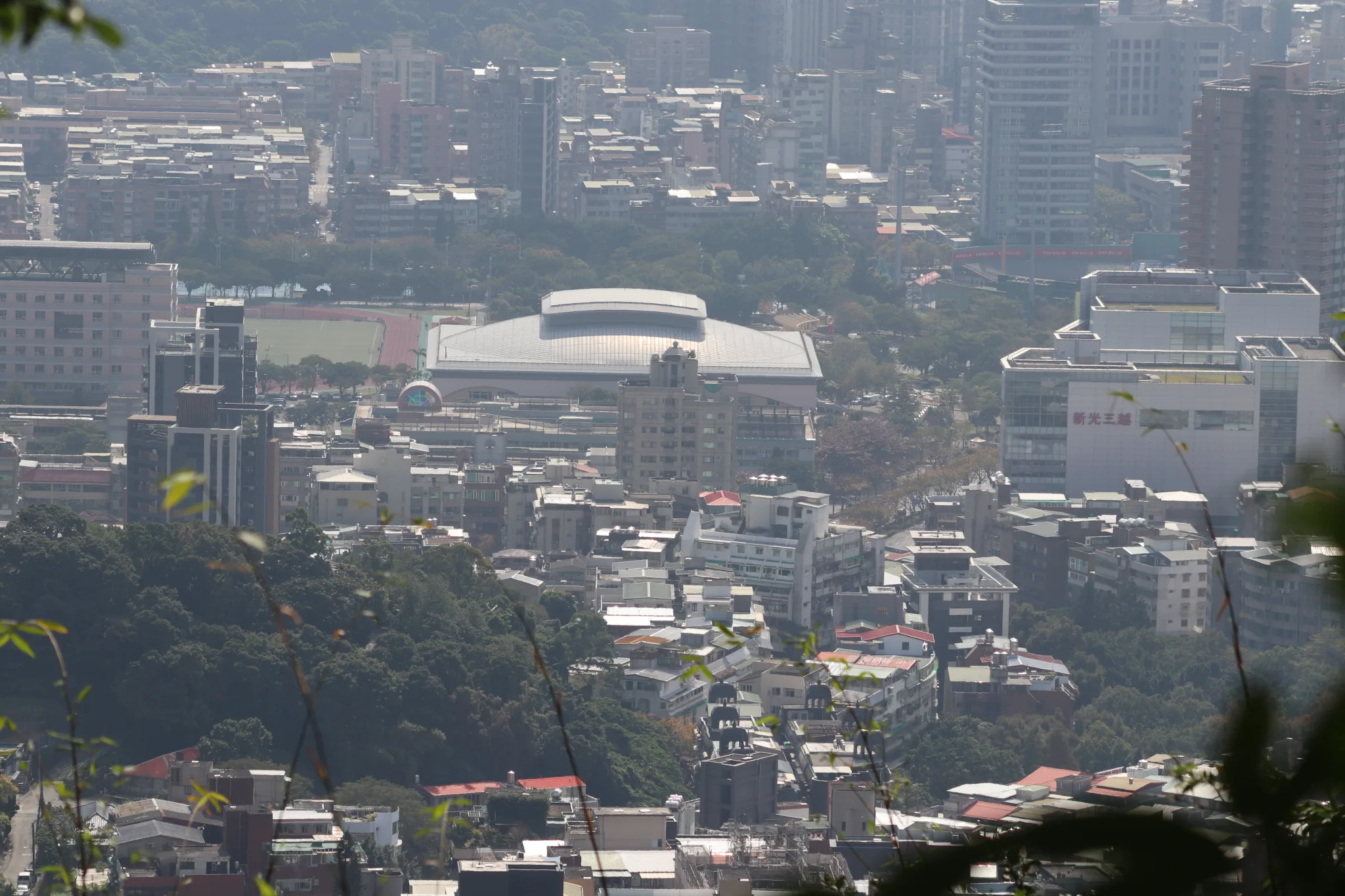
Looking back down on downtown Tianmu.
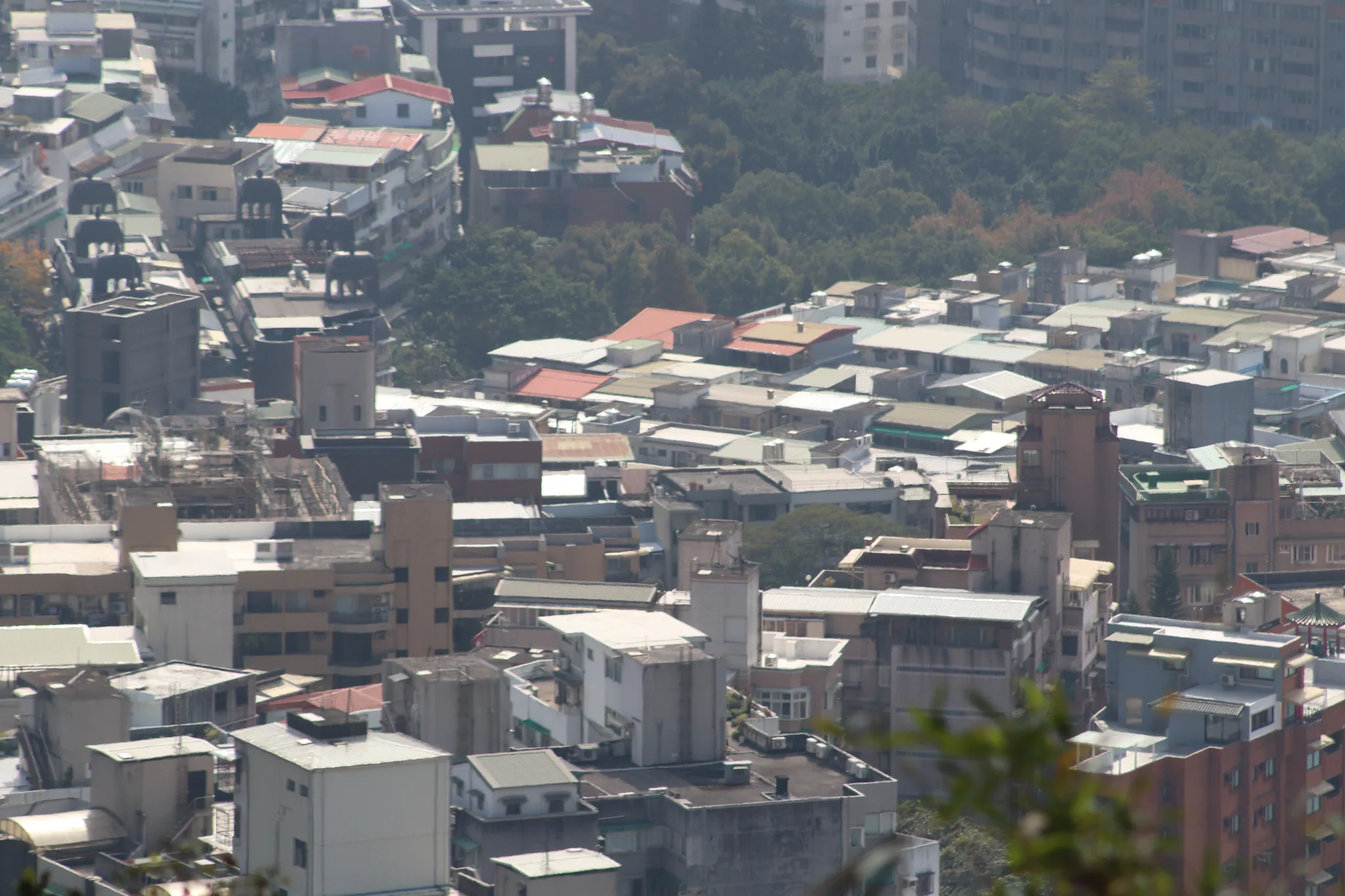
Tianmu skyline.
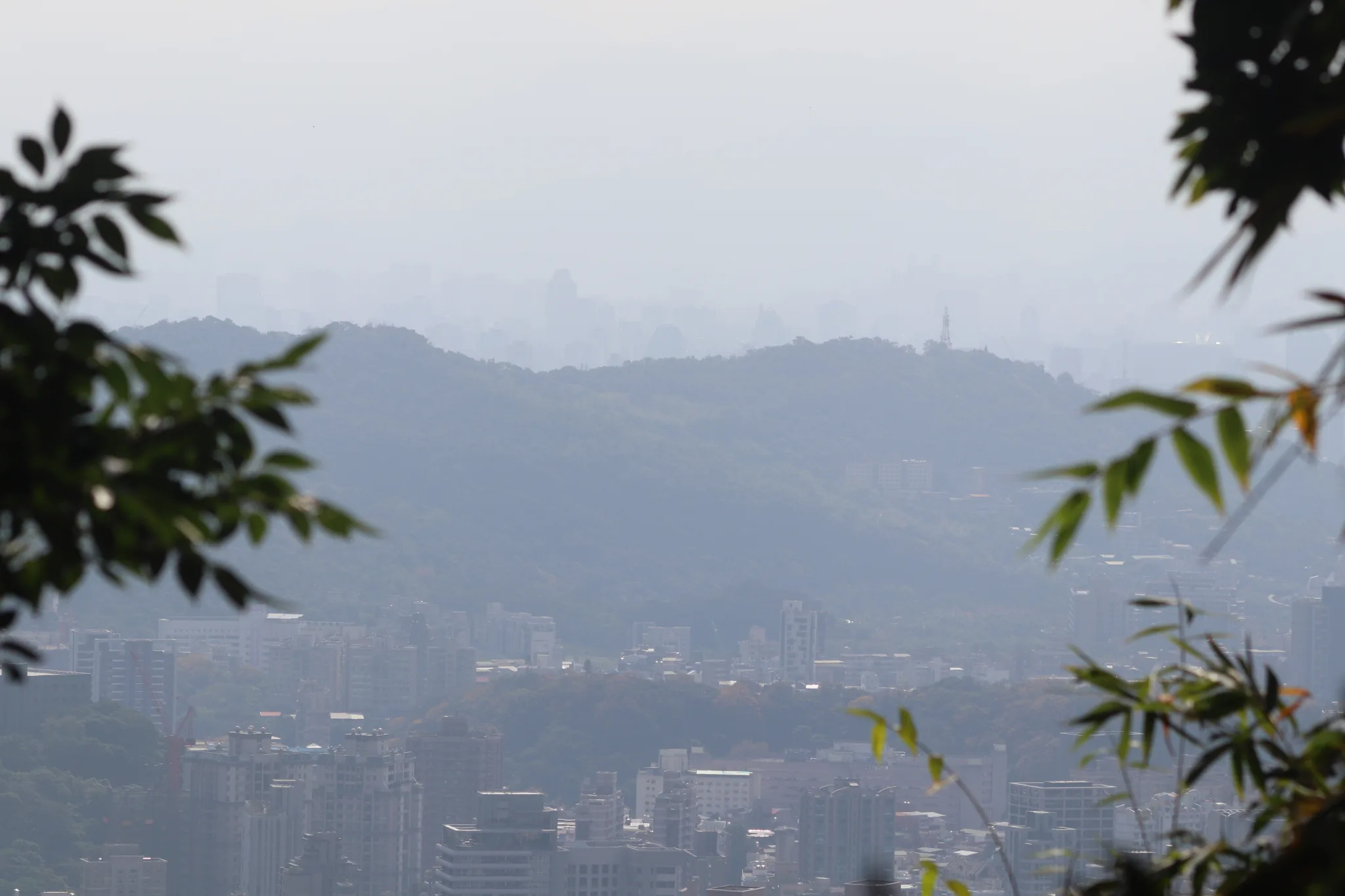
Hazy view of Taipei in the distance.
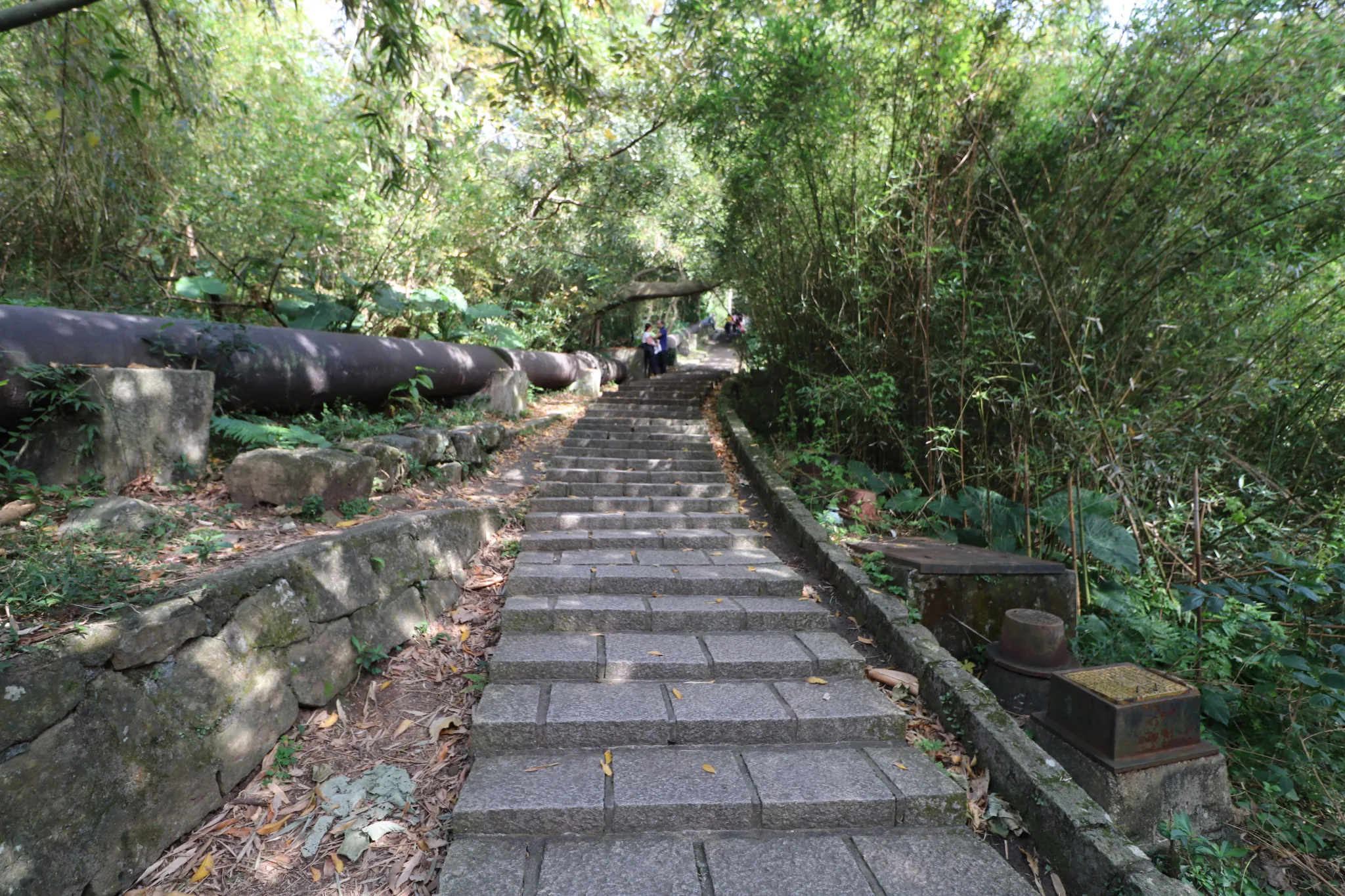
Here the trail meets up with a gigantic water pipe.
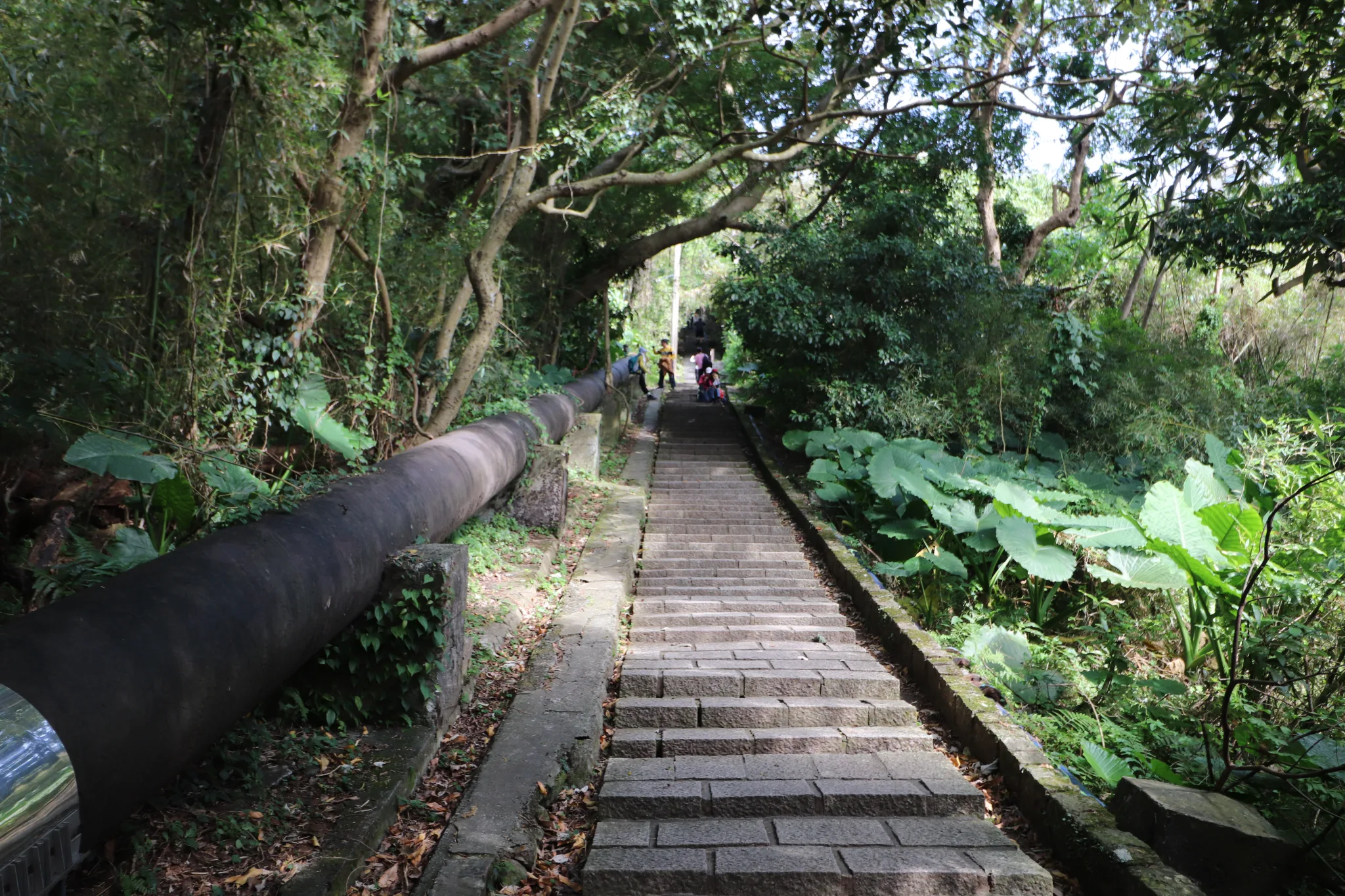
View looking up the trail next to the huge water pipe.
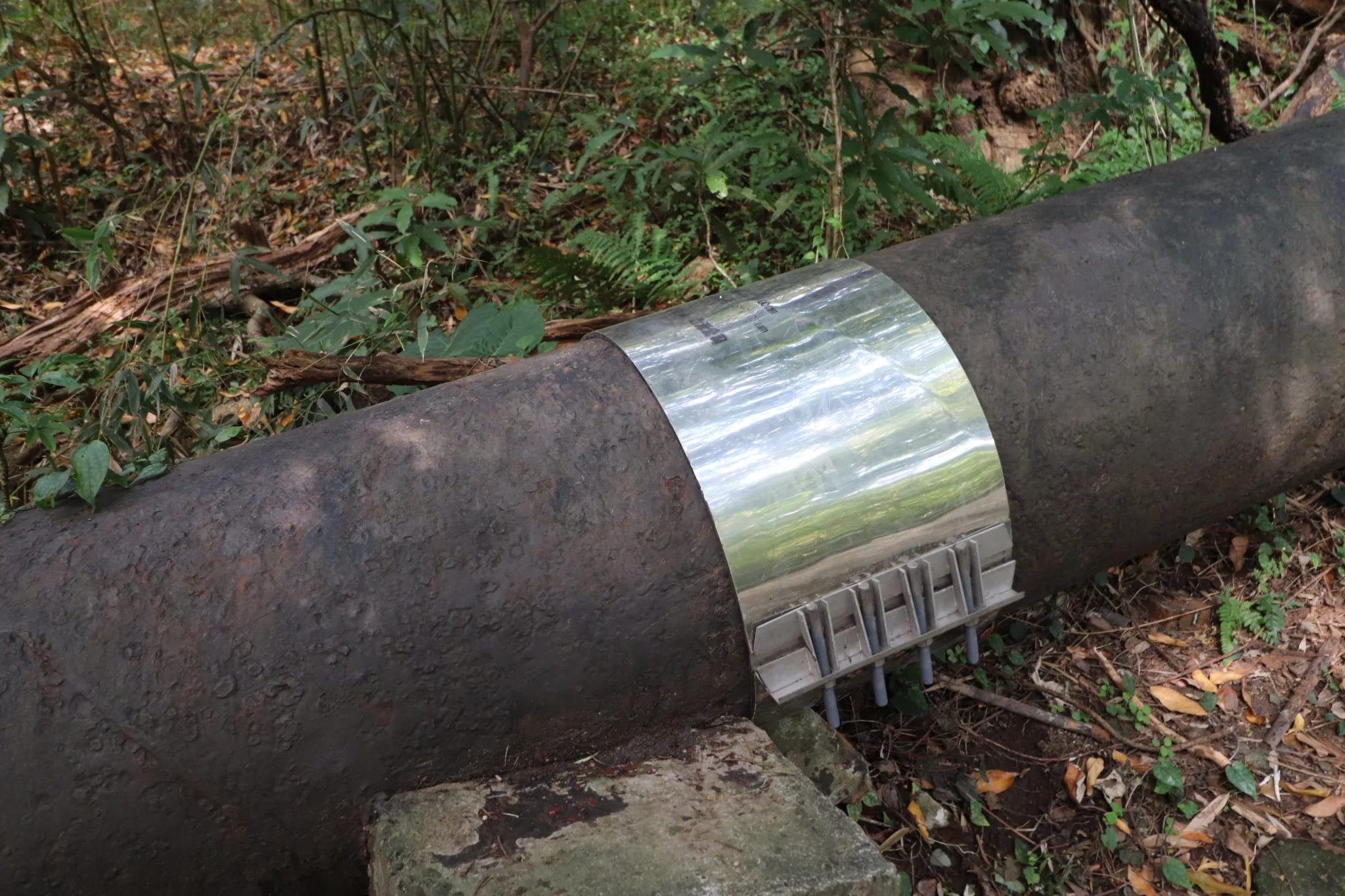
I guess the pipe had a leak here.
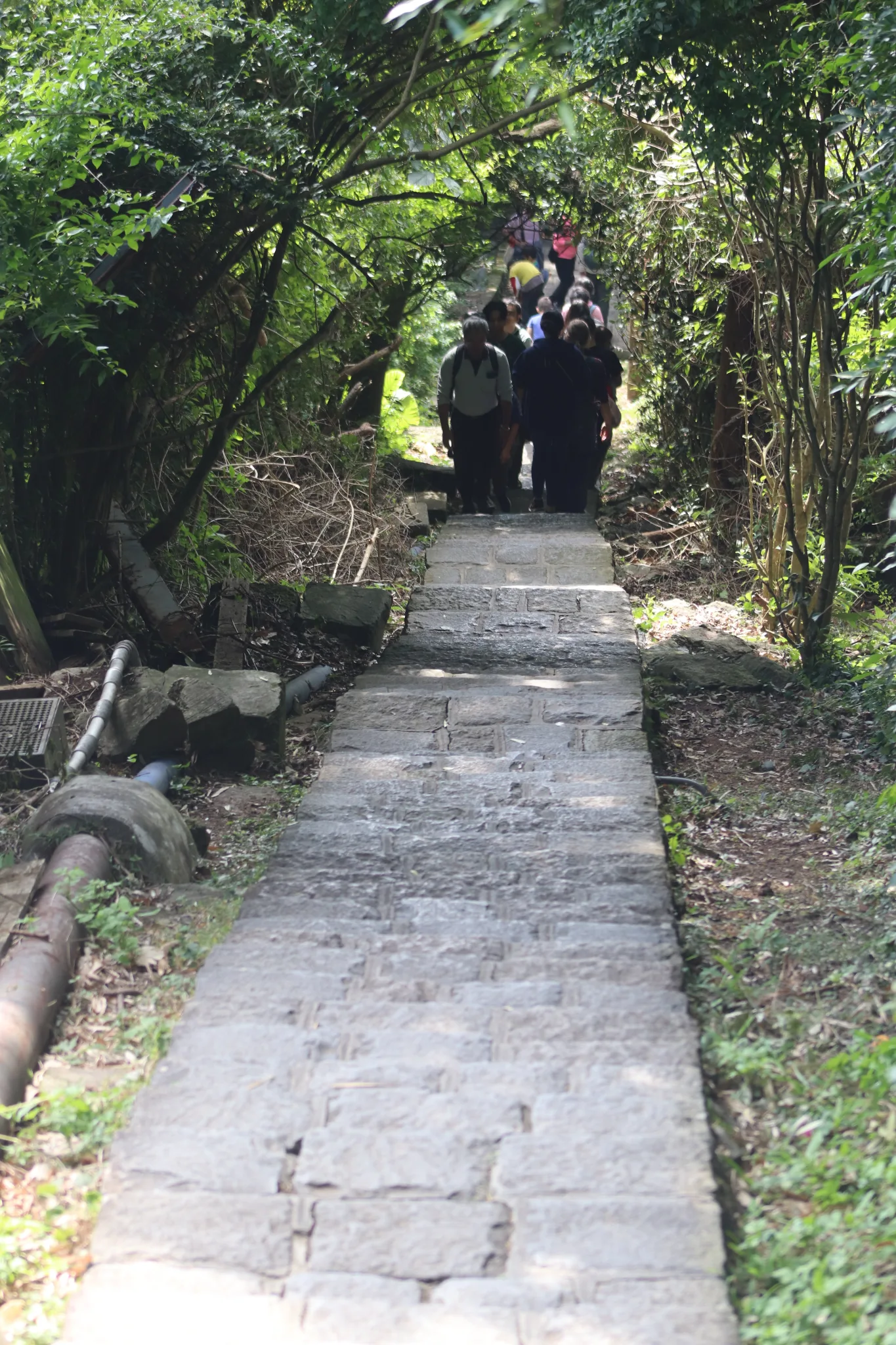
View looking down the trail.
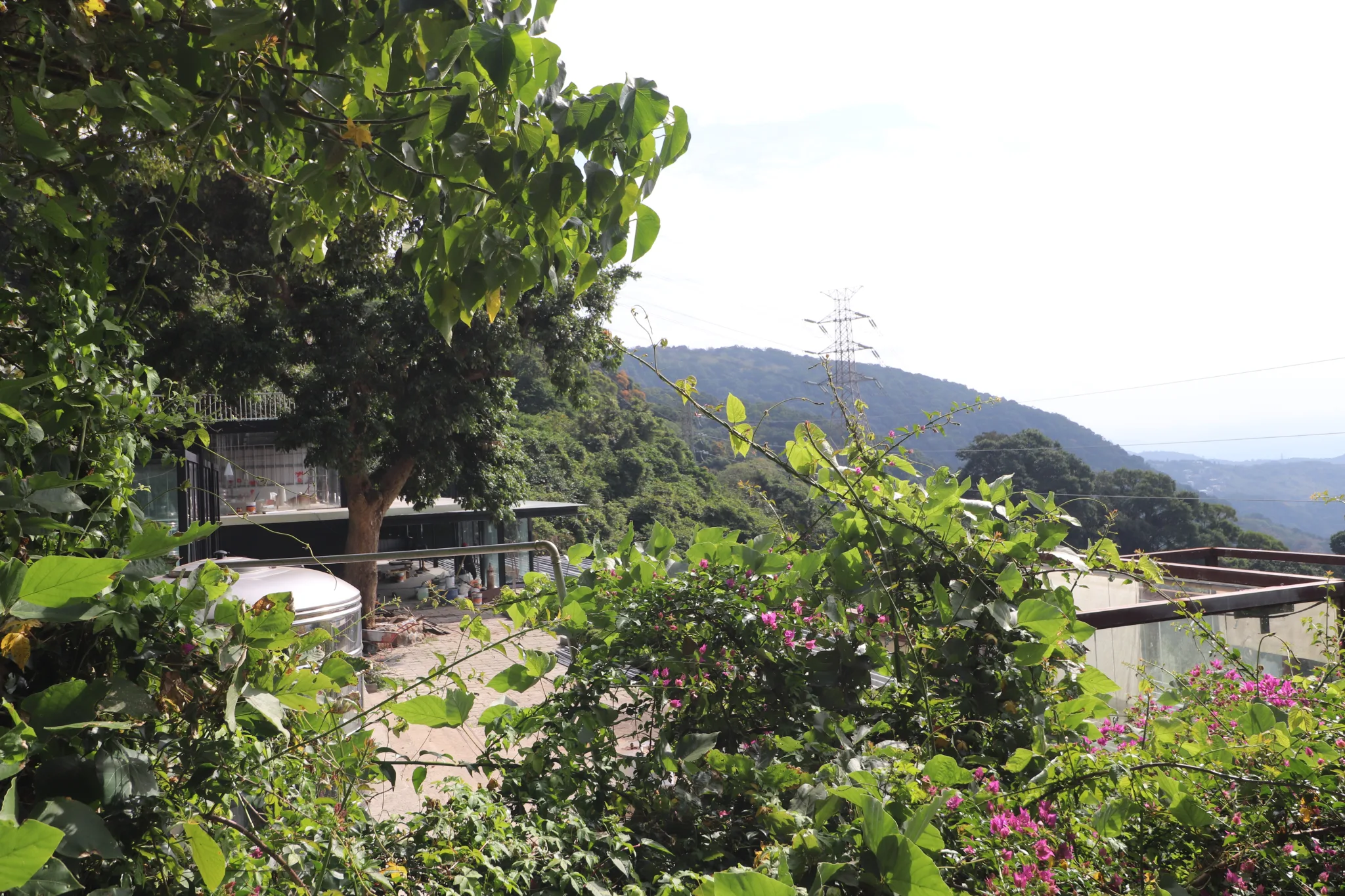
After that section, the trail flattens out and there is a rest area and some nice views.
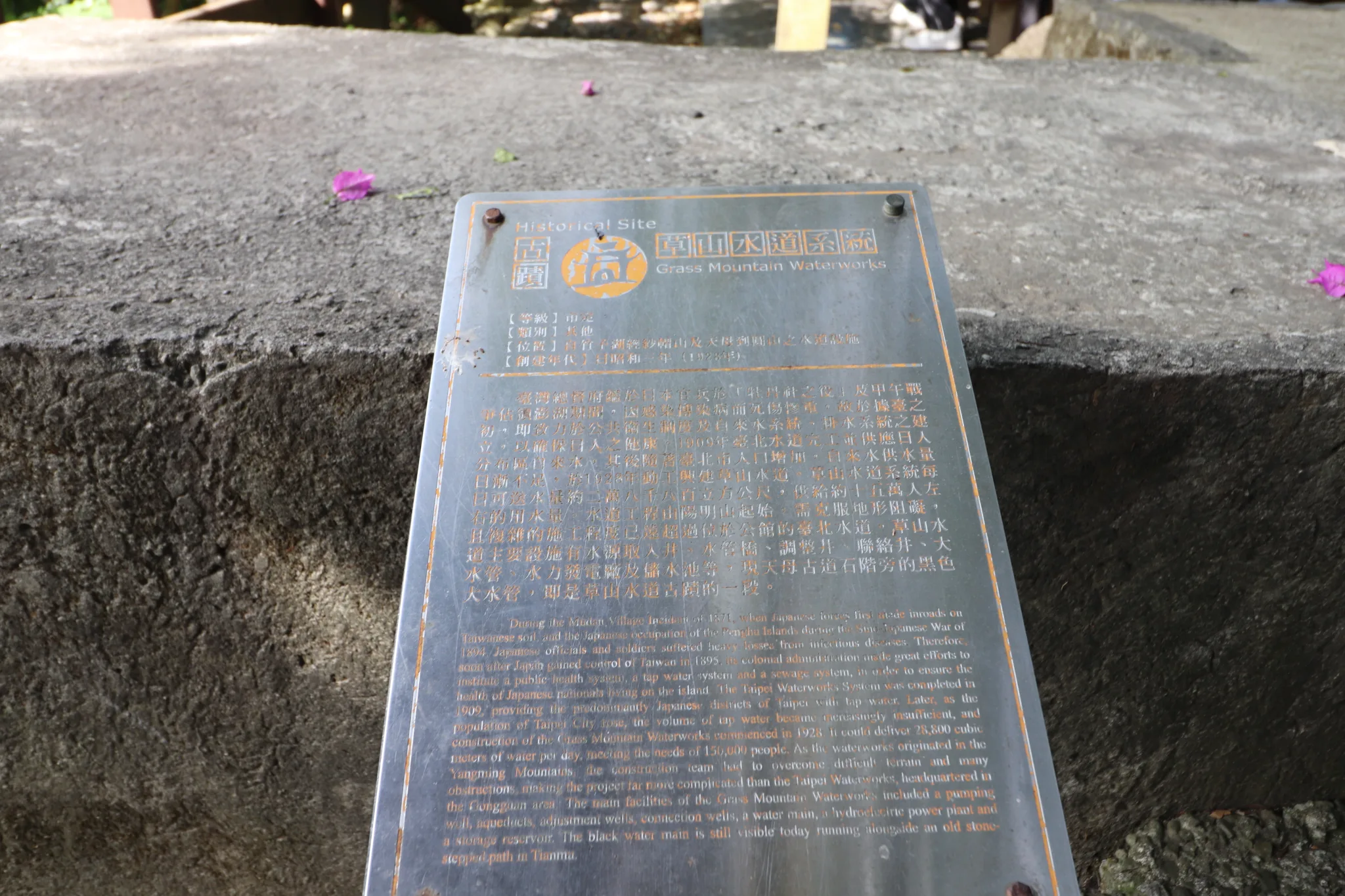
Grass Mountain Waterworks
During the Mudan Village Incident of 1871, when Japanese forces first made inroads on Taiwanese soil, and the subsequent occupation of the Penghu Islands during the Sino-Japanese War of 1894, Japanese officials and soldiers suffered heavy losses from infectious diseases. Therefore, soon after Japan gained control of Taiwan in 1895, its colonial administration made great efforts to construct a public health system, a tap water system and a sewage system, in order to ensure the health of Japanese nationals living on the island.
The Taipei Waterworks System was completed in 1909, providing the predominantly Japanese districts of Taipei with tap water. Later, as the population of Taipei city rose, the volume of tap water became increasingly insufficient, and construction of the Grass Mountain Waterworks commenced in 1928. It could deliver 28,800 cubic meters of water per day, meeting the needs of 150,000 people.
As the waterworks originated in the Yangmingshan Mountains, the construction team had to overcome difficult terrain and many obstructions, making the project far more complicated than the Taipei Waterworks located in the downtown area. The main facilities of the Grass Mountain Waterworks include a pumping well, aqueducts, adjustment wells, collection wells, a water main, a hydroelectric power plant and a storage reservoir. The black water main is still visible today running alongside an old stone-stepped path in Tianmu.
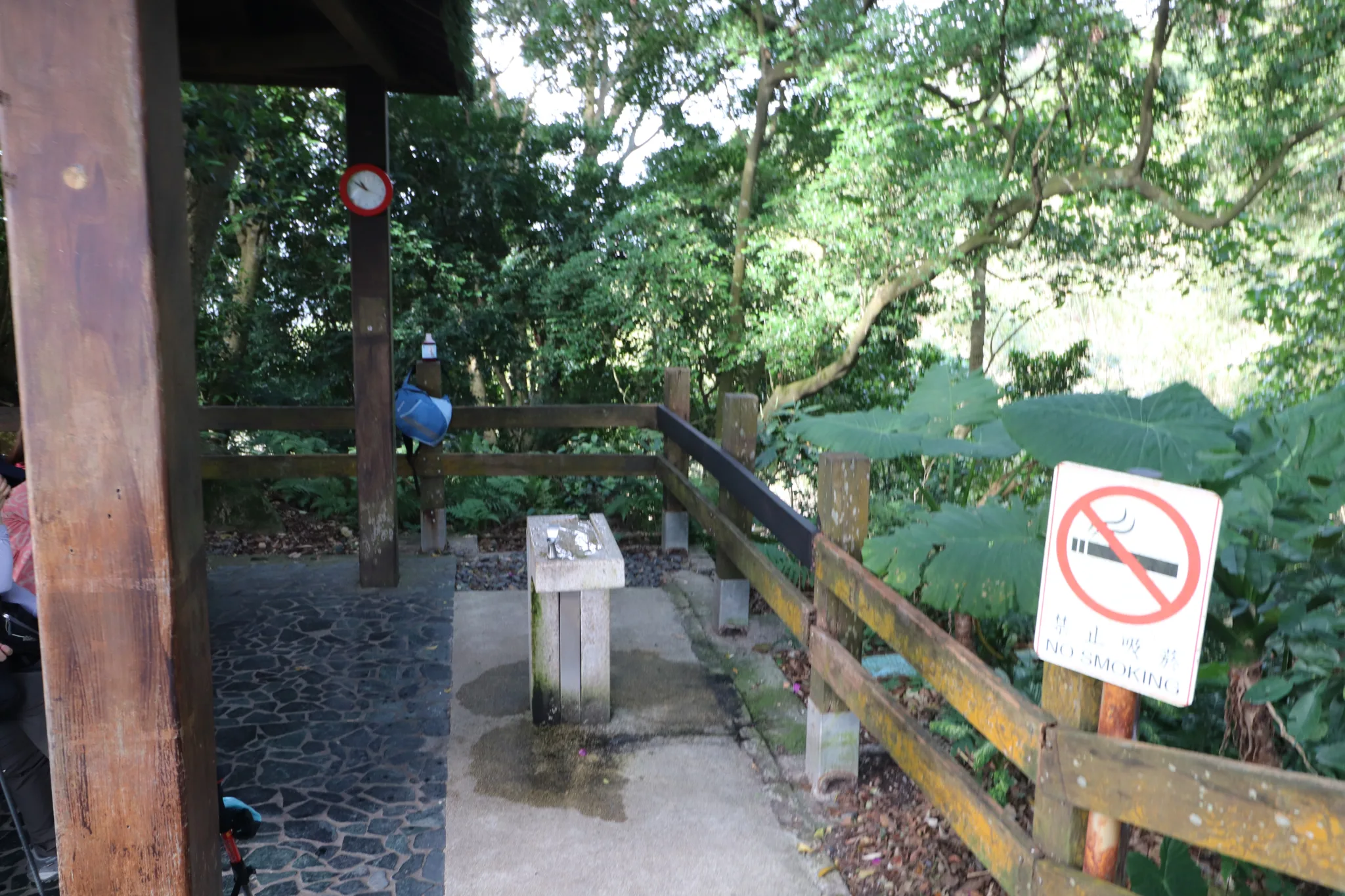
There is also a drinking fountain here and a pavilion.
View looking back from the pavilion.
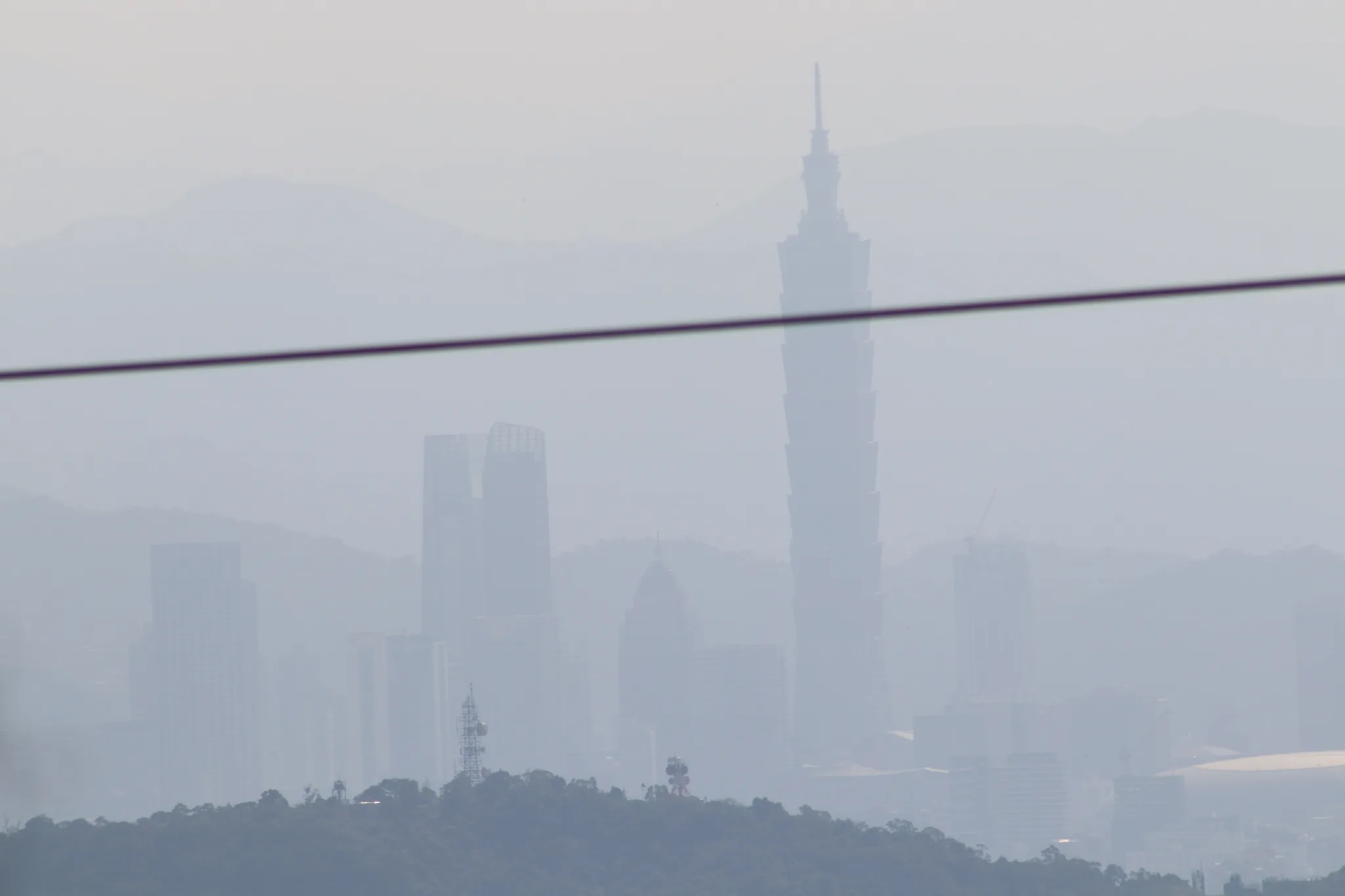
View of Xinyi District through the smog.
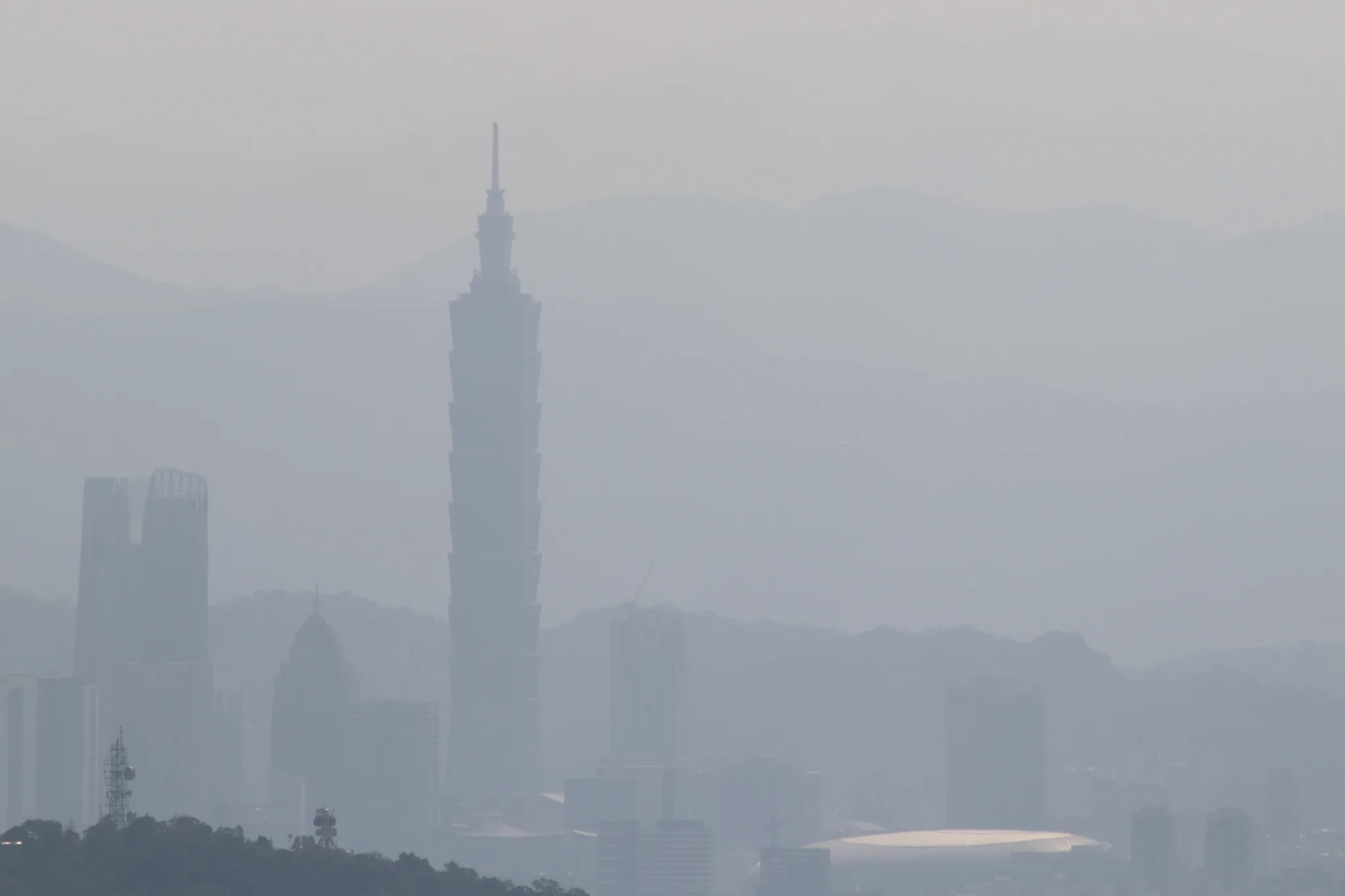
Another view of the Taipei 101.
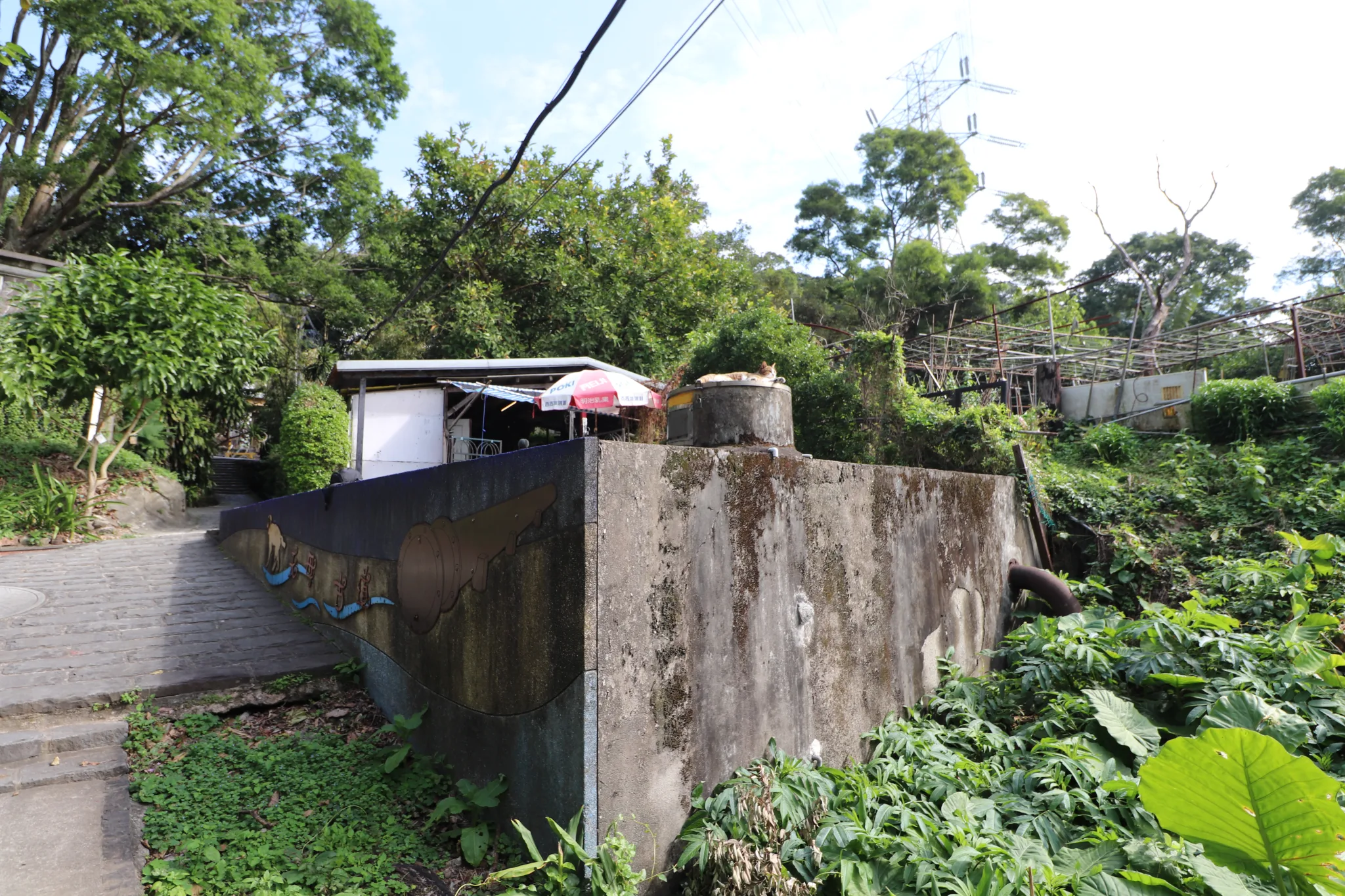
The trail then flattens out at this area.
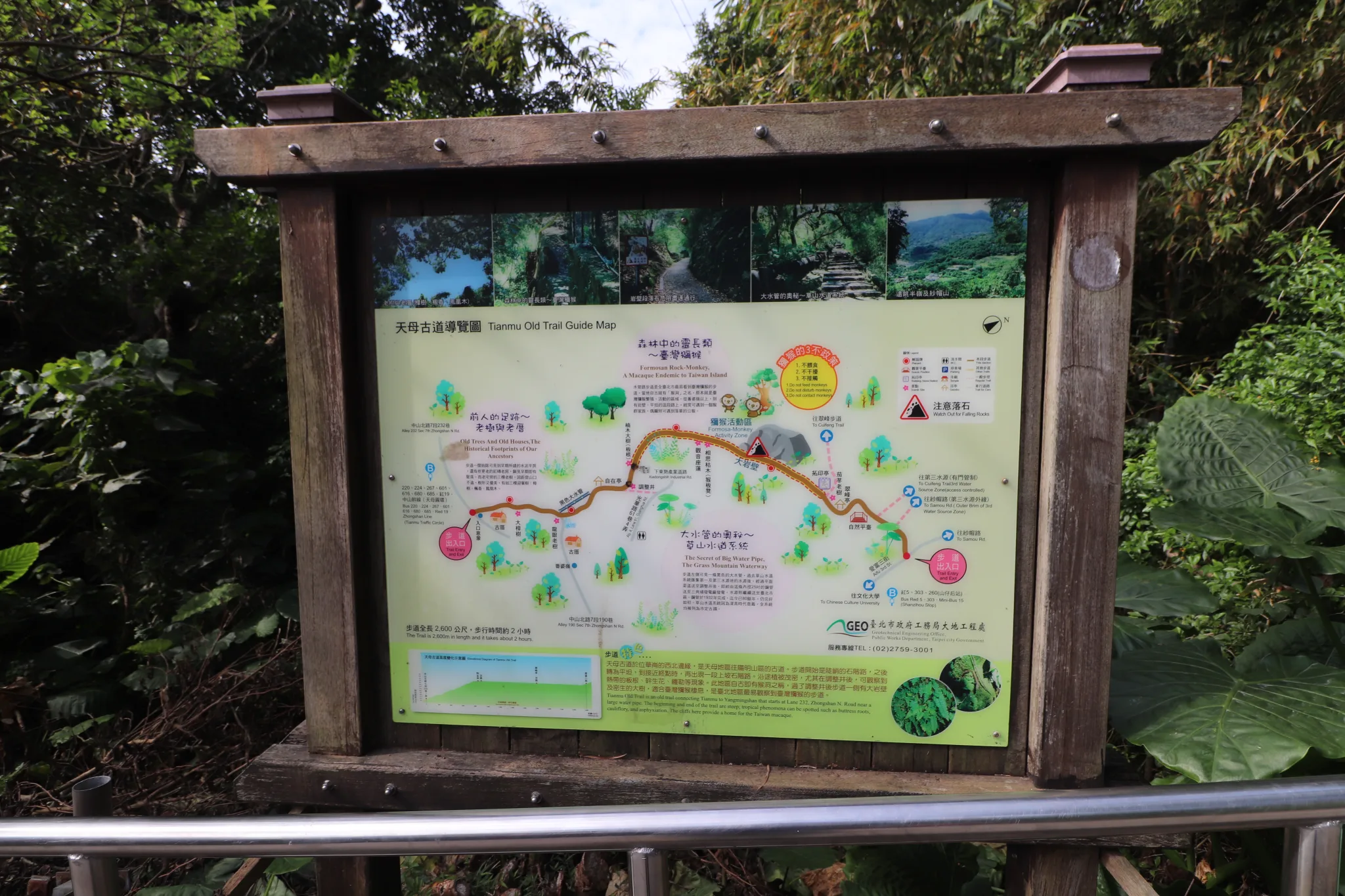
Another map of the trail.
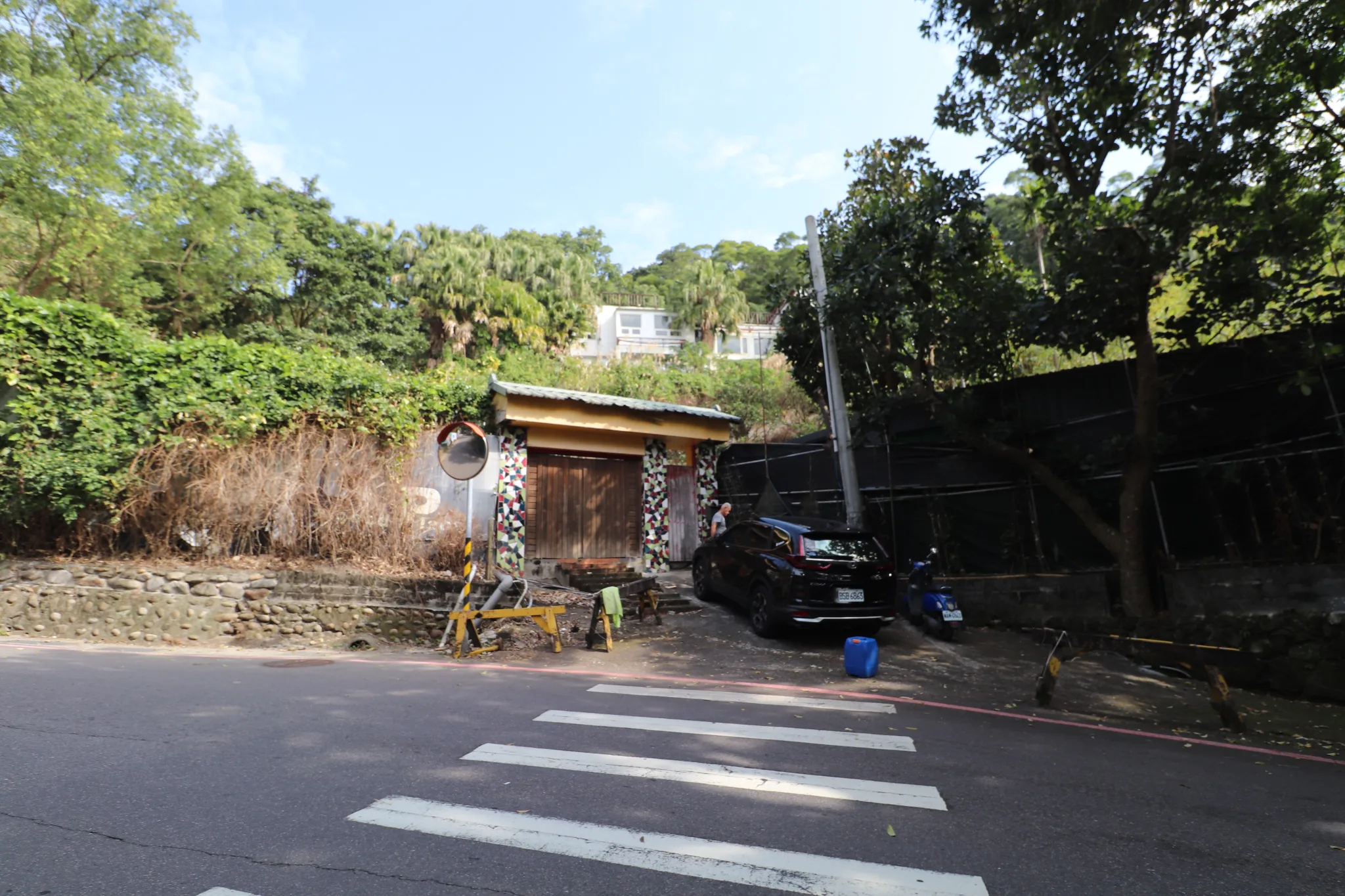
If you continue up this road, it will take you to China Cultural University.
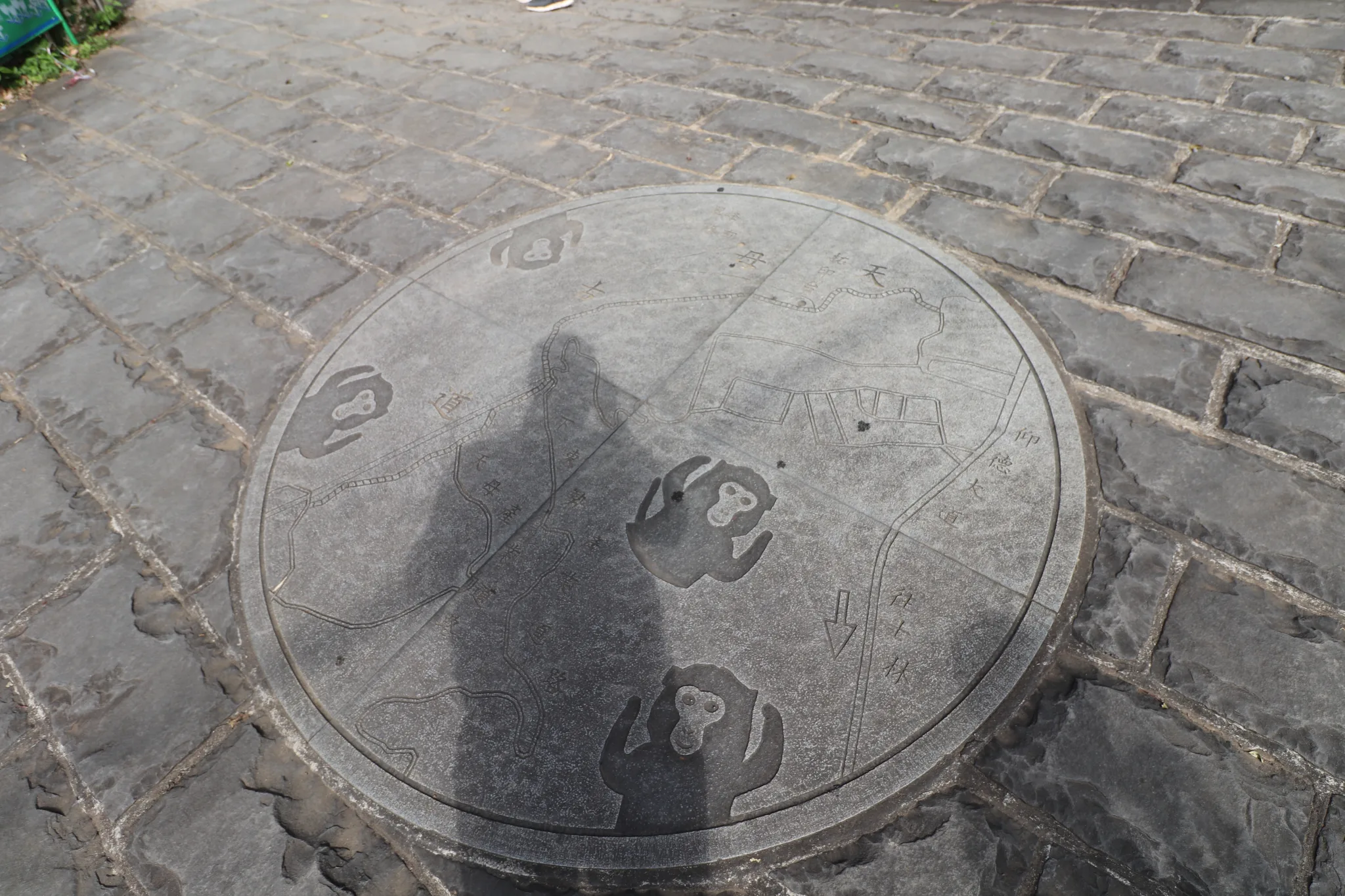
Monkey sewer cap.
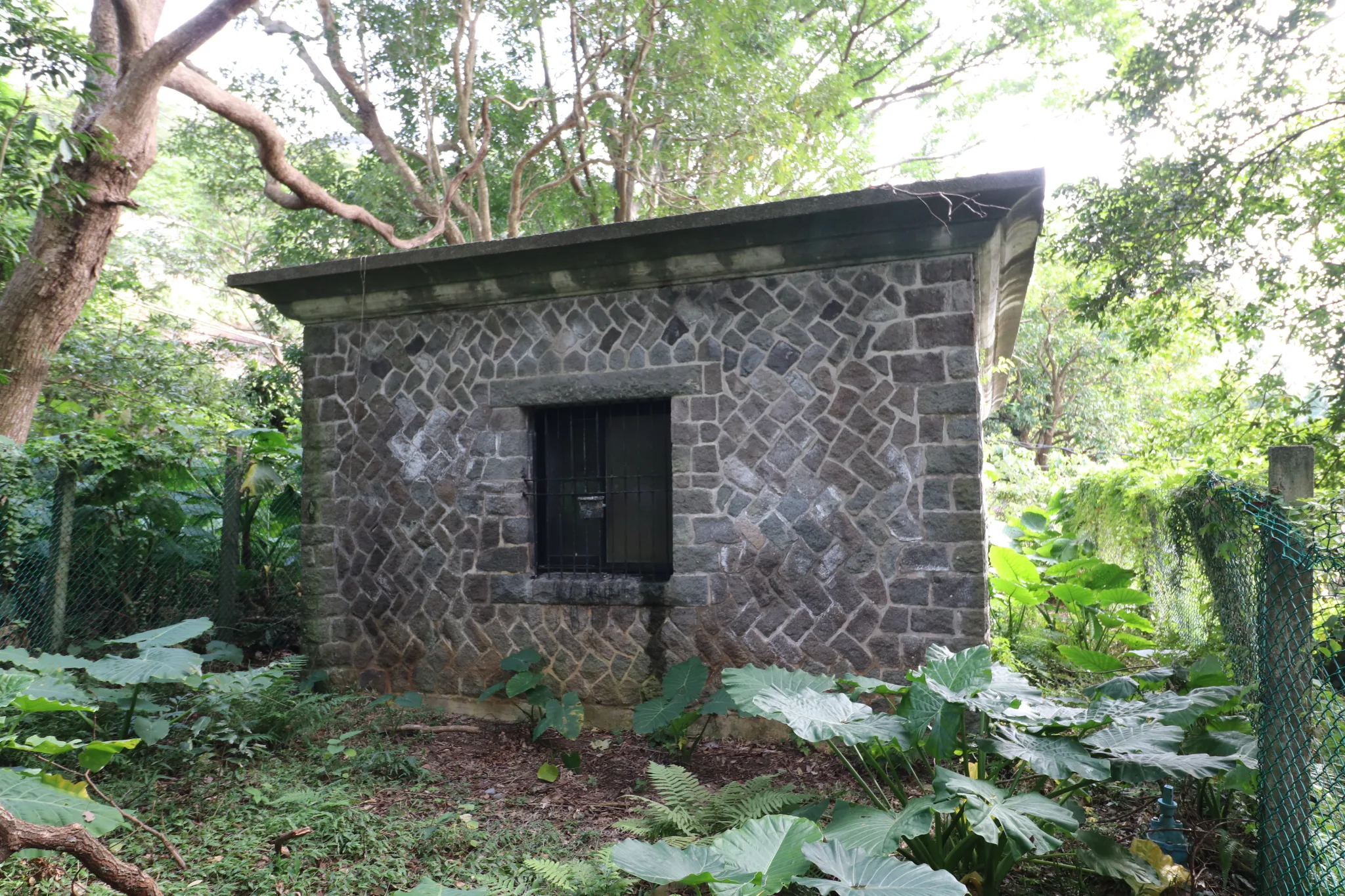
This is the old water station built by the Japanese in the early 1900s.
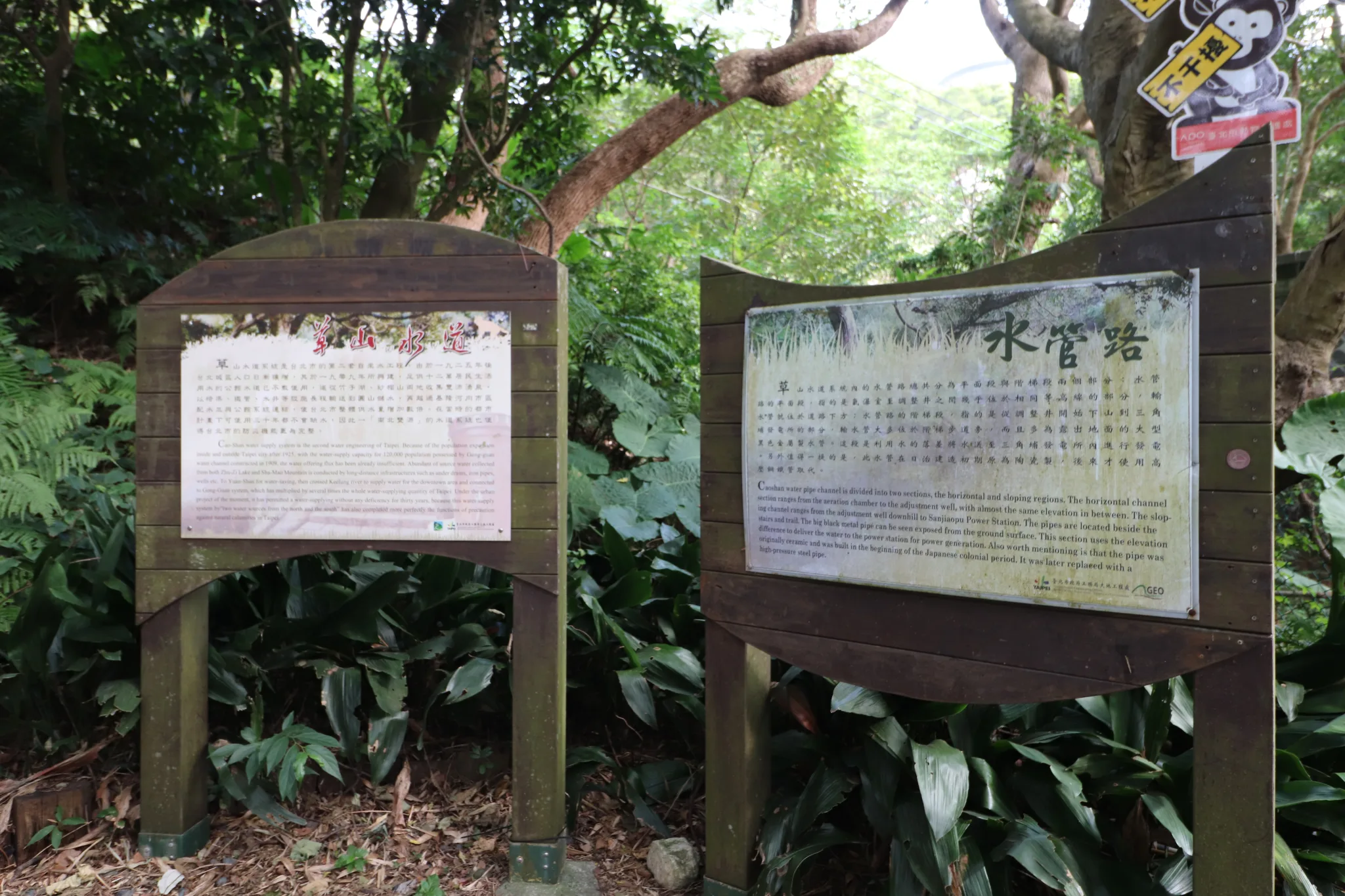
Left Sign – Grass Mountain Waterworks
Grass Mountain waterworks is the second water engineering project of Taipei. Because of the population explosion and the insufficiency of the Taipei water supply system, the colonial government planned the construction of a new waterworks in 1928. The water was drawn from the Yangmingshan area and transported to the Taipei basin.
Due to the steep terrain and difficult construction conditions, the project was more complicated than the earlier Taipei waterworks. The system included water collection facilities, aqueducts, pipelines, and storage systems. It significantly improved the water supply capacity for the expanding population and played an important role in Taipei’s urban development.
Right Sign – Water Pipeline
Grass Mountain water channels are divided into two sections: horizontal and sloping regions. The horizontal channel runs straight from the aeration chamber to the adjustment well, with almost the same elevation throughout. The sloping channel begins from the adjustment well and slopes downward to the reservoir station.
The pipelines are located beside the steps and terrain and were partially exposed above ground. This design uses the elevation difference to deliver water to the power station for power generation. The pipeline was originally made of wood at the beginning of the Japanese colonial period and was later replaced with high-pressure steel pipes.
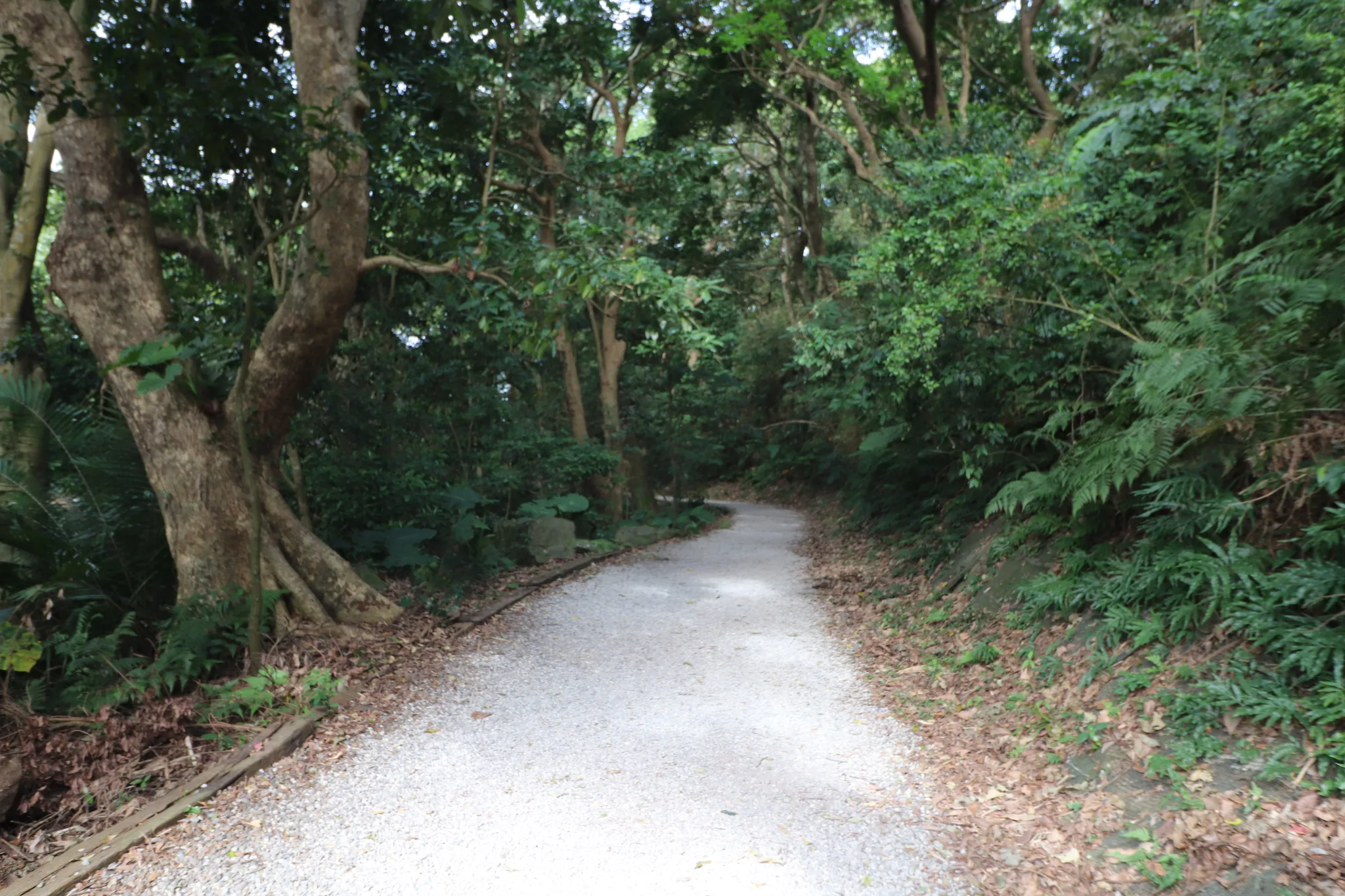
From here on out, the trail follows a mostly flat line along the ridge through a forest.
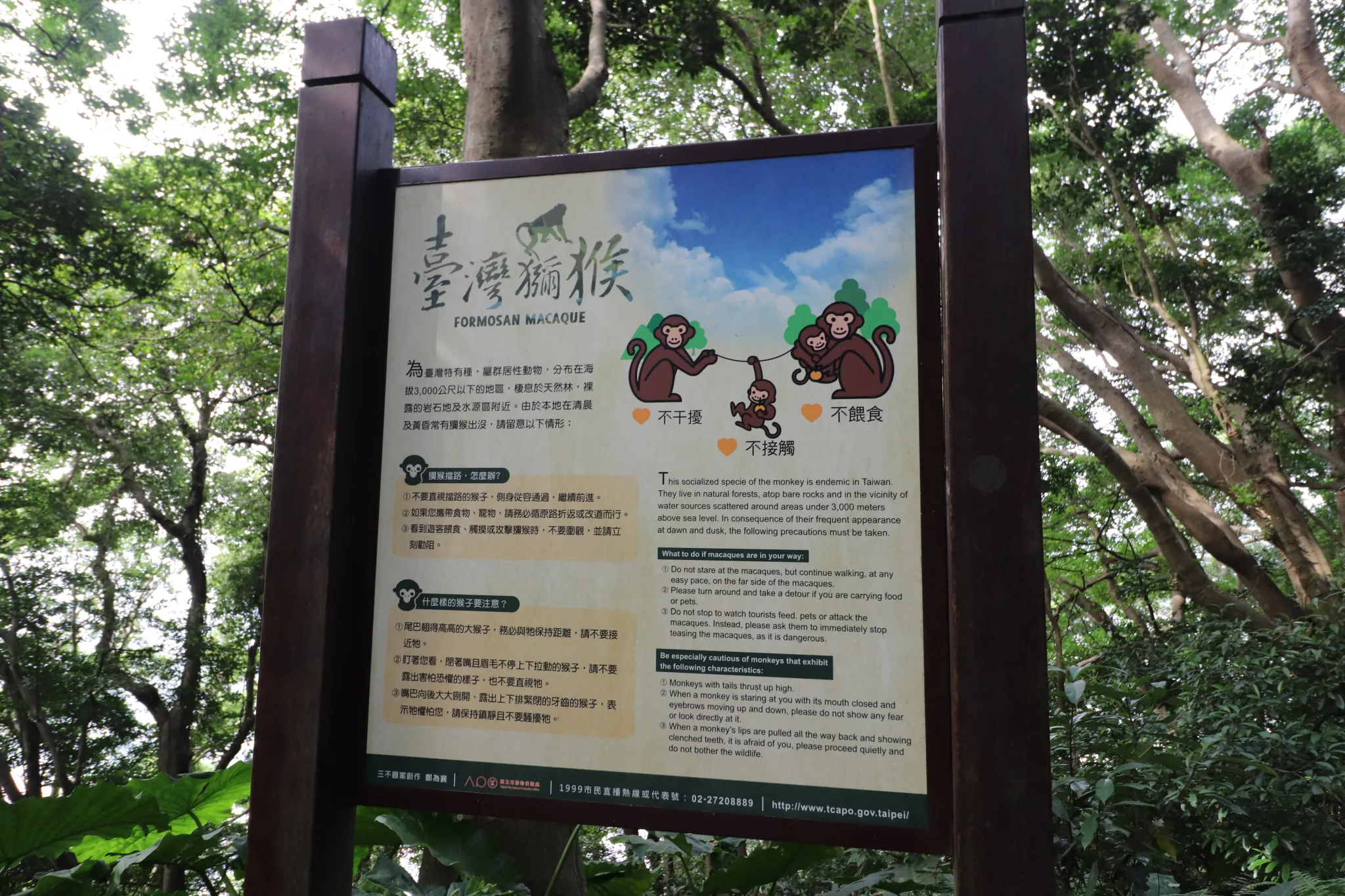
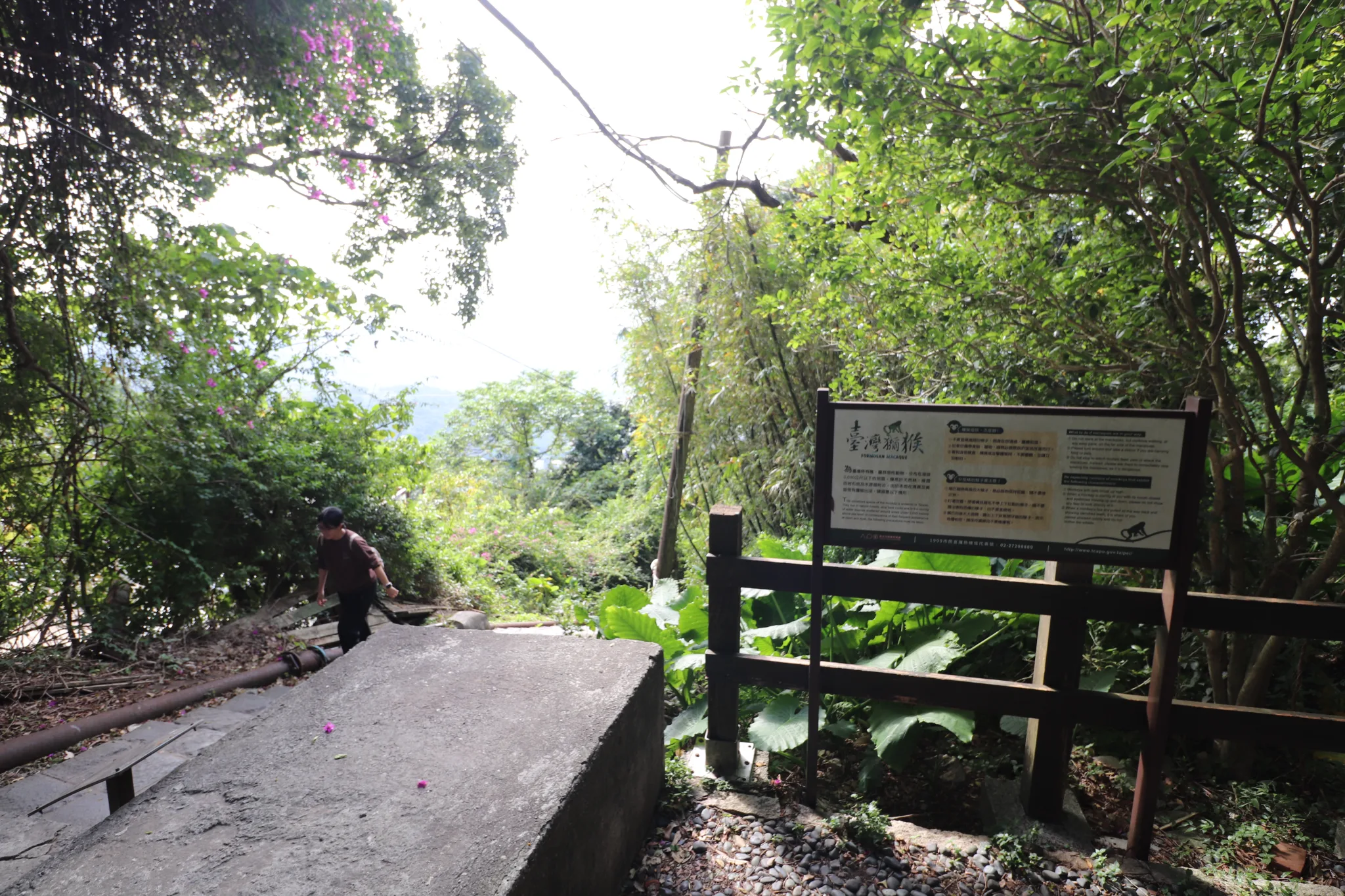
Formosan Macaque
This socialized species of monkey is endemic to Taiwan. They live in natural forests, atop bare rocks and in the vicinity of water sources scattered around areas under 3,000 meters above sea level. In consequence of their frequent appearance at dawn and dusk, the following precautions must be taken.
What to do if macaques are in your way: Do not stare at the macaques, but continue walking, at an easy pace, on the far side of the macaques. Please turn around and take a detour if you are carrying food or pets. Do not stop to watch tourists feed, pets or attack the macaques. Instead, please ask them to immediately stop teasing the macaques, as it is dangerous. Be especially cautious of monkeys that exhibit the following characteristics: Monkeys with tails thrust up high. When a monkey is staring at you with its mouth closed and eyebrows moving up and down, please do not show any fear or hostility at it. When a monkey’s lips are pulled all the way back and showing clenched teeth, it is afraid of you; please proceed quietly and do not bother the wildlife. Key reminders (icons on the sign): Do not disturb Do not feed Do not touch
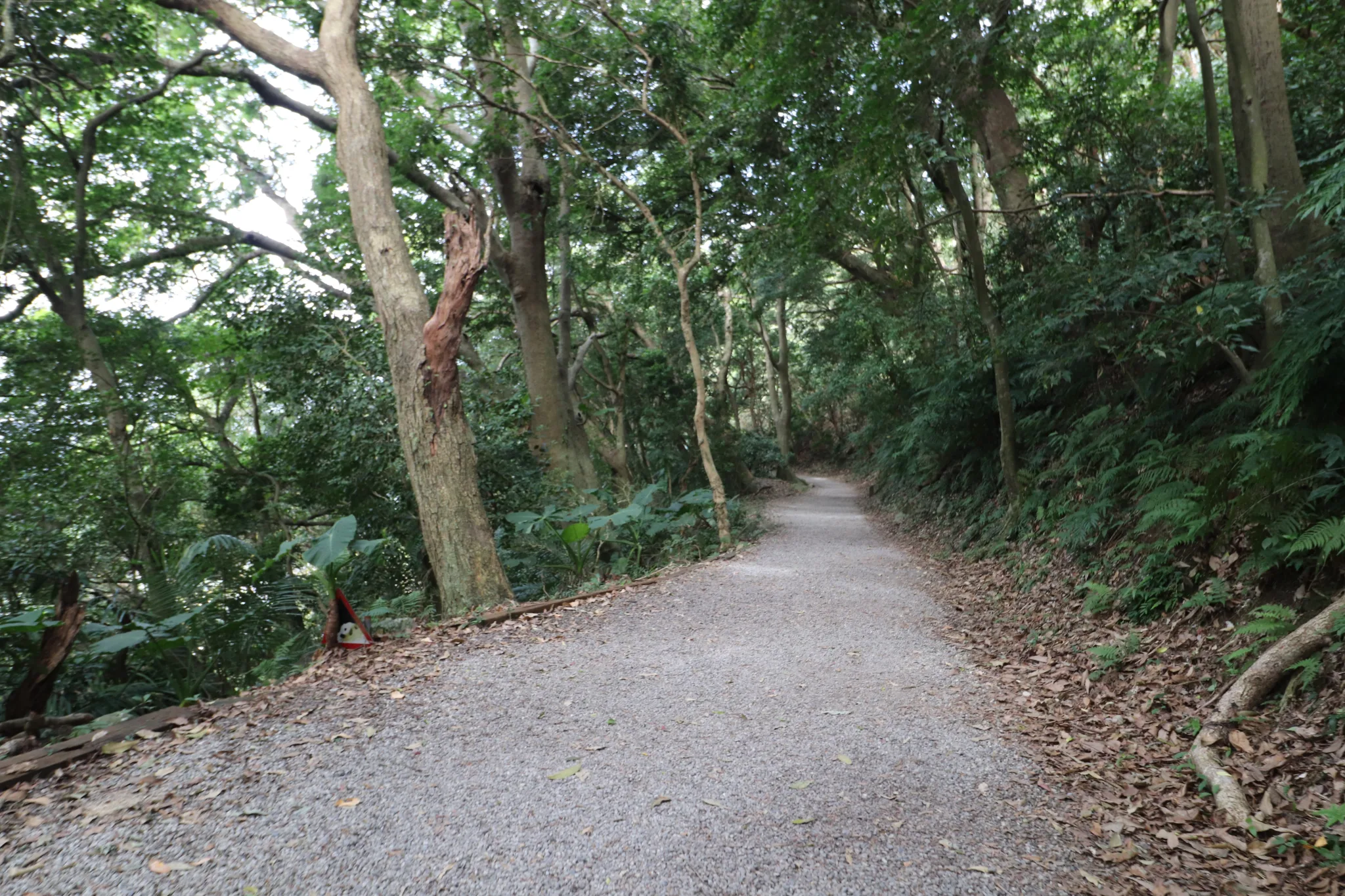
The trail continues onward through the forest here.
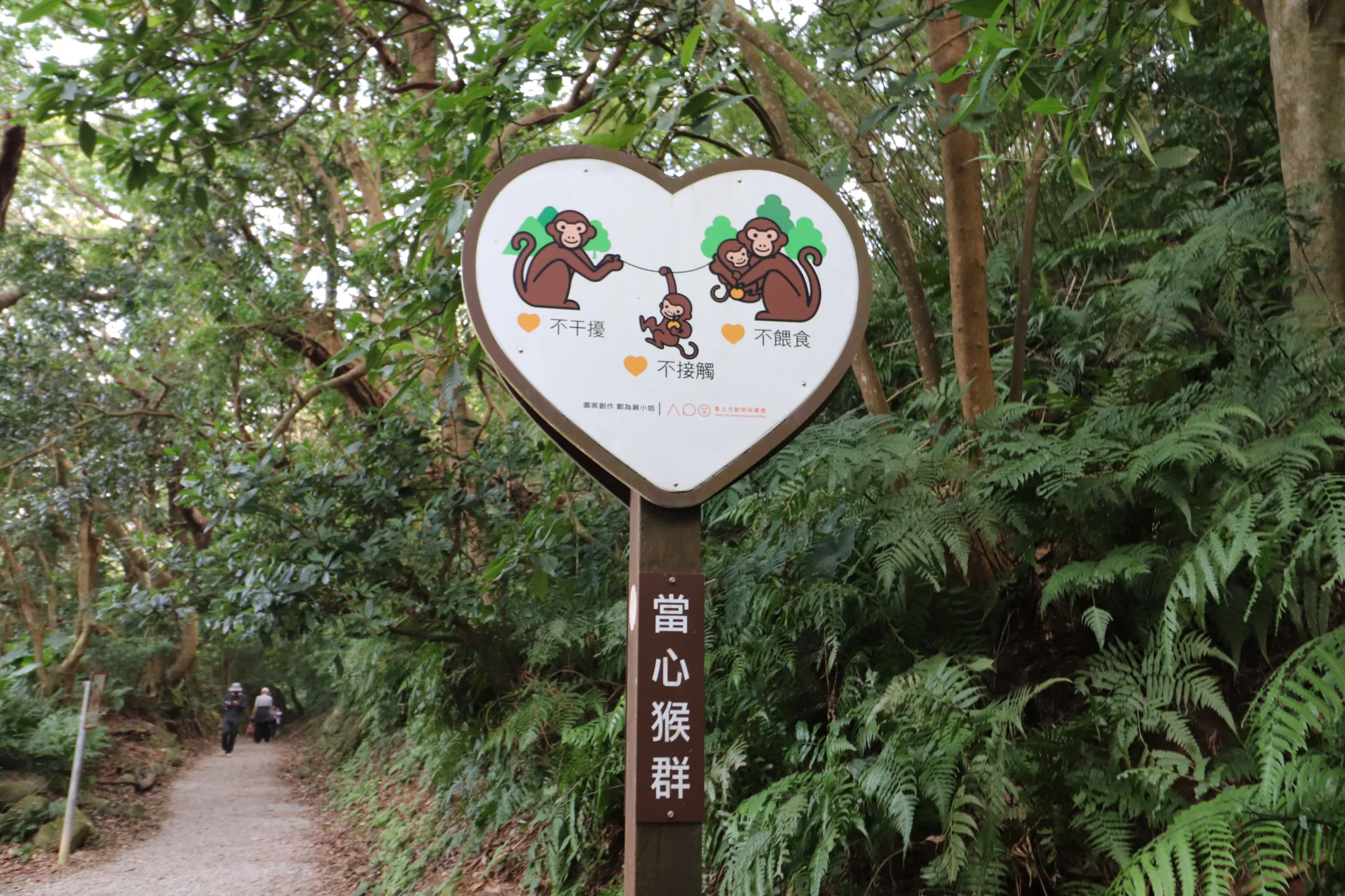
Don’t feed, touch, or harass the monkeys.
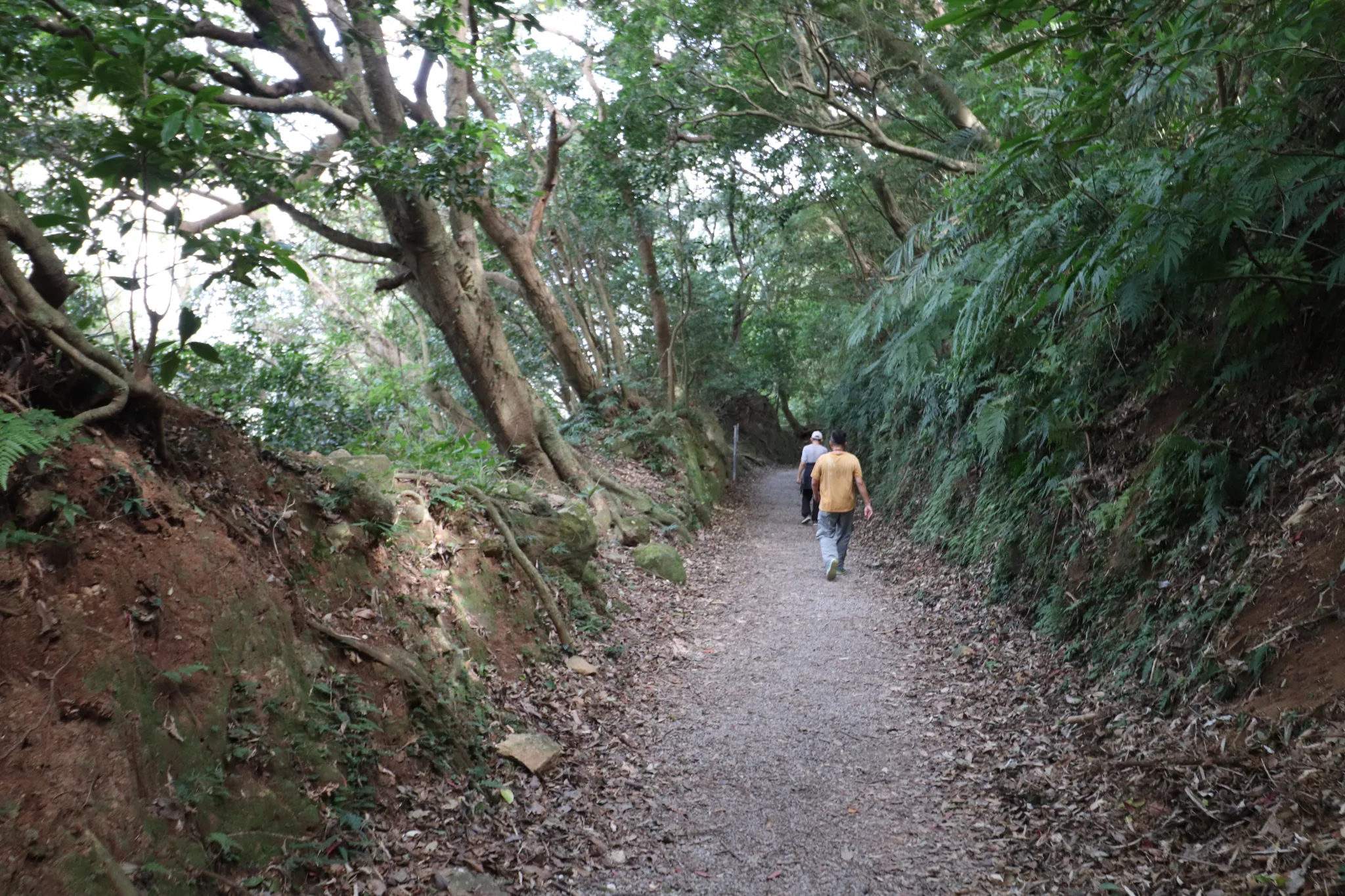
The trail kind of turns into a trench at some points.
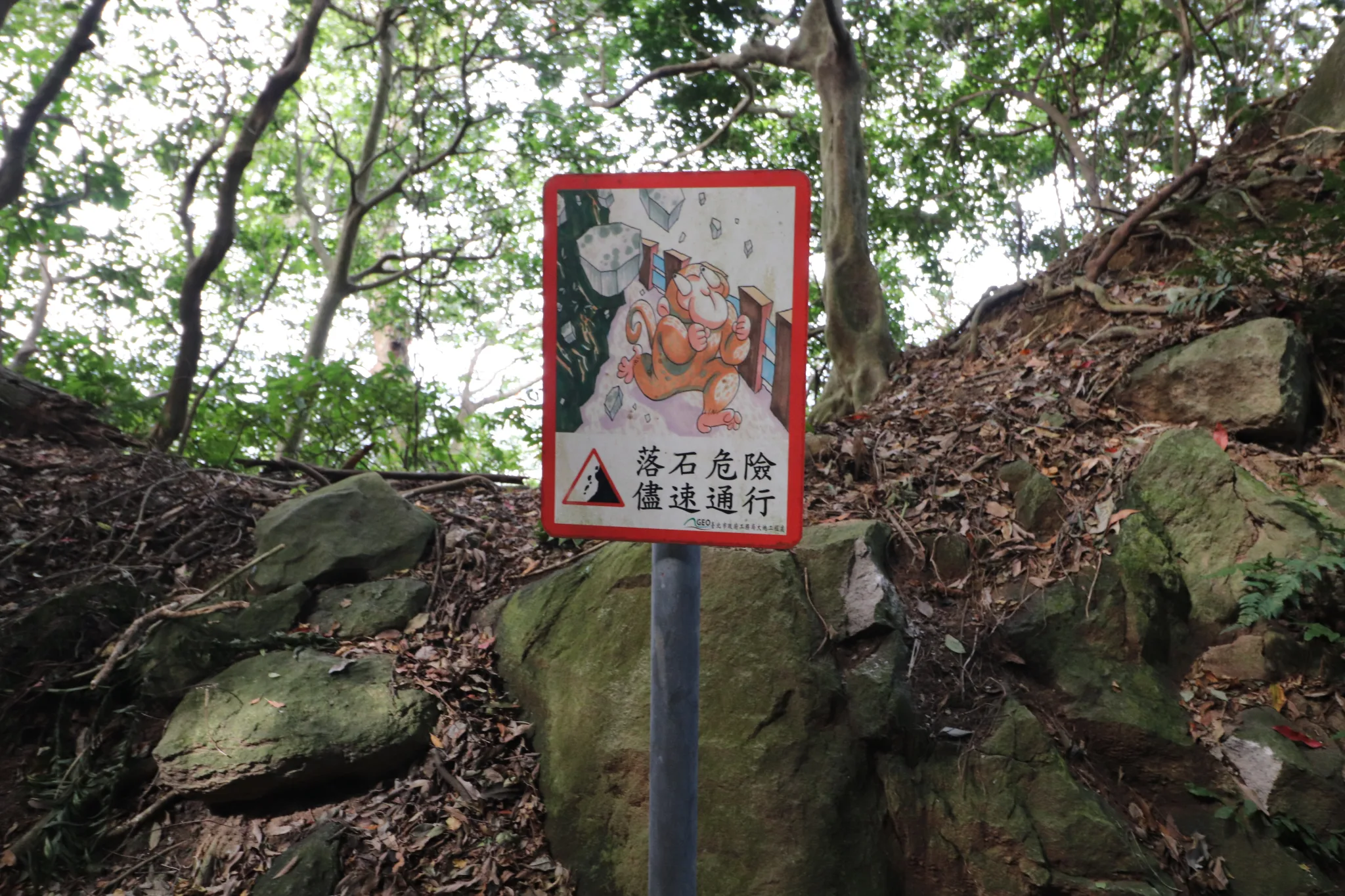
Beware of rock falls.
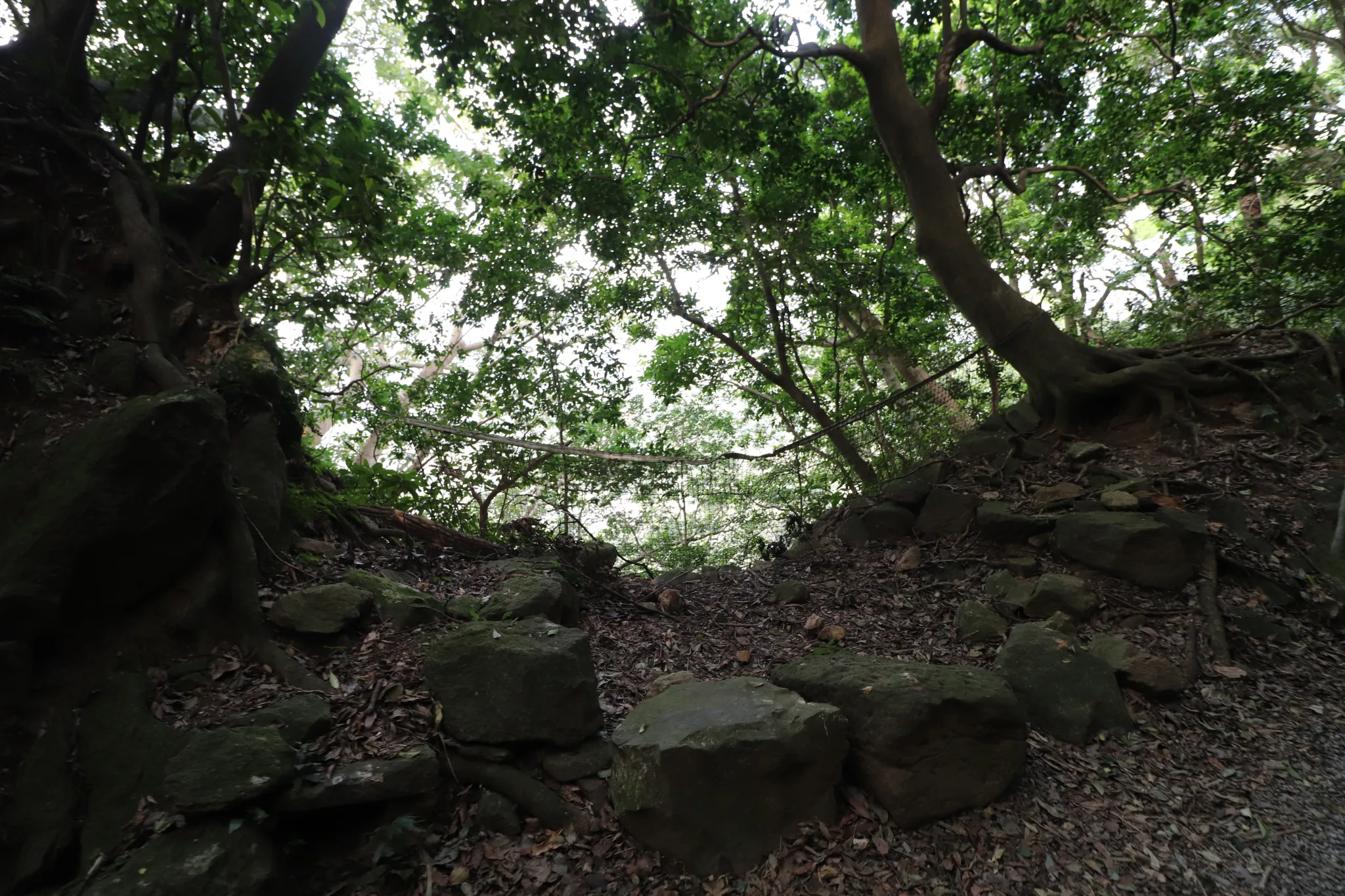
Someone put a tennis court net here to protect people?
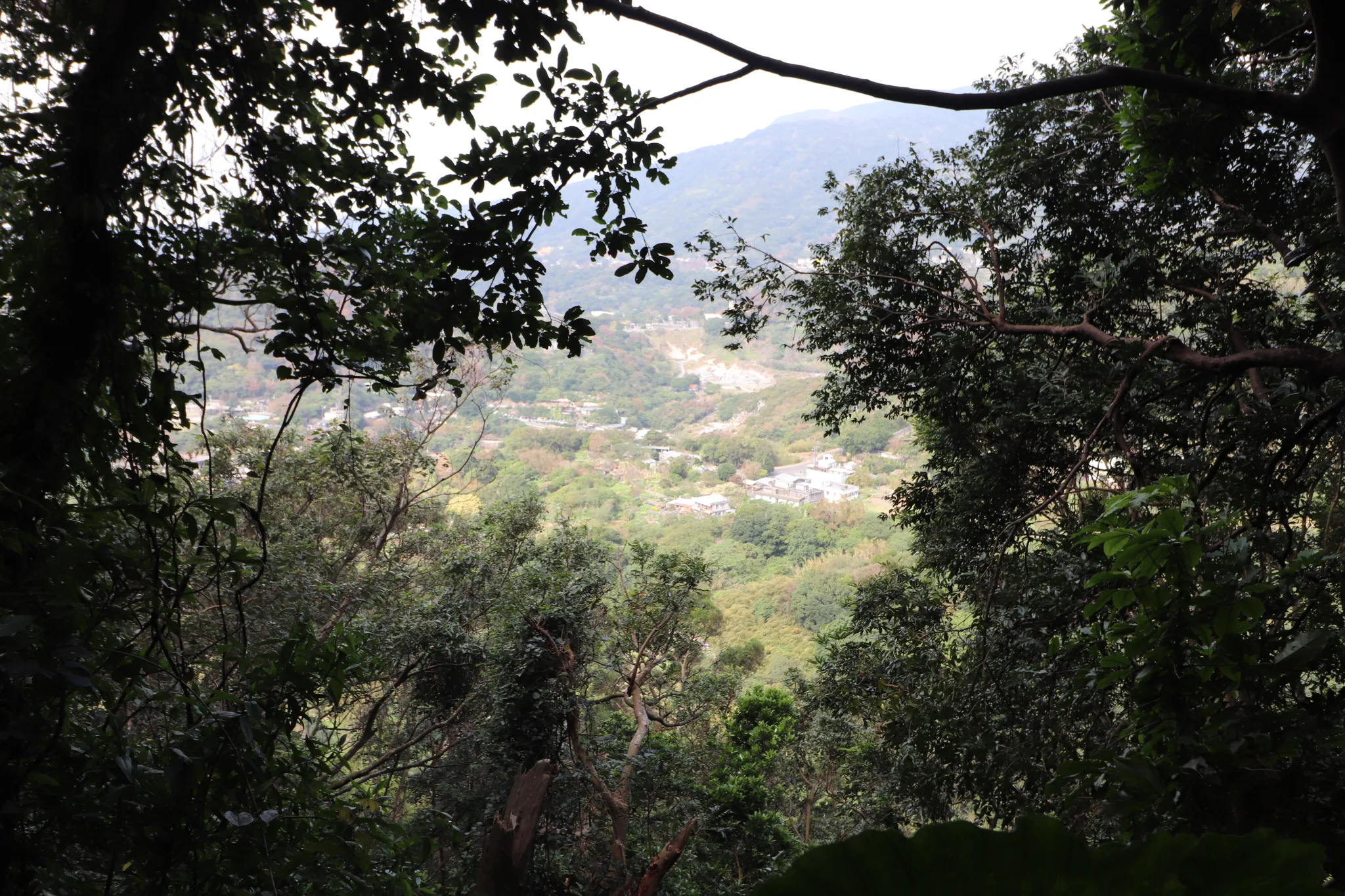
View from in between the trees.
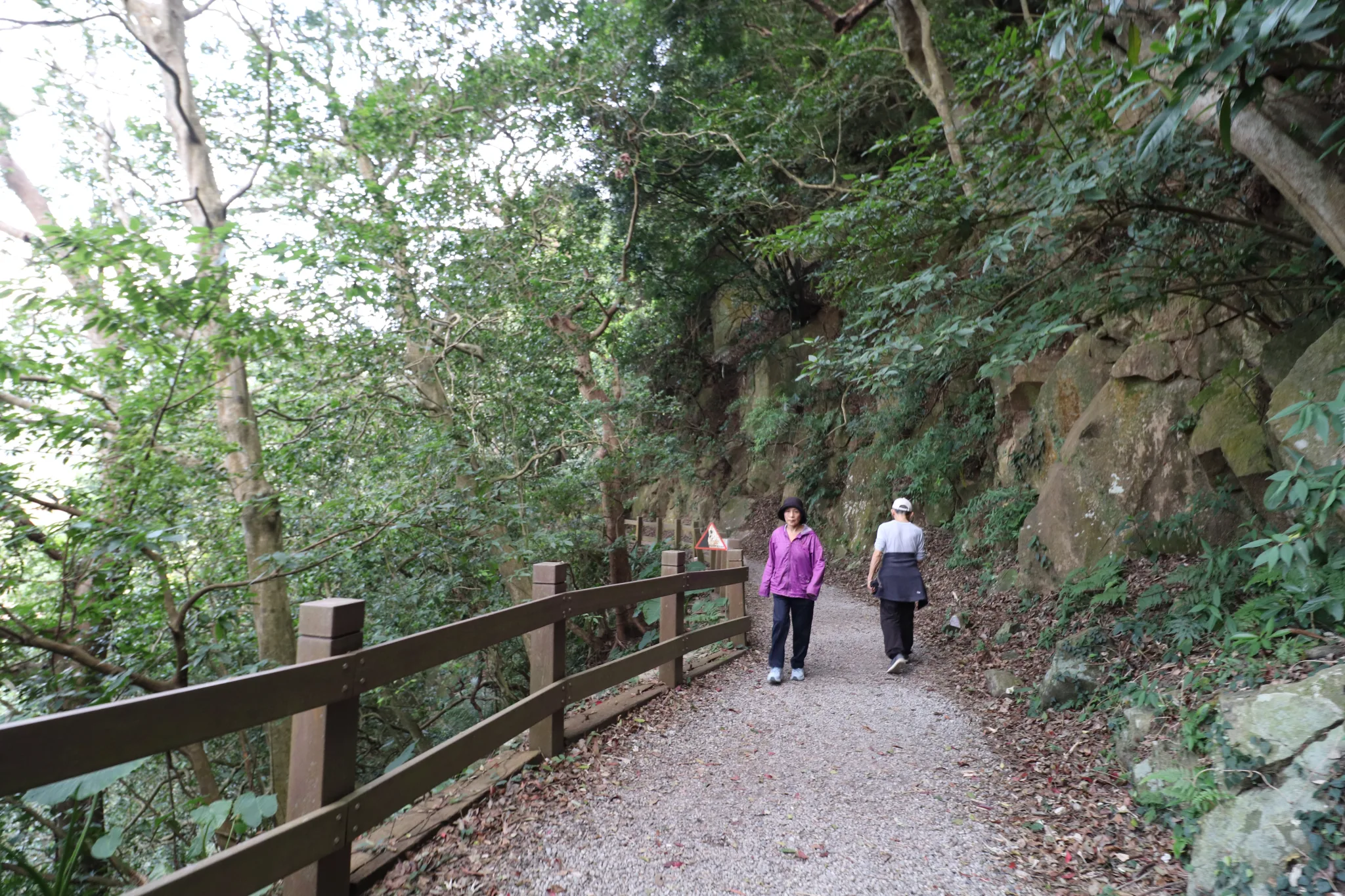
Here the trail runs along a steep cliff.
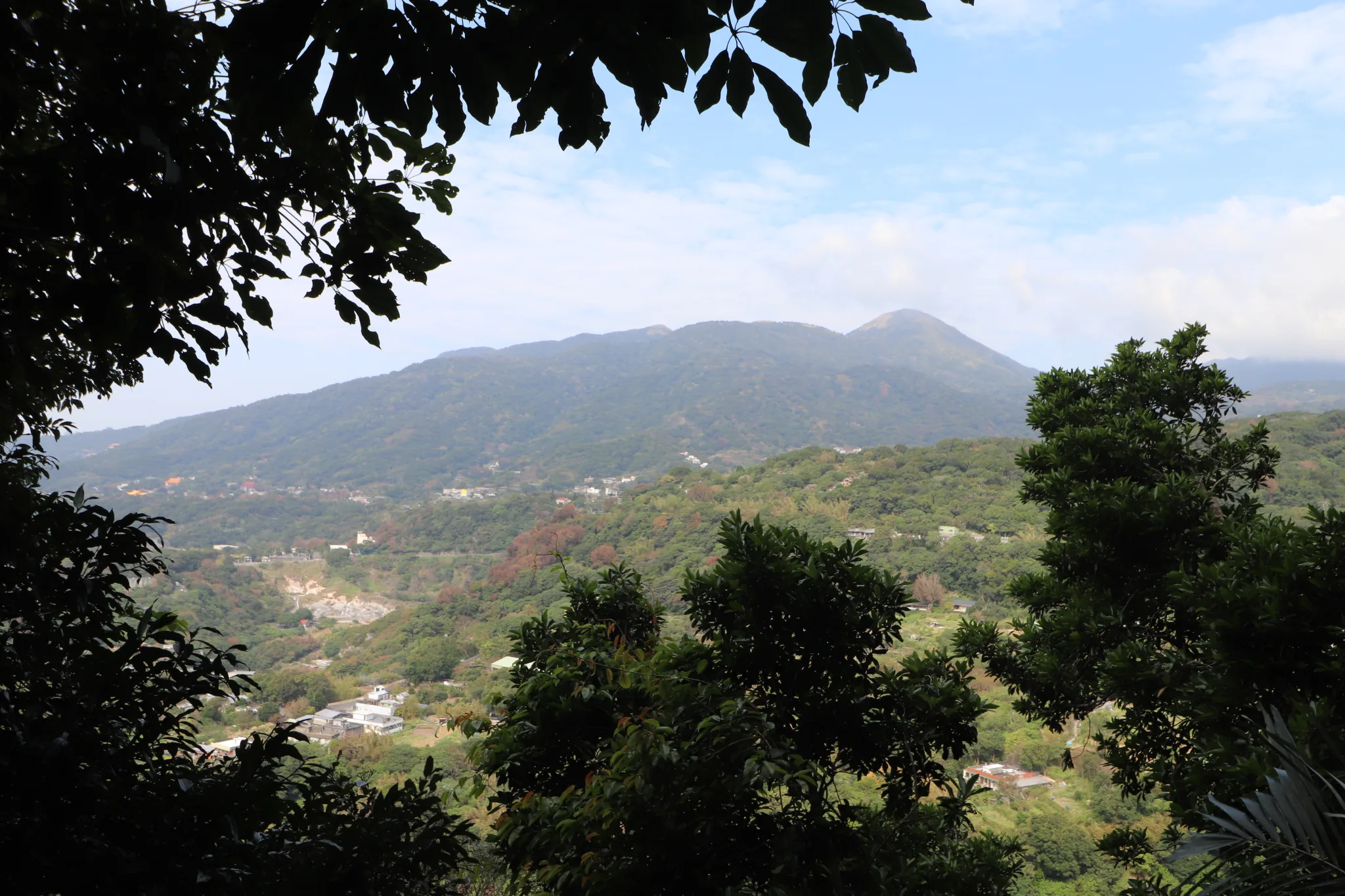
View looking toward Datunshan.
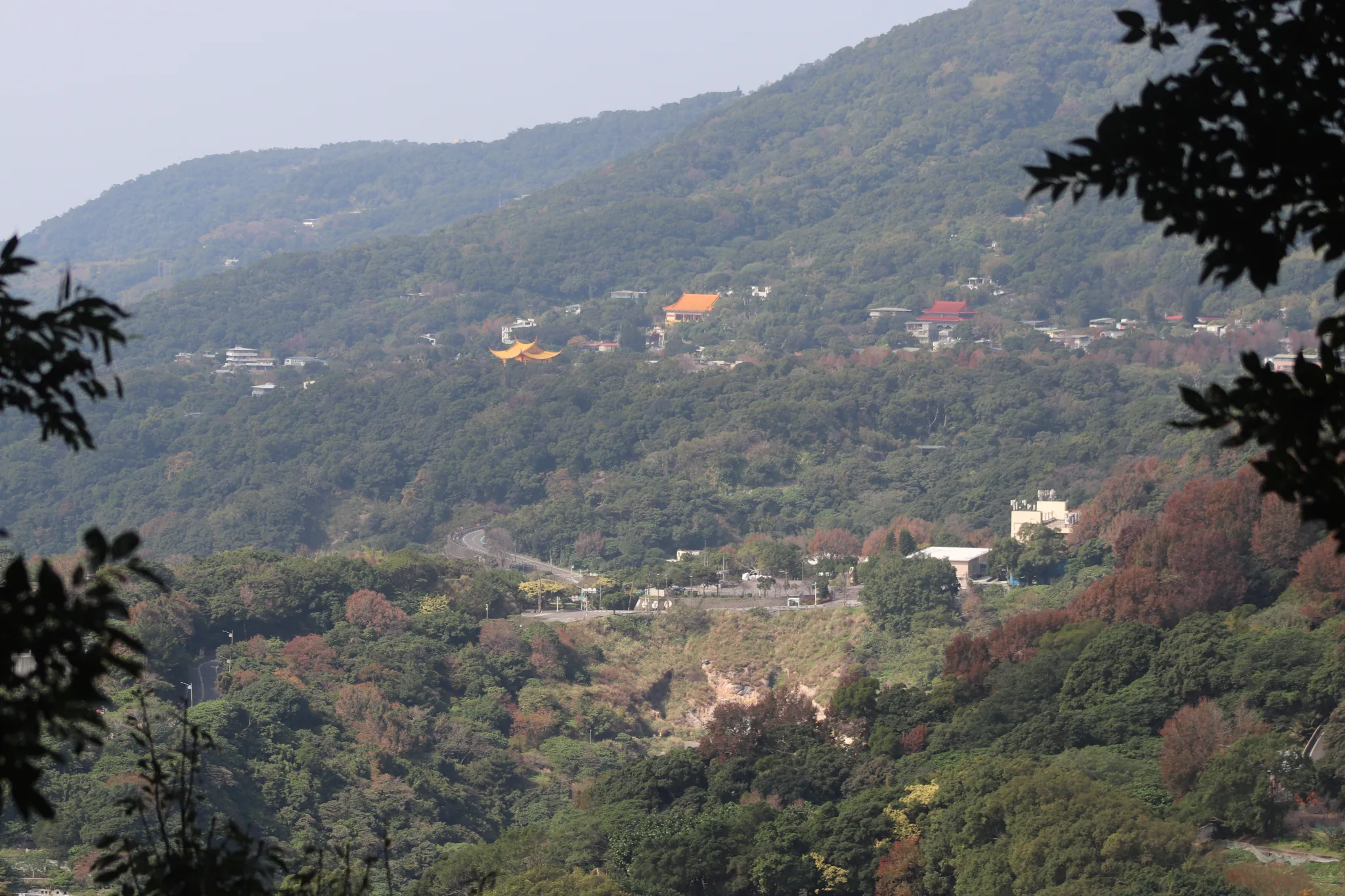
View looking at Longfeng Valley.
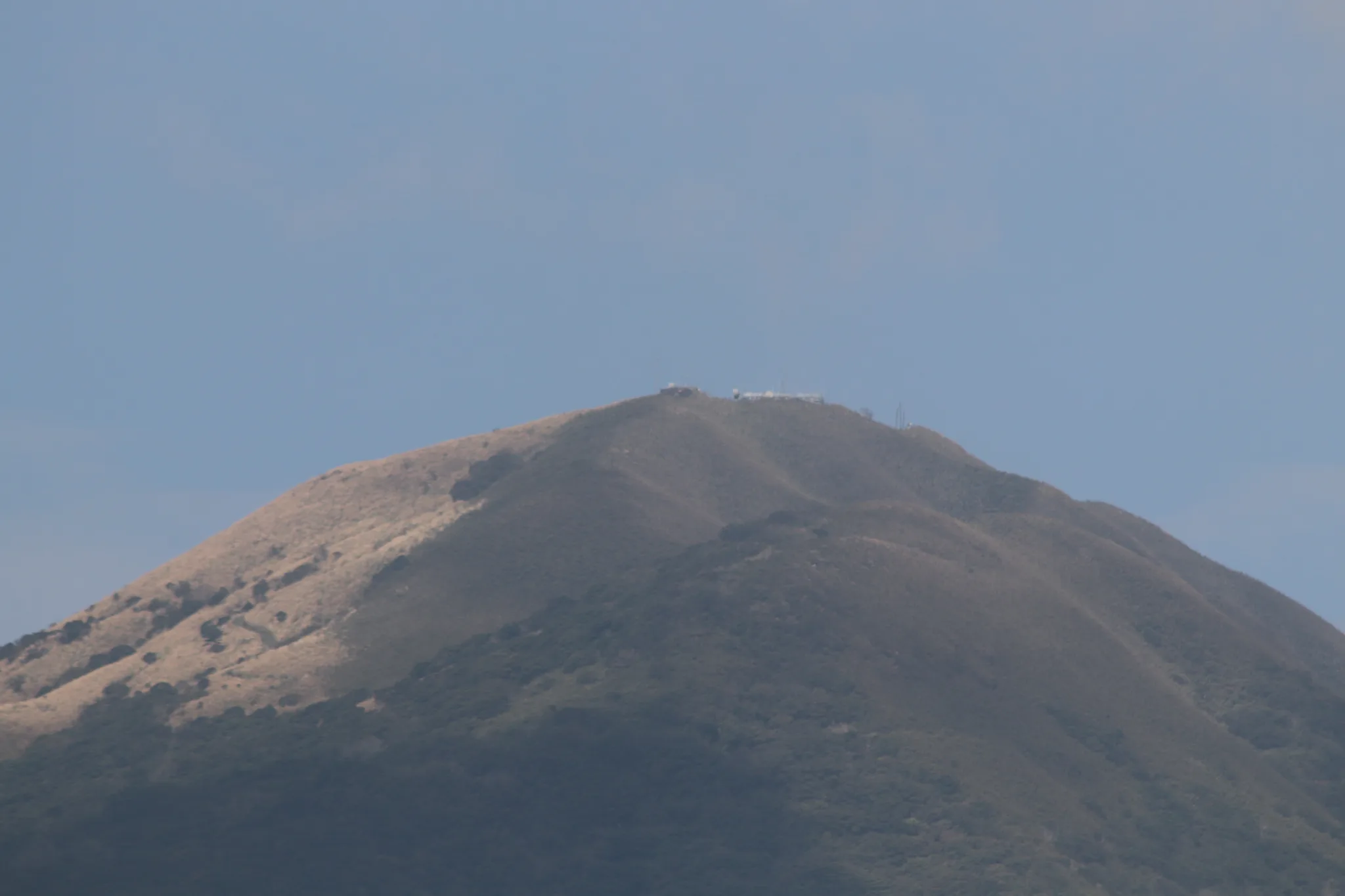
View of the top of Datunshan.
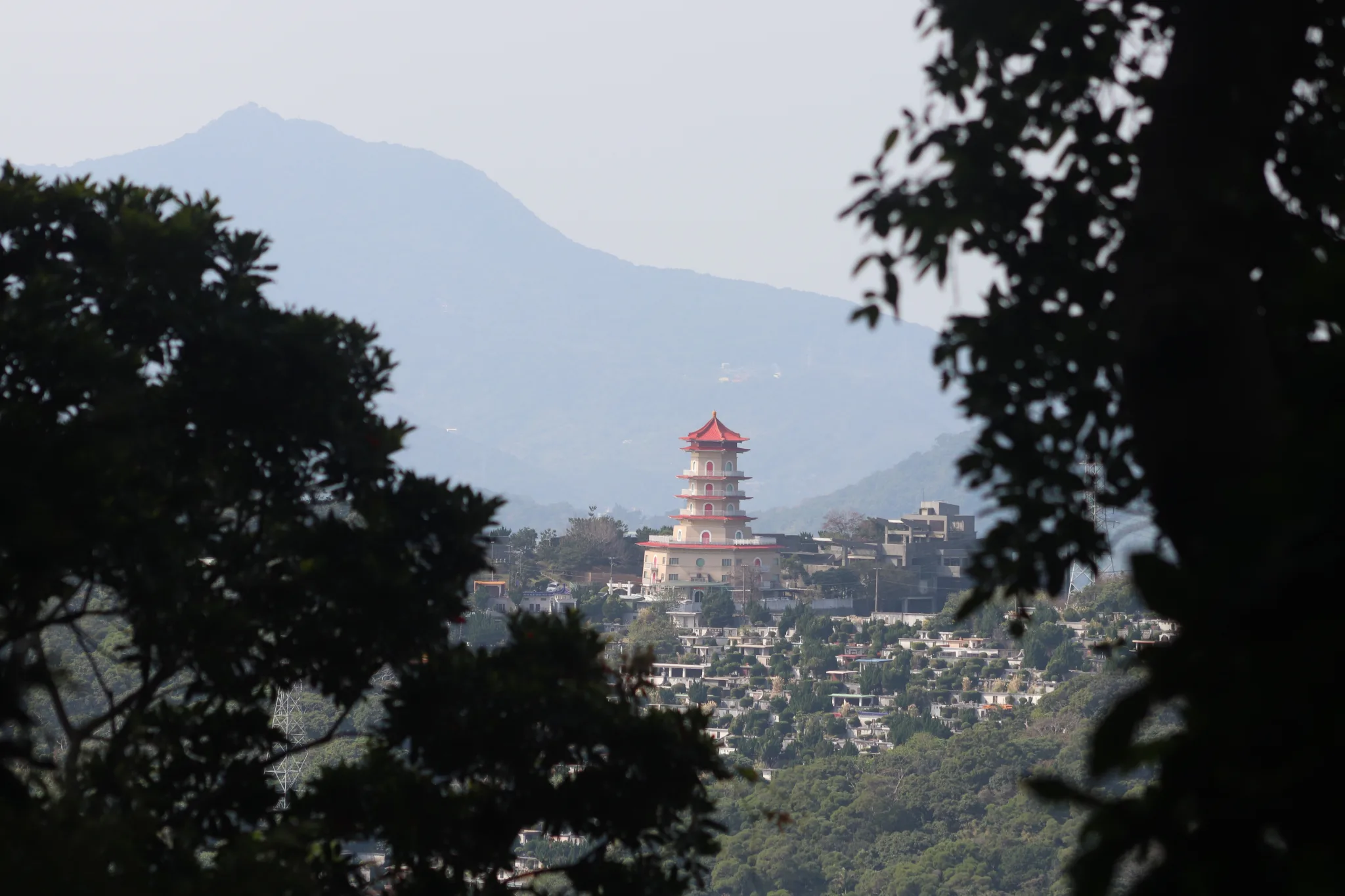
Spirit bone tower.
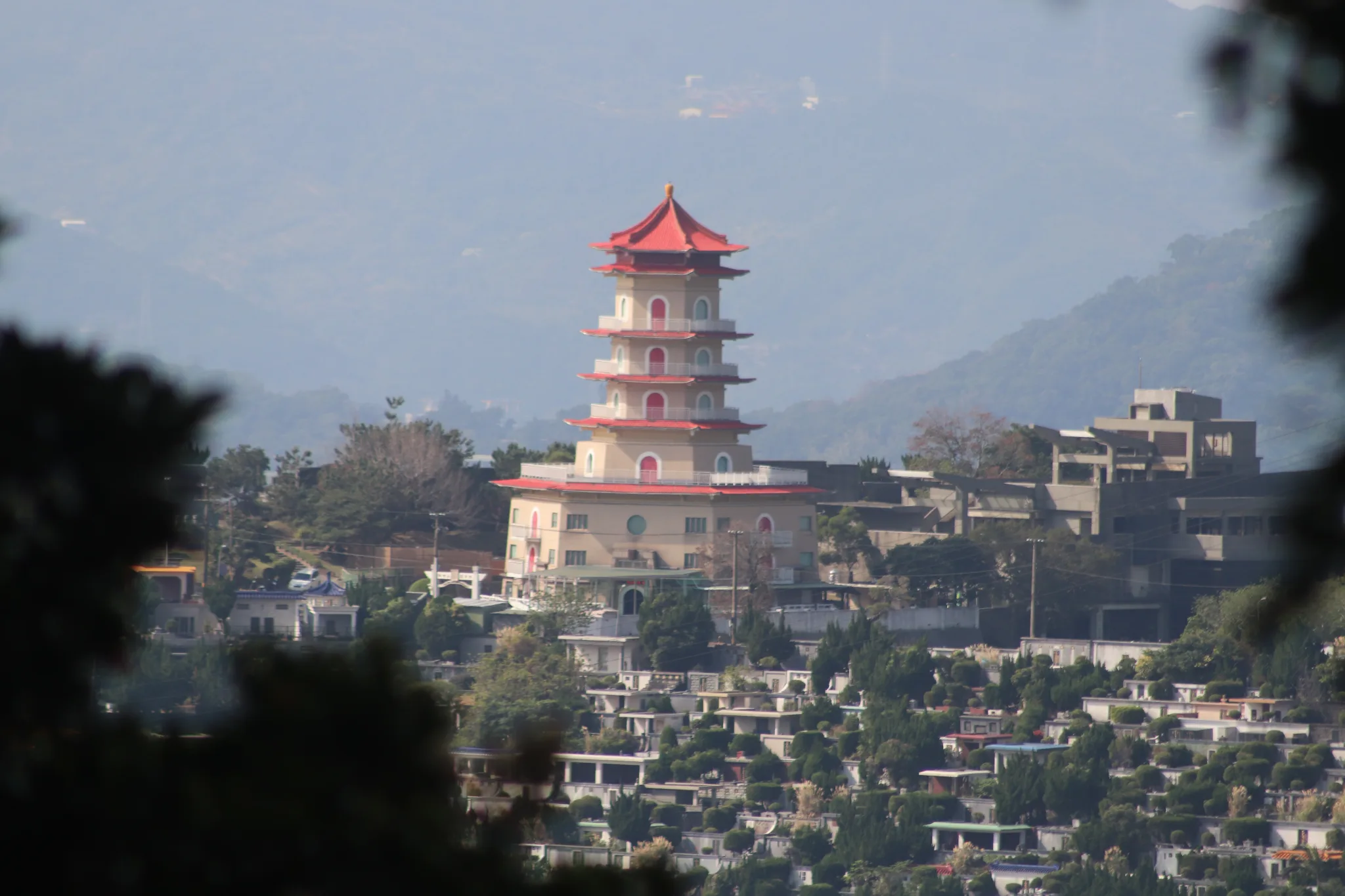
Close-up on the spirit bone tower at Longfeng Valley.
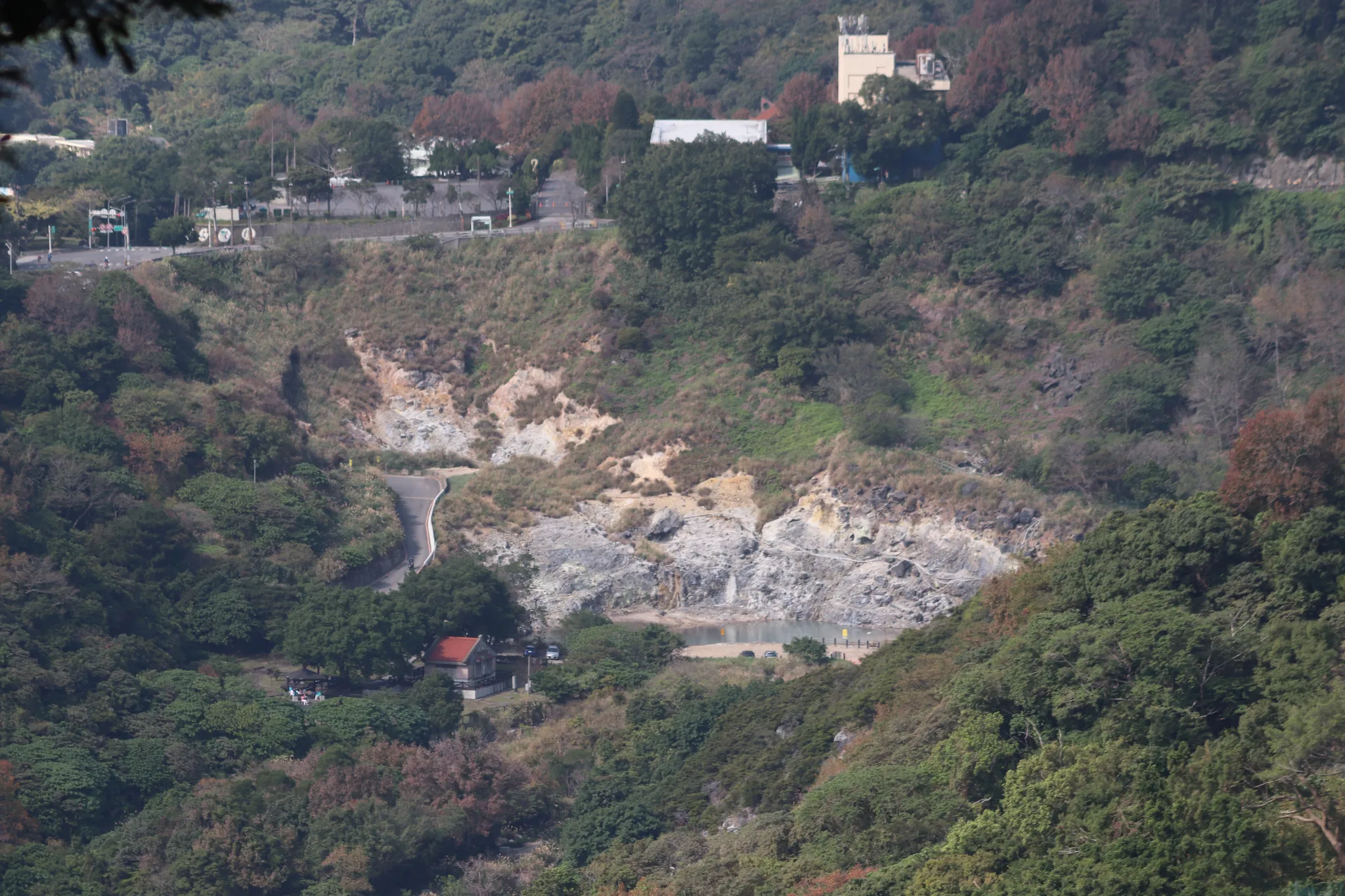
Closeup on Longfeng Valley and the super-heated spring at its base.
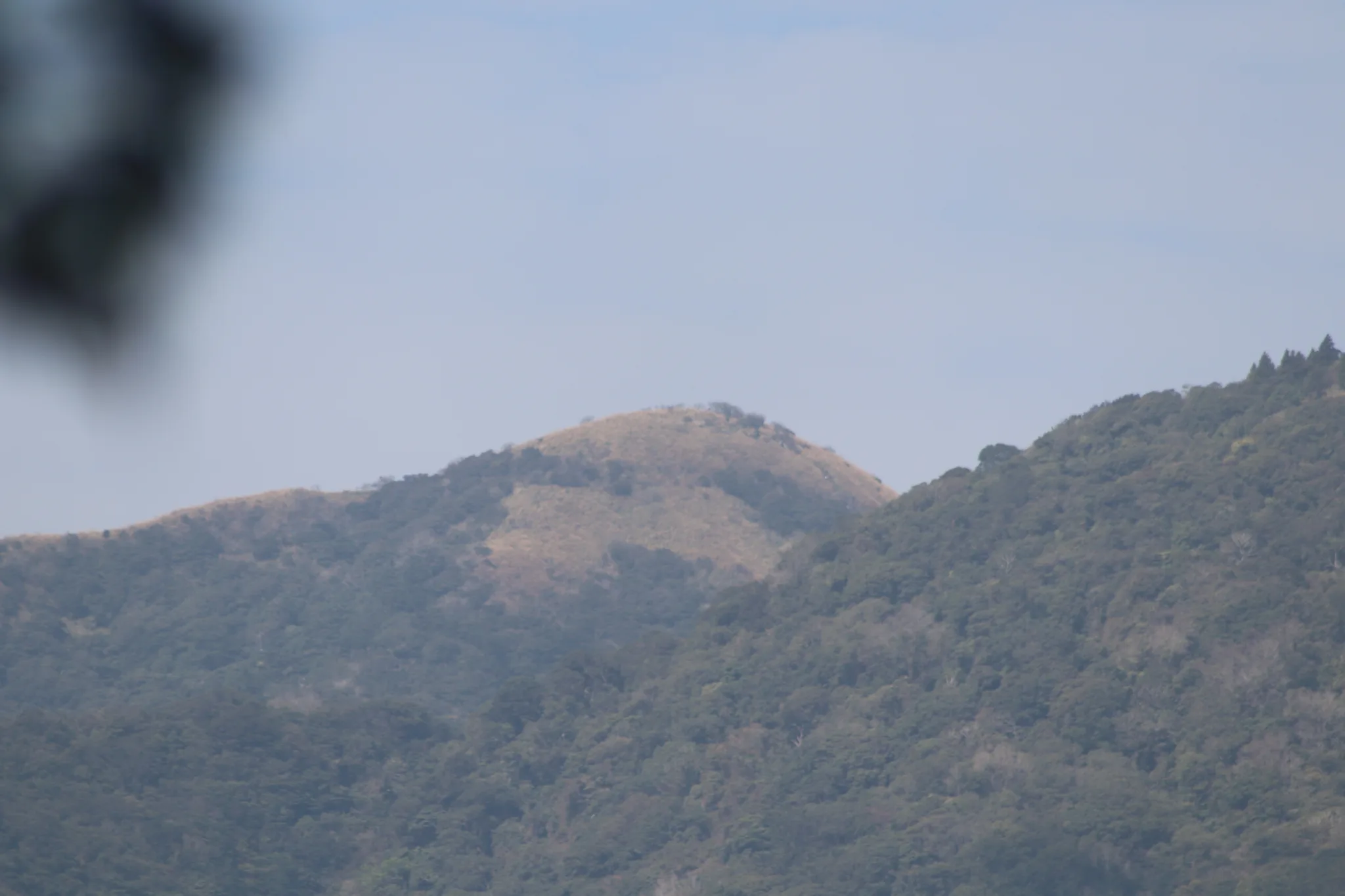
Another view looking up Yangmingshan.
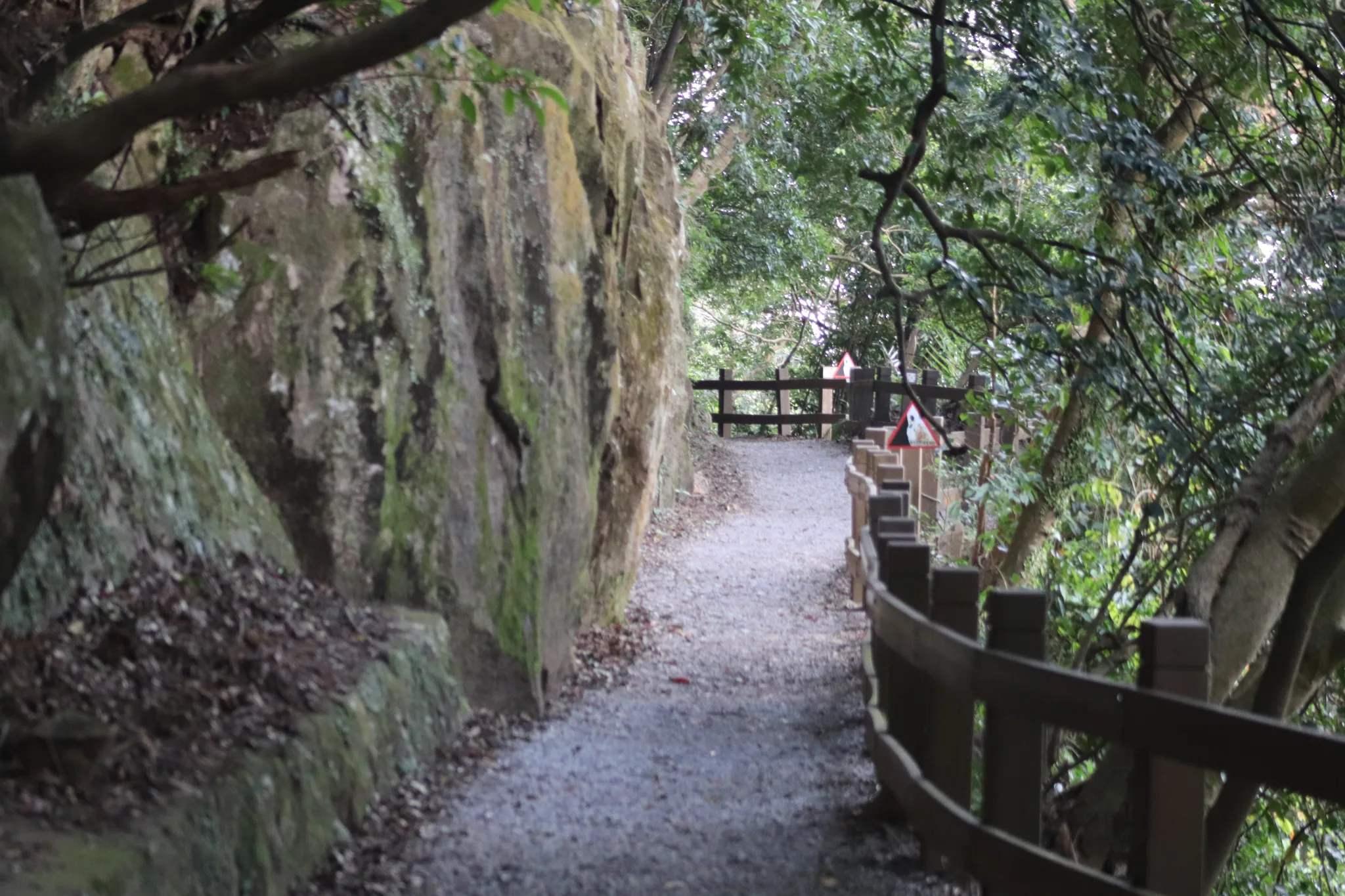
View looking down the trail.
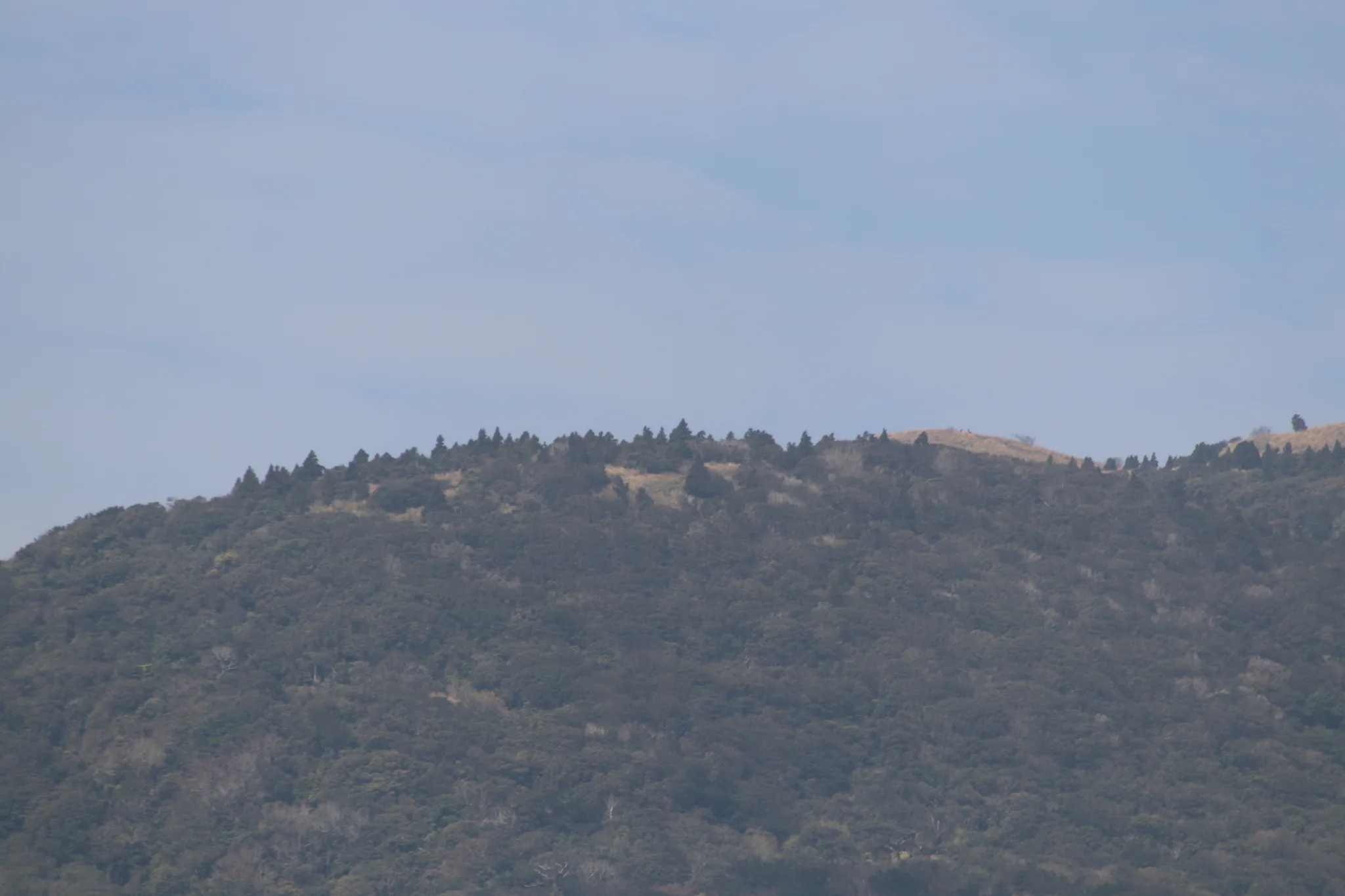
Bare spots along the ridgeline.
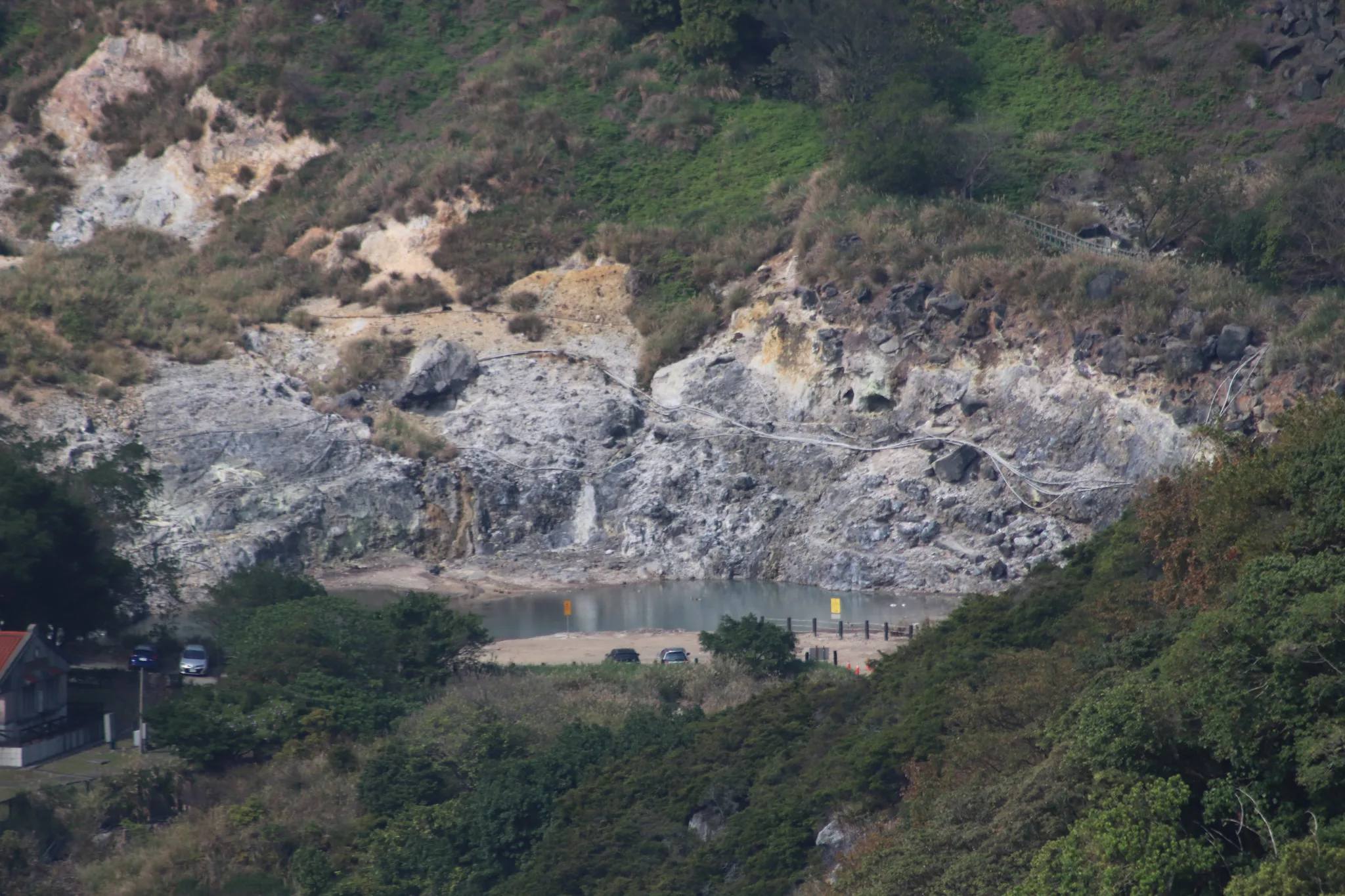
Closer view of Longfeng Valley.
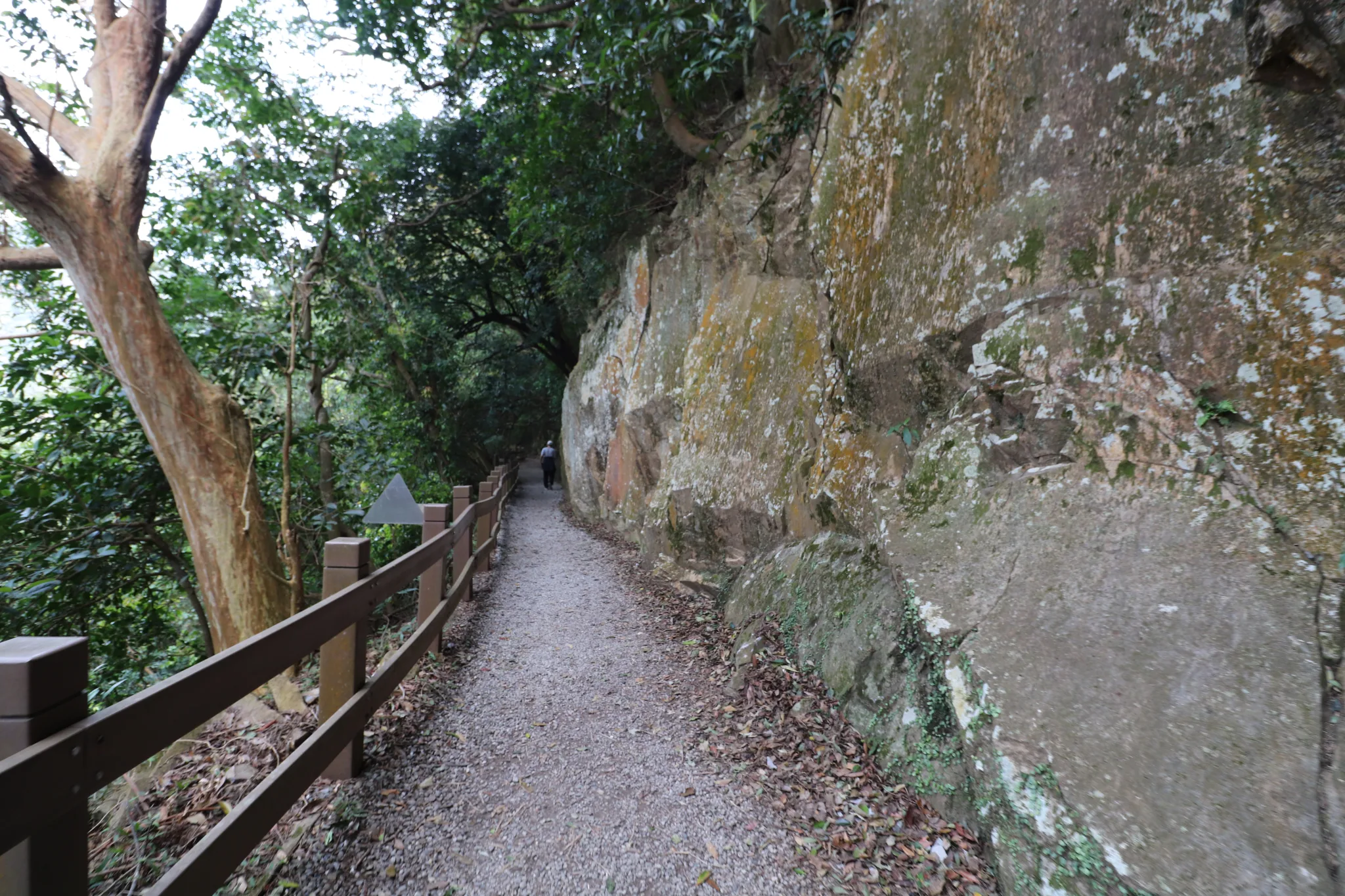
We kept following the trail along this cliff.
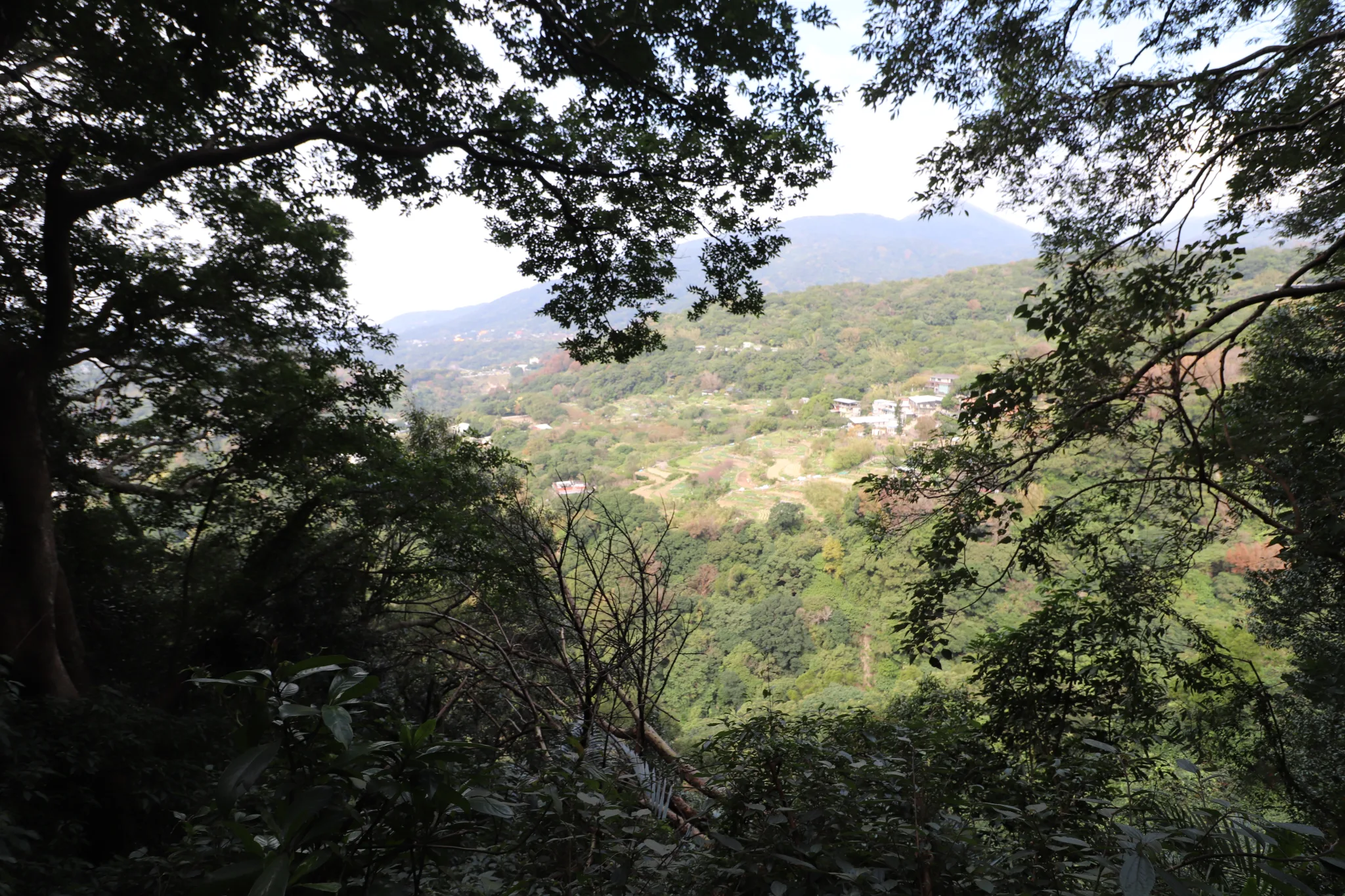
More views through the trees.
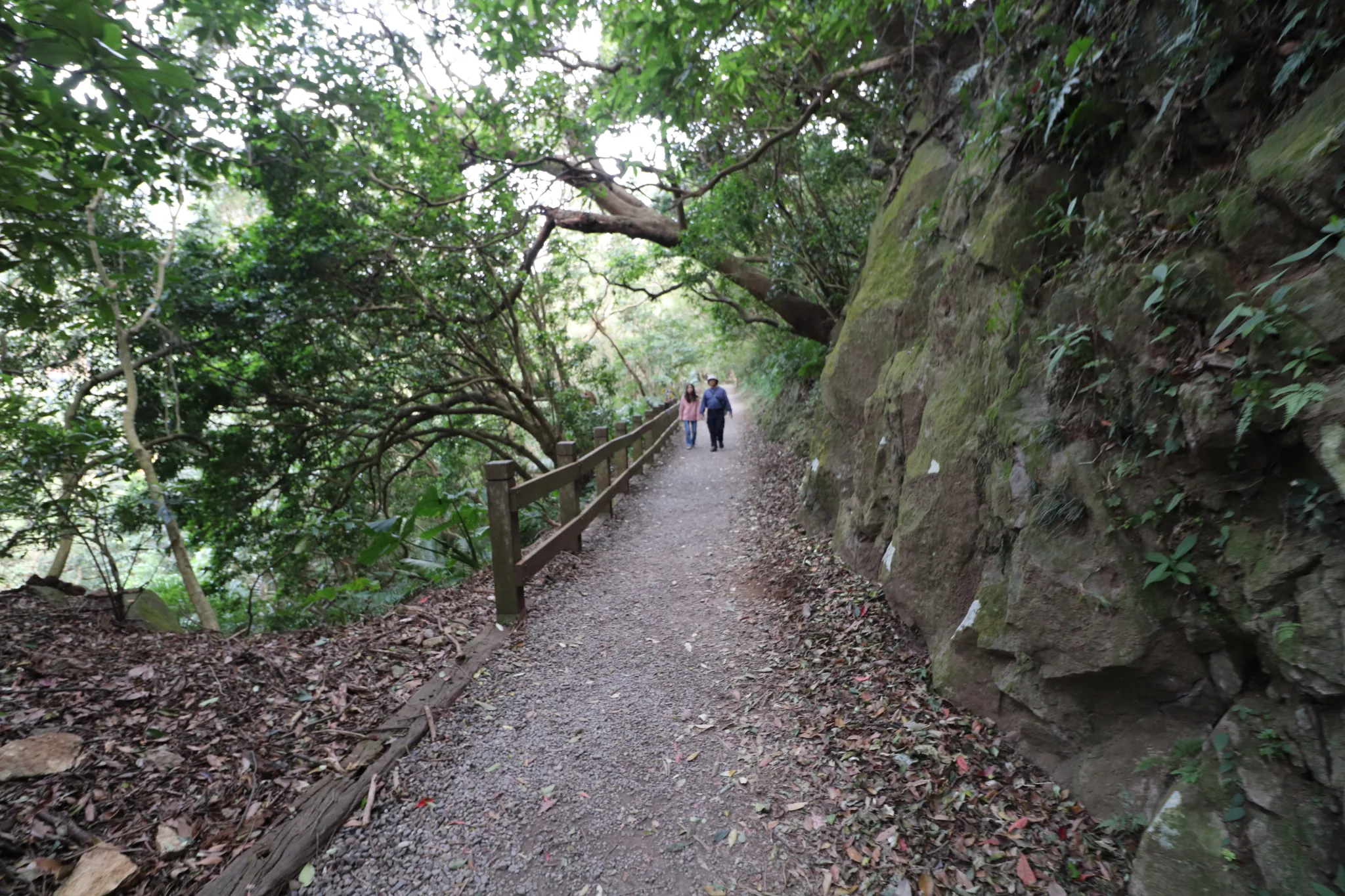
Similar looking trail.
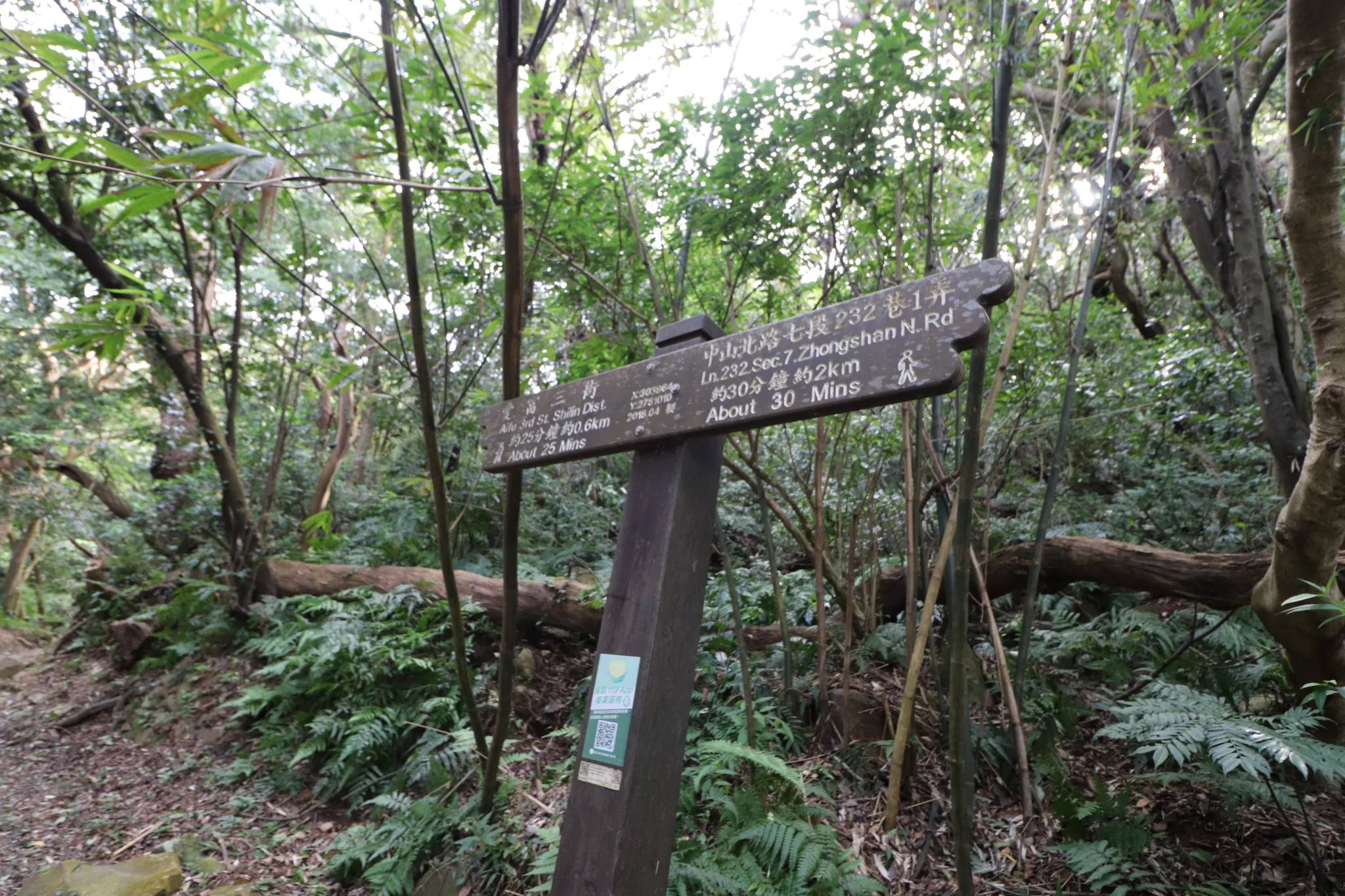
About 30 more minutes until we reach the end of the trail.
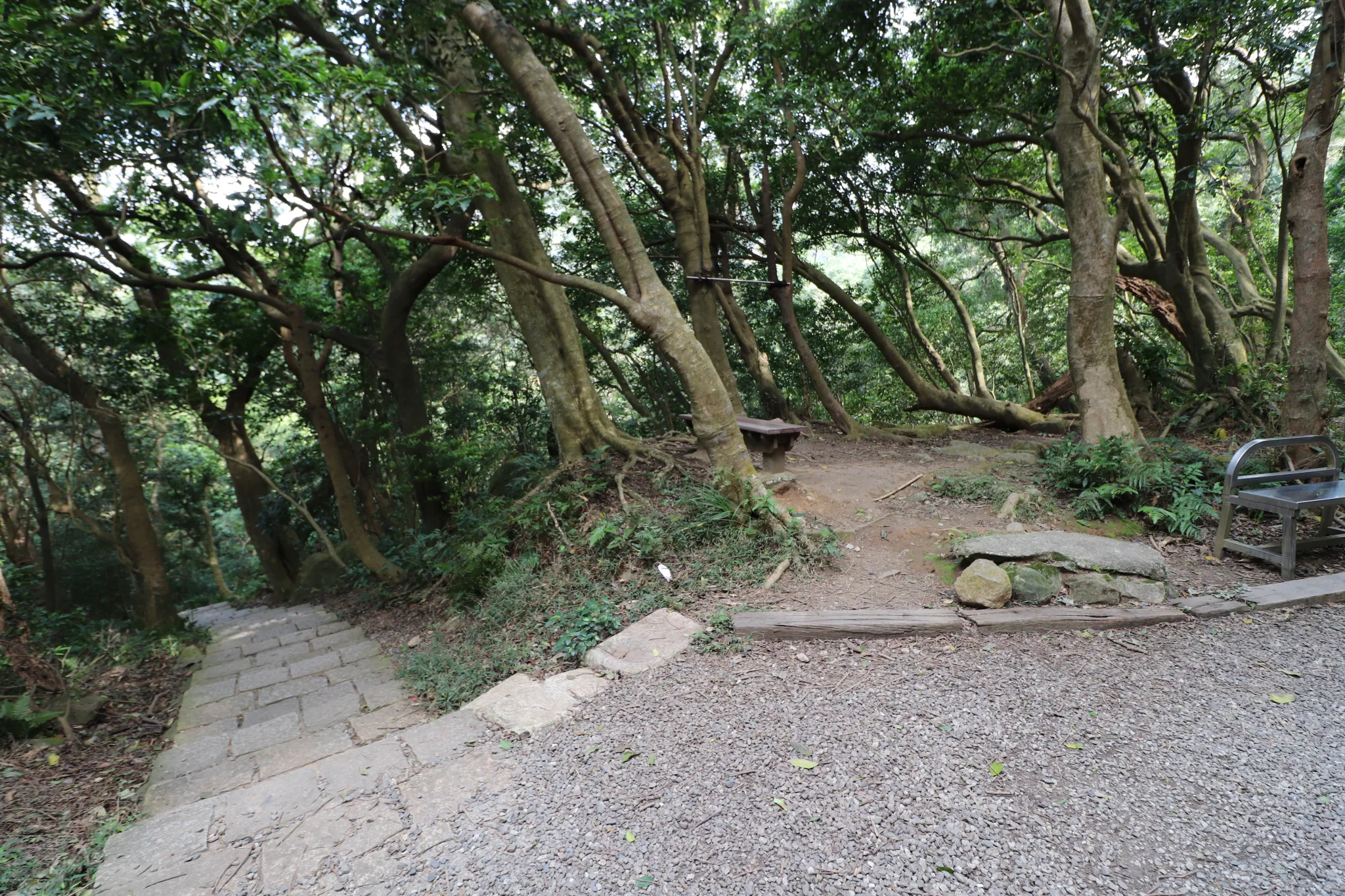
Rest area and another trail that goes down into the valley.
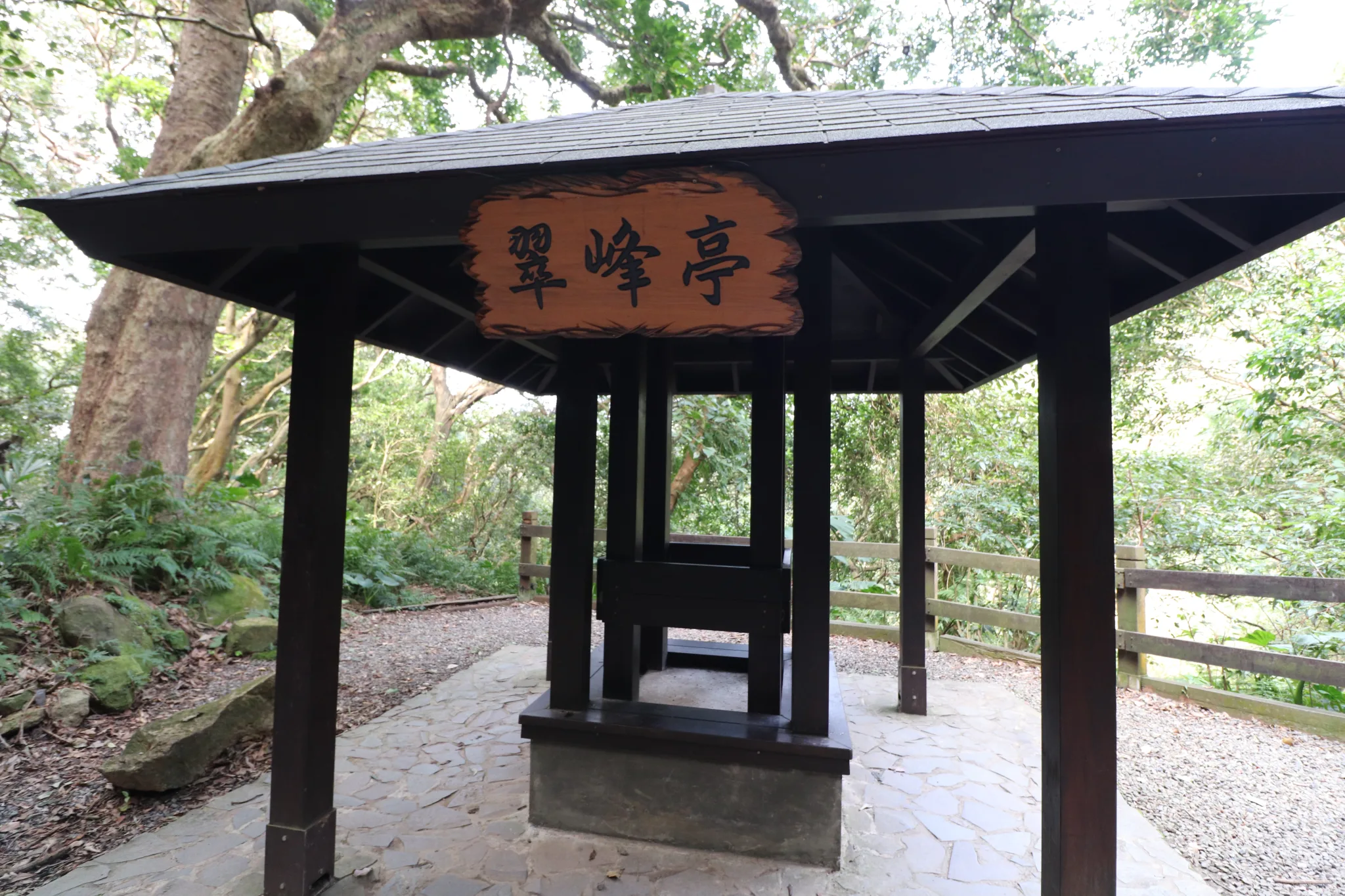
Cuifeng Pavilion.
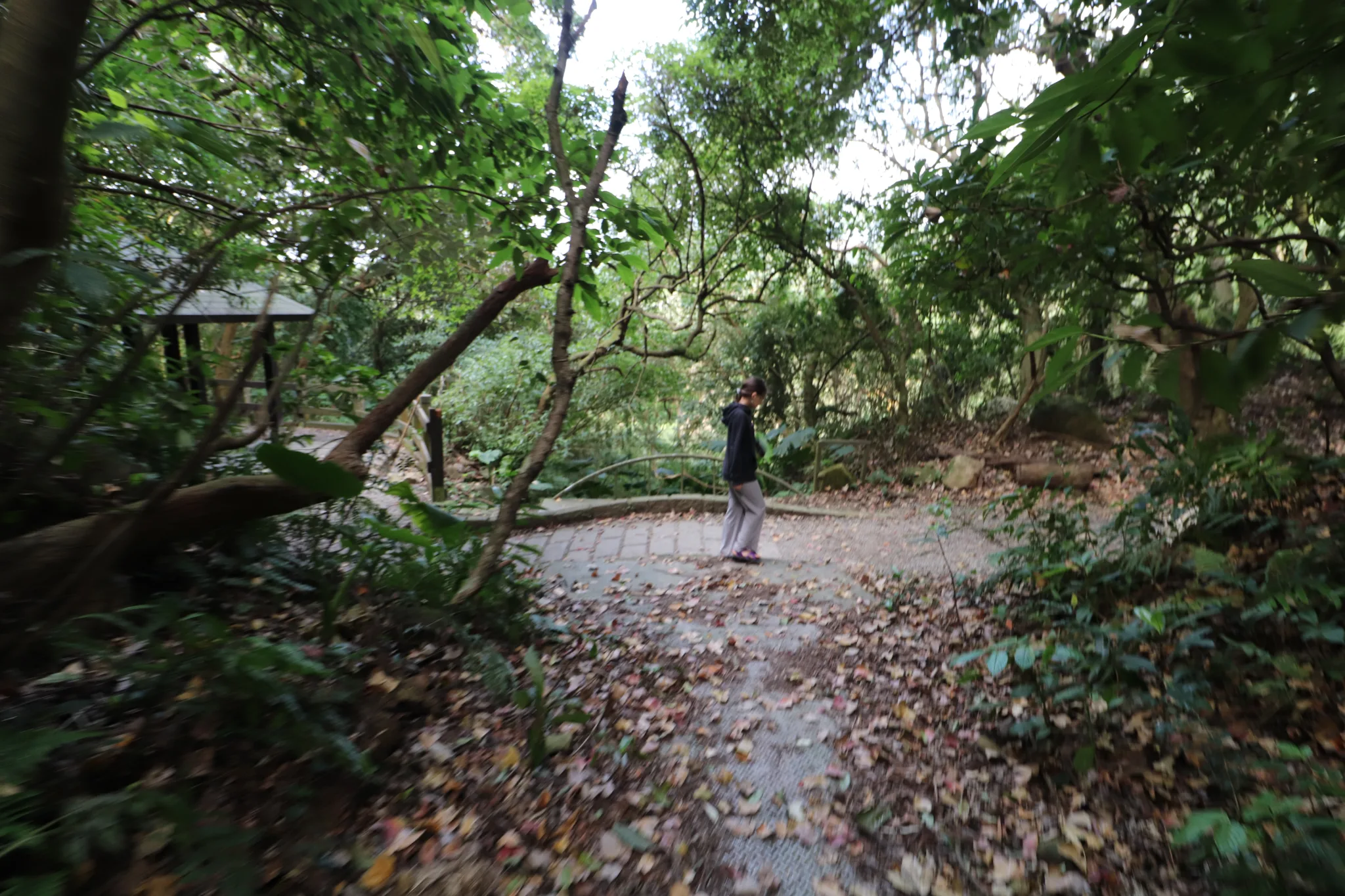
A small stone bridge.
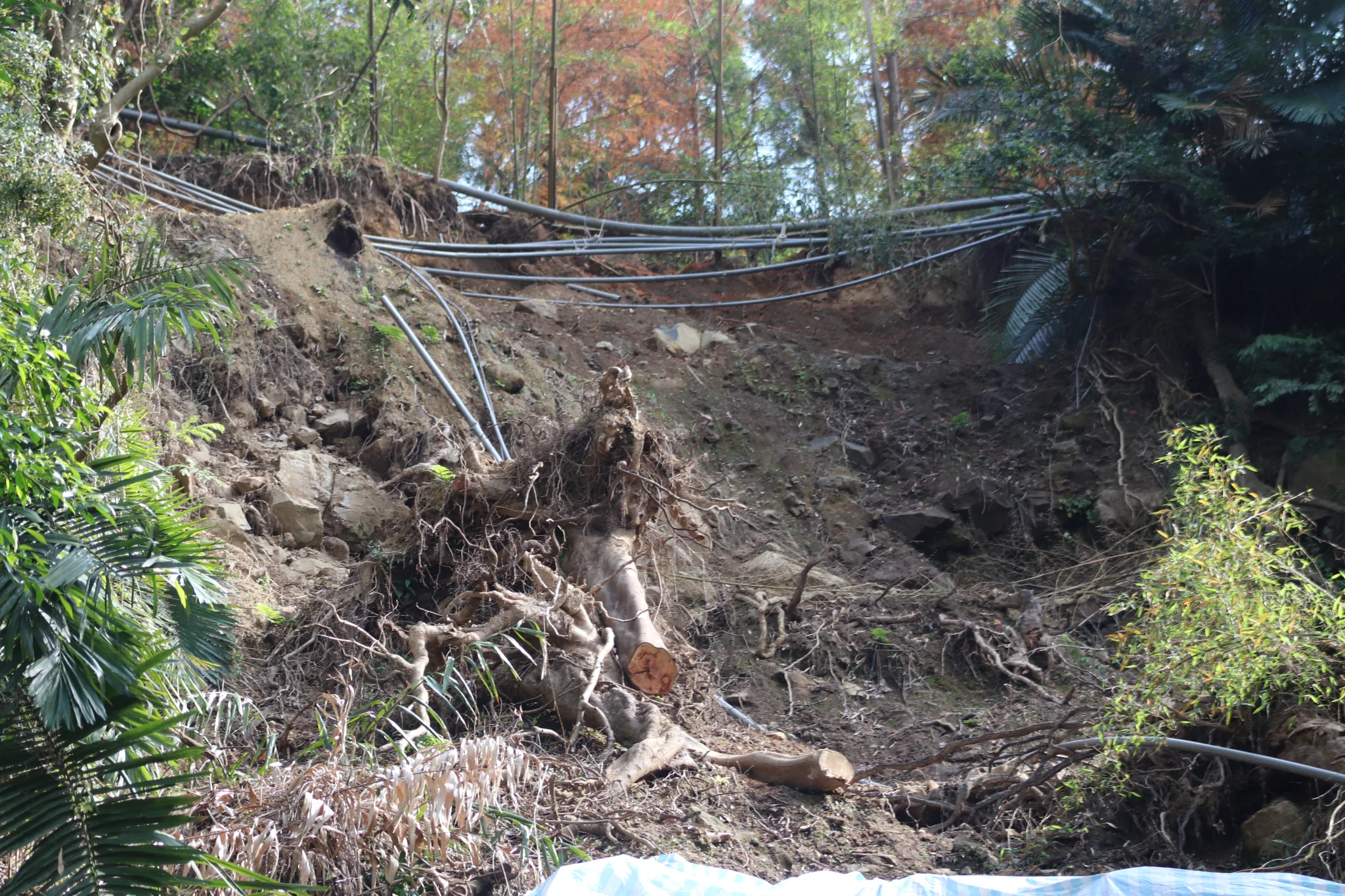
It appears that a landslide hit here recently.
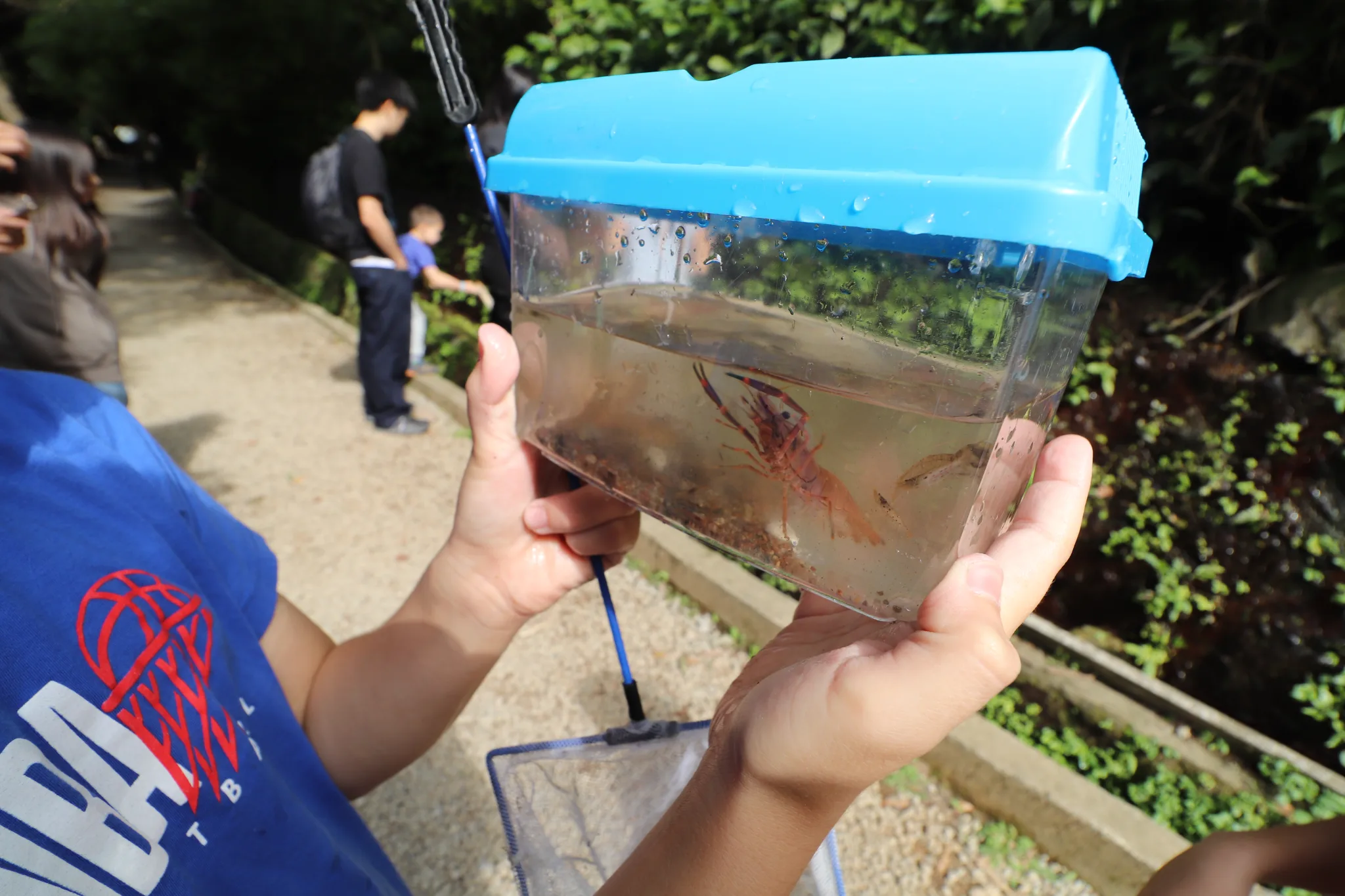
We found some kids catching crawdads in the stream here.
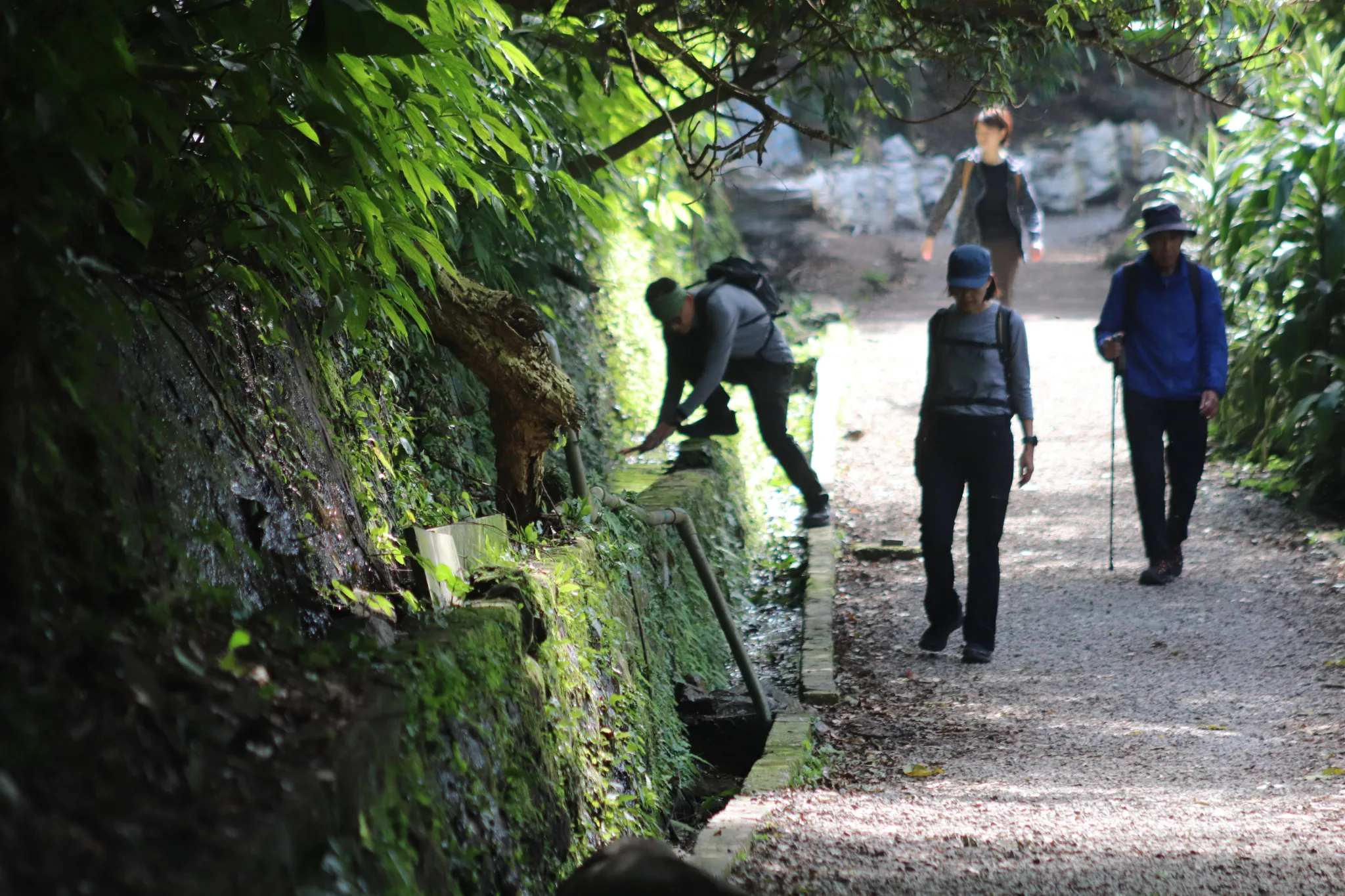
Another remnant of the old water road can be found here.
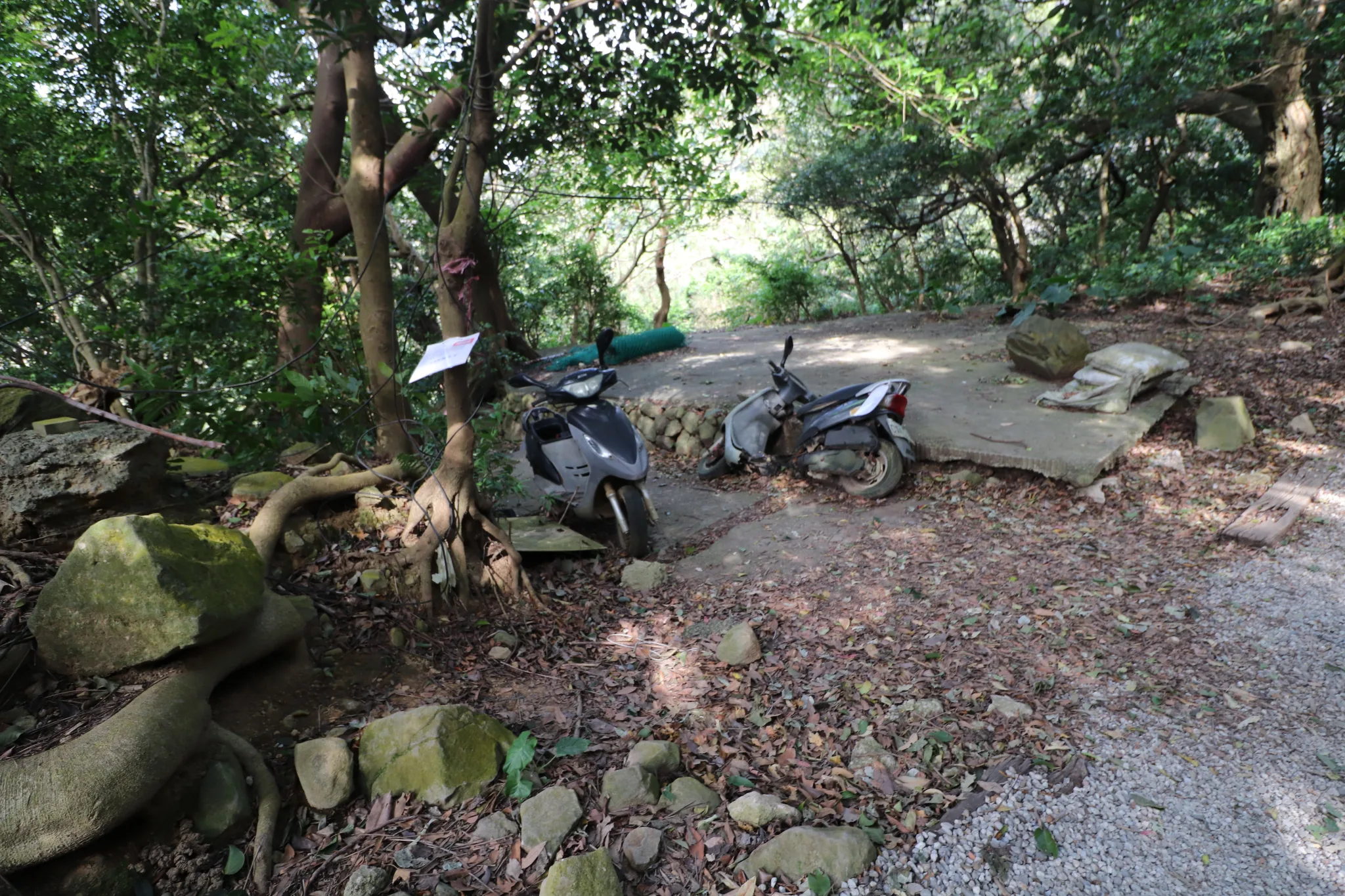
Some abandoned scooters.
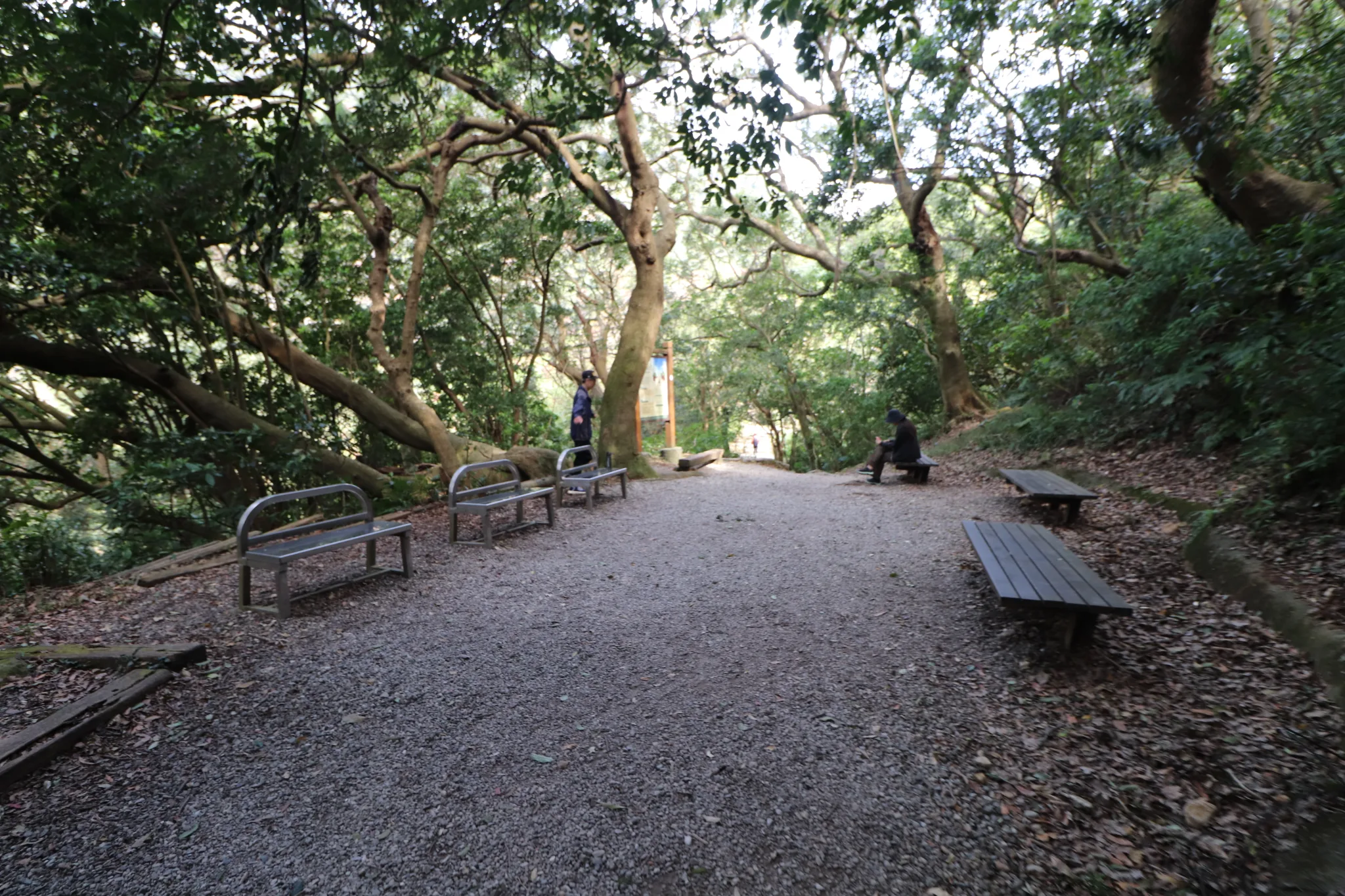
Another rest area.
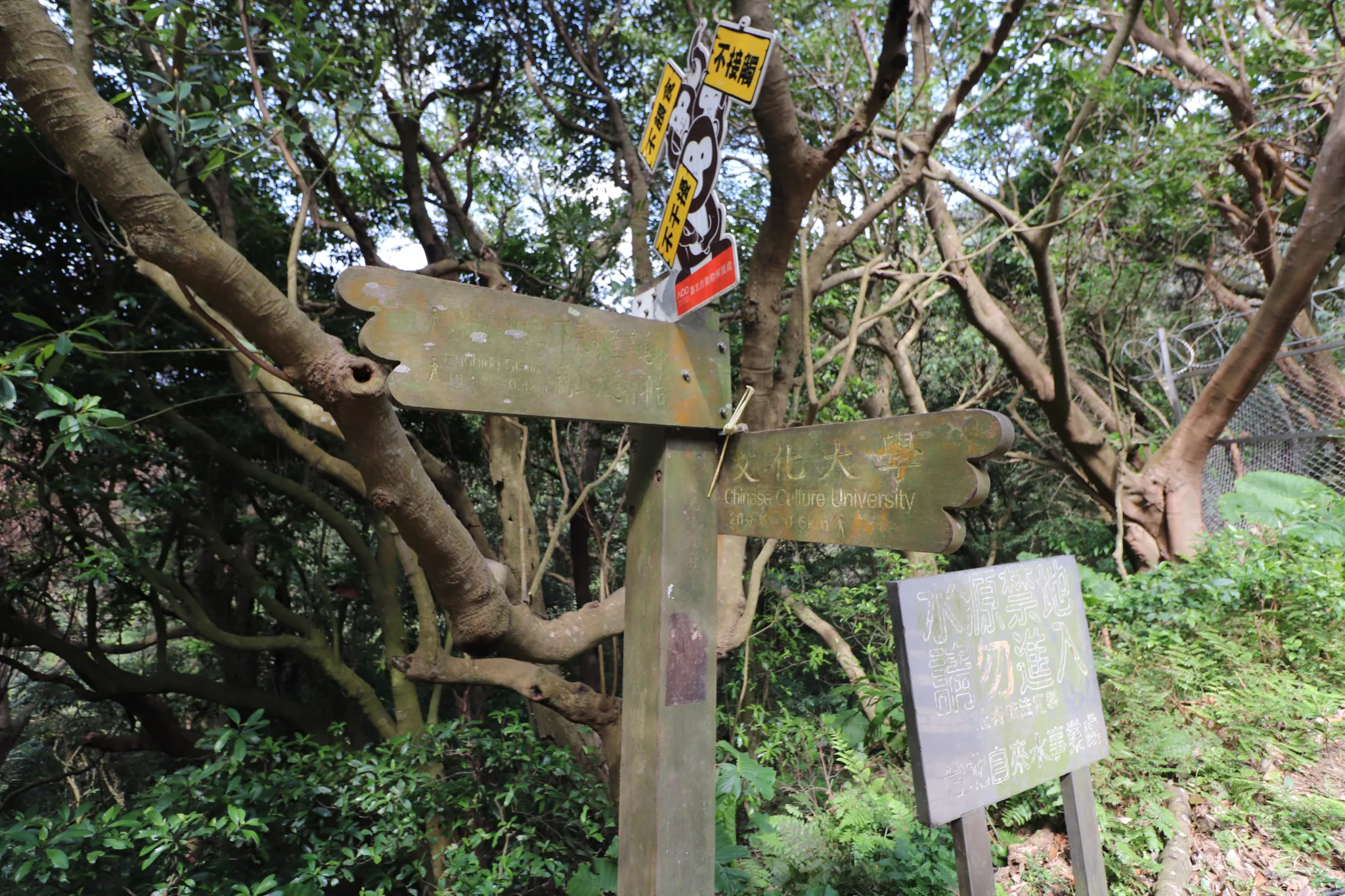
Getting close to the end of the trail, the trail connects back up with a road here and that is the end.
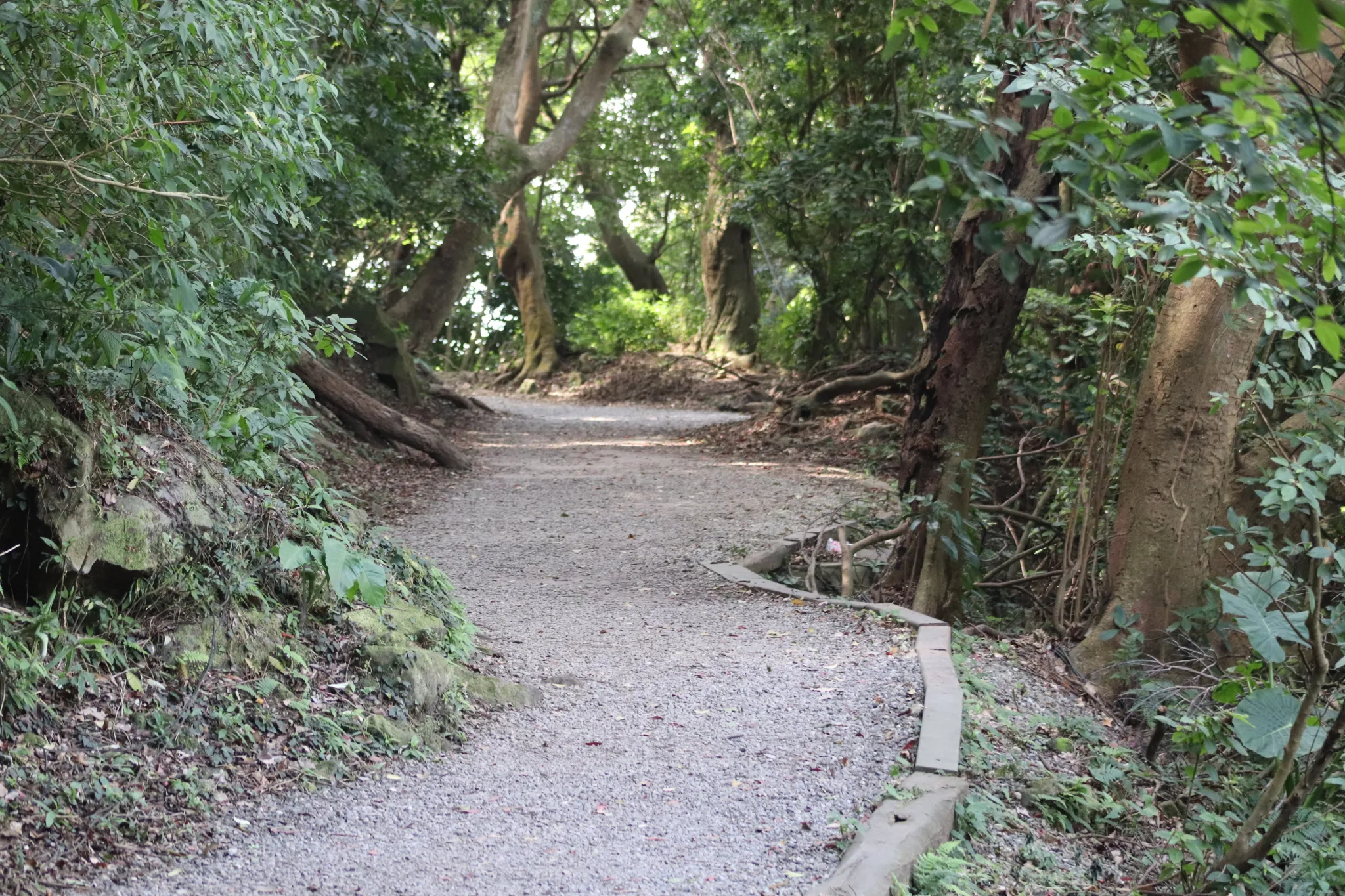
And then we made the long journey back.
Tianmu Park 天母公園
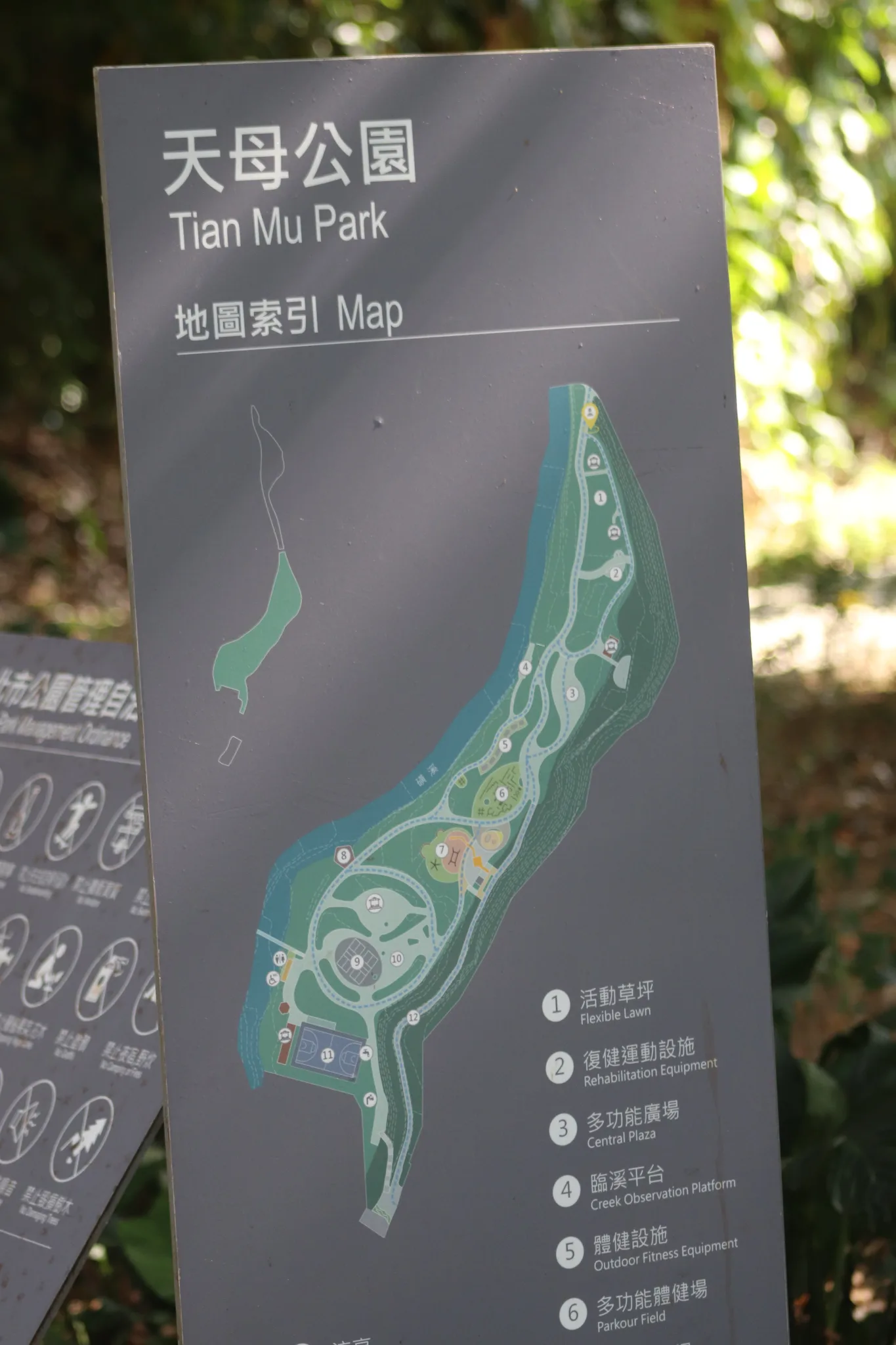
If you go back to the trailhead, you will end up at Tianmu Park.
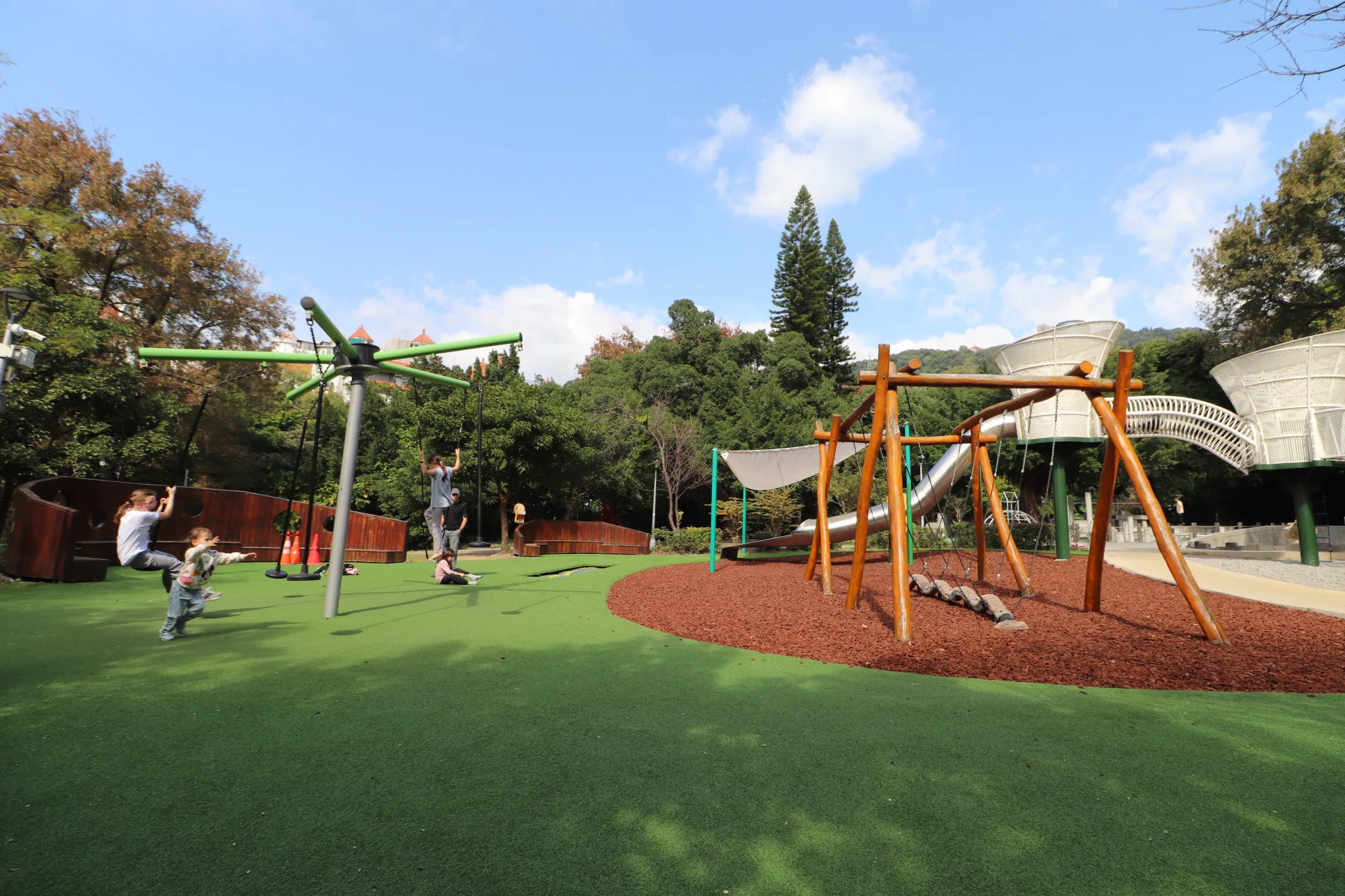
Tianmu Park in Shilin District of Taipei is a fun park for the whole family. Here you can find amazing mountain views, swings, slides, tennis courts, and access to a hot spring river. You can also check out the nearby Tianmu Historic Trail…(read more)
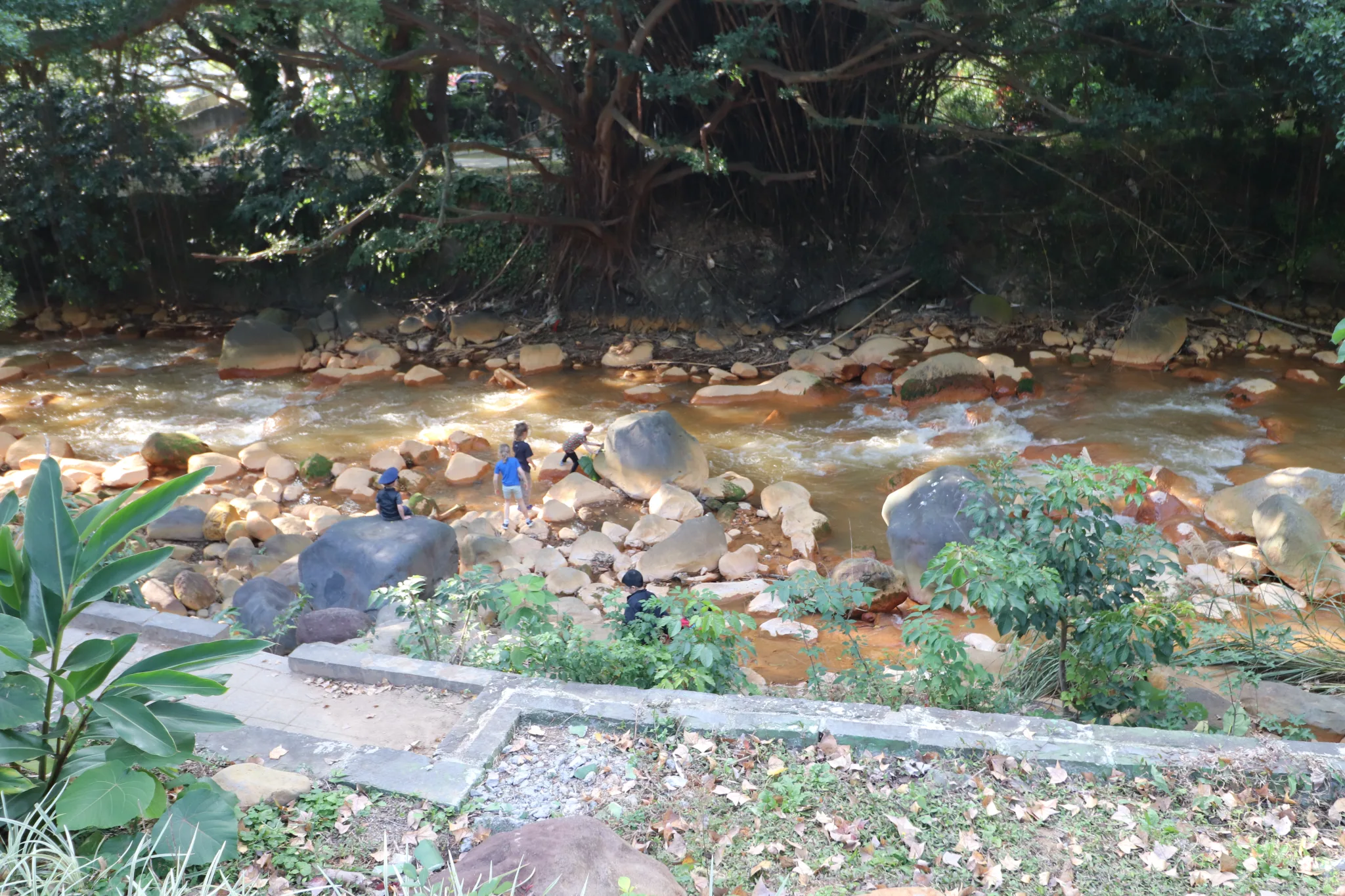
The park also has direct access to this hot spring river.
Thanks for reading!
Check out our hiking guide to Taipei here.
Check out our full guide to Taipei here.