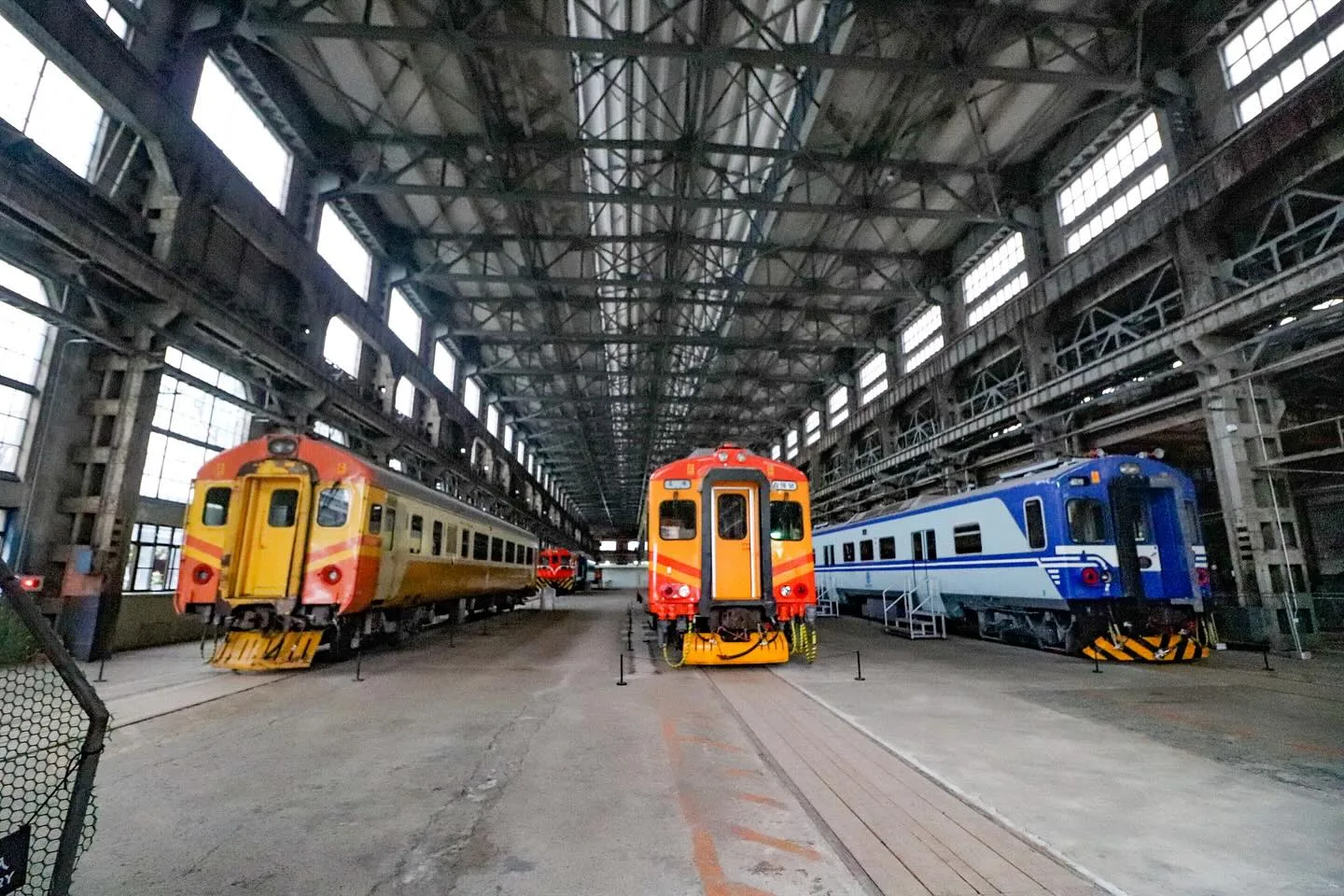
Taiwan’s National Railway Museum, also known as the Taipei Railway Workshop, is an amazing view into the historical railways of Taiwan, as well as historical buildings, railway cars, maintenance techniques, and the people who worked here in the past. Here you can get an in-depth experience of what it was like to work for Taiwan’s railways, enjoy many trains on display, and also take a ride on an old train.
🏯 Planning your trip to Taipei? 🏮
Here are some top travel tips for you:
- You can buy tickets to museums in Taipei for a discount on Klook here
- How to get there: Taiwan High Speed Railway and Inter-City Bus
- Best places to stay: Yuanshan Grand Hotel or Fu Chang Hotel
- Book tours and activities in Taipei on Klook
- Stay connected with a local SIM
- Rent a car to explore distant sights
Historical Background:
The National Railway Museum is a national museum under Taiwan’s Ministry of Culture, located on the historic site of the former Taipei Railway Workshop in Taipei’s Xinyi District. After long public advocacy to preserve the entire rail yard, the site was designated a national historic monument in 2015 and later redeveloped into a museum intended to function as a “living railway museum.” A preparatory office was established in 2019 to oversee restoration and planning, and the museum opened its first phase to the public on July 31, 2025, after conservation and renovation of the historic industrial buildings. In the future, it will operate as a semi-autonomous public institution jointly supervised by the Ministry of Culture and the Ministry of Transportation, preserving railway heritage through restored workshops, historic structures, and an extensive collection of locomotives, passenger cars, freight cars, and engineering vehicles representing the history of Taiwan’s railways.
Hours:
Closed on Mondays, except National Holidays
Open 9:30 AM to 5 PM
Price:
100 NT per person for the permanent Diesel-Electric workshop.
100 NT per person for the train ride.
You can buy Taipei museum tickets at a discount on Klook here.
Where to stay:
We recommend Fullon Hotel, which has locations in Tamsui and Fulong near the beach (book on Booking.com here, Tripadvisor here, Agoda here, or Hotels.com here).
We have stayed at and recommend Gold Mountain Ranch, which is a horse ranch and glamping destination in Jinshan. You can book a night at Gold Mountain Ranch on Klook here. You can also check out our full blog on the ranch here.
We have also stayed at and recommend Hai Xia Your Home, which is right in front of Fulong Beach (book on Booking.com here, Tripadvisor here, Agoda here, or Hotels.com here).
Activities in Taipei:
There are many activities available to enjoy in Taipei, such as kayaking, canoeing, snorkeling, SUP / paddle boarding, water biking, and more activities which you can book on Klook here or KKday here.
How to get there:
By Car/Scooter: The museum is on Section 5 of Civic Boulevard in Taipei. The museum will be on the south side of the road and is hard to miss. There is limited paid parking nearby, but not on site.
Looking for scooter rental in Taipei? You can search on Klook here or KKday here to search for options. You can also check out our scooter rental guide here.
If you are looking for car rentals, you can also search Qeeq here, Klook here, or KKday here. You can also check out our car rental guide here.
By MRT/Bus: The museum is within walking distance of Sun Yat-sen MRT Station. You can also book an MRT travel pass on Klook here.
By Bicycle:
Cycling is the best way to enjoy Taiwan’s landscapes if you have the time and energy. Looking for bicycle rentals in Taiwan? You can use Taiwan’s many Youbike sharing stations, or search for rentals on KKday here, and search for tours on Klook here. You can also check out our Taiwan cycling guide here. You can also book a Sunset Riverside Bike Ride and Historical Tour, 4 Hour Cycling in Taipei, Ultimate 8-Hour Cycling City Tour, or Taipei City Bike Tour with Night Market Experience on TripAdvisor here.
For more information, check out our Taiwan transportation guide here.
Map:
Please see below to see:
Our Journey:
I have been to the National Taiwan Railway Museum twice. It was renovated for a really long time, but I was happy when it finally opened up again. The museum is as much a museum of the building itself as it is about Taiwan’s railway history. The Diesel-electric exhibit is also well worth the extra ticket price and is full of everything you could ever want to know about train maintenance. Overall, it is definitely worth a visit. Hopefully, more of the workshop will be opened for visitors in the future.

Both times I visited, I rode my scooter there. The nearest place to park is Songyan, but I also parked at Taipei Dome.
Songshan Cultural and Creative Park 松山文創園區
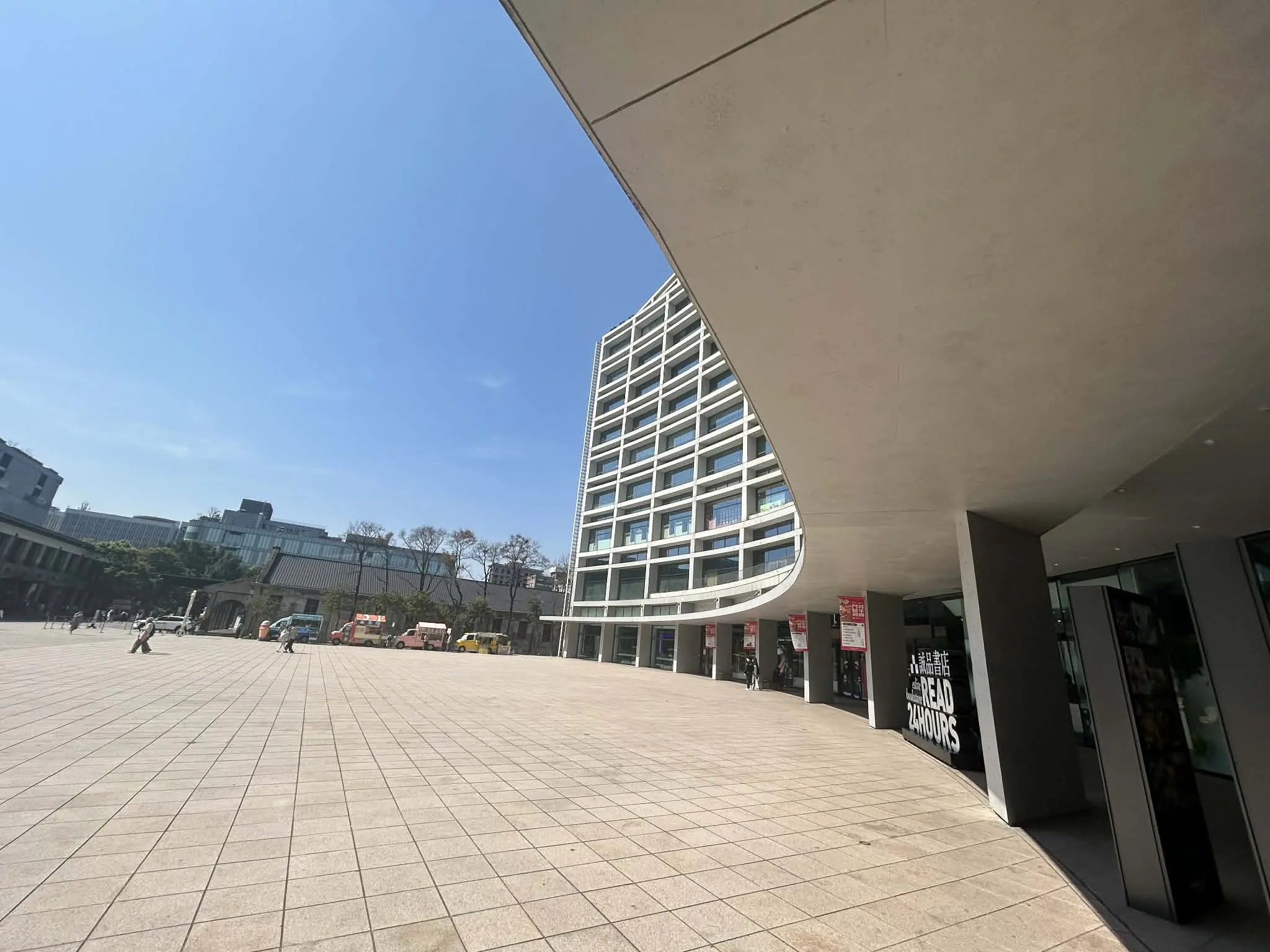

Songshan Cultural and Creative Park is a former tobacco plant in Taipei that has now been converted into a park, exhibition space, museum, and more. In this multifunctional park, you can enjoy the history of the old tobacco plant buildings, as well as ongoing exhibitions, art shows, restaurants, bookstores, and cafés. It is a great tourist stop in the heart of Taipei for both geeks and hipsters…(read more)

The original Songshan Tobacco office building, built in the Japanese era.
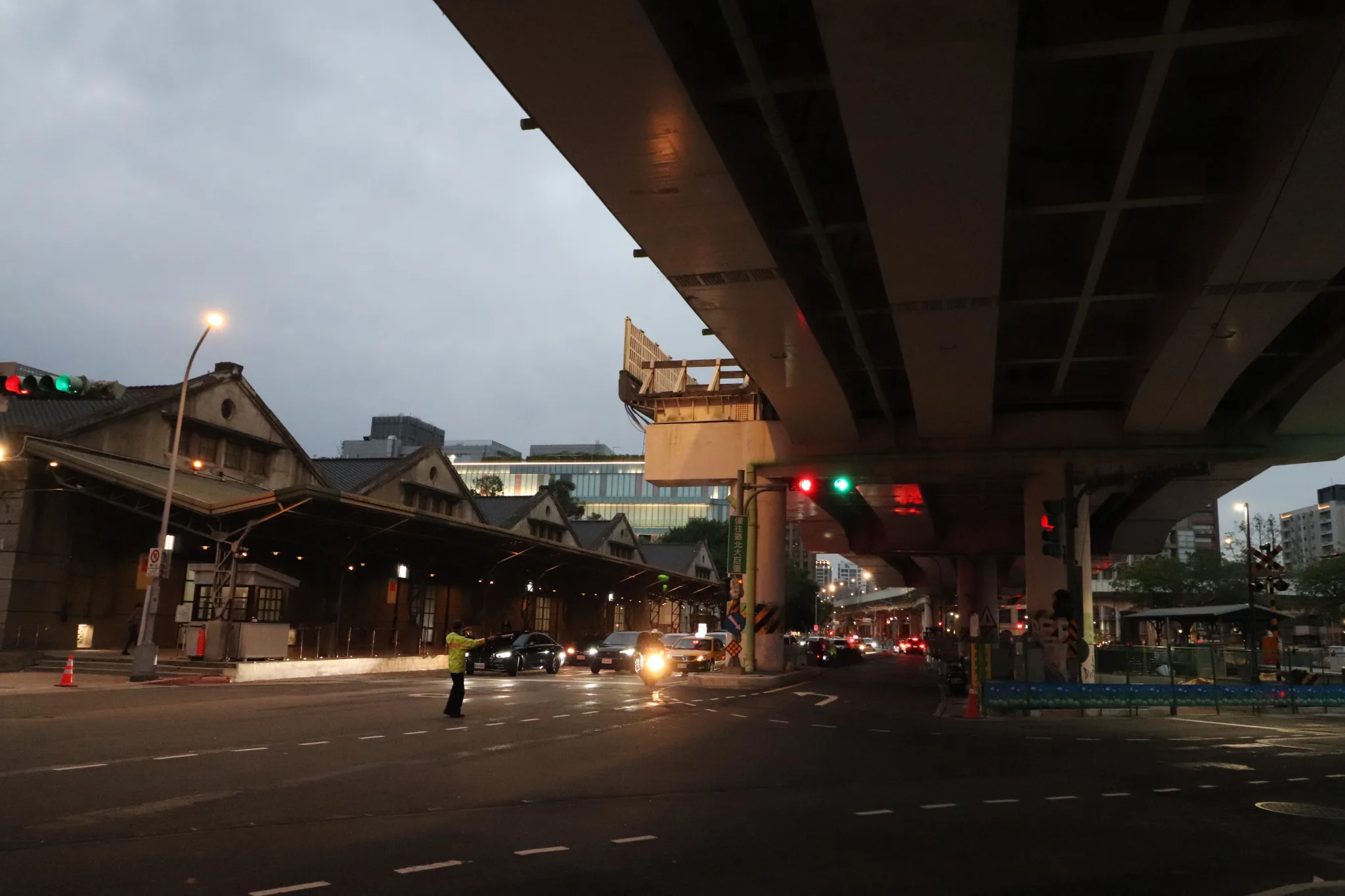
From Songyan, you need to cross the street.

The train crosses the street here, so it gets closer than Songyan.

View looking at the Taipei Railway Workshop.
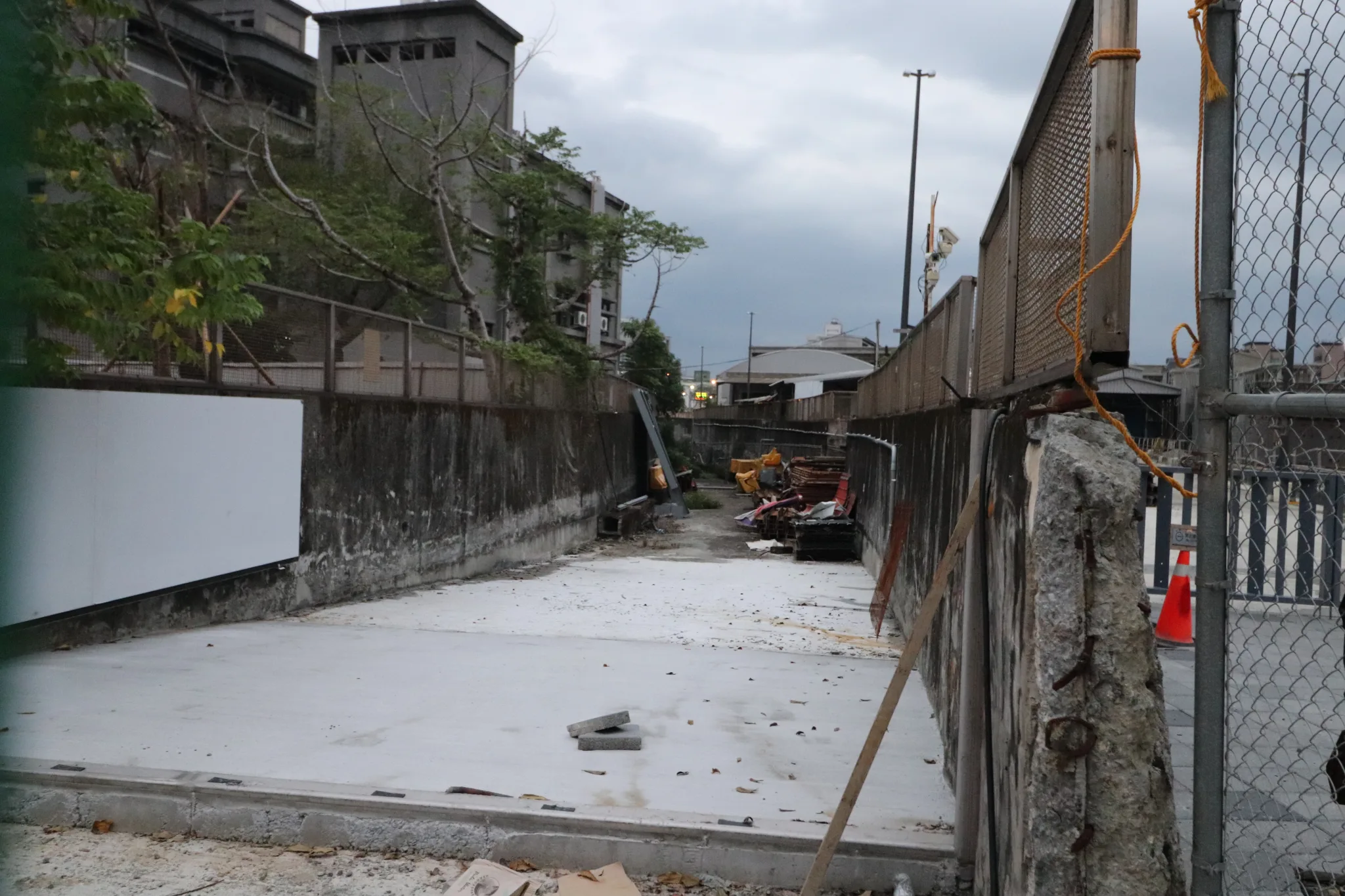
This is a ramp that leads to the underground railway in Taipei that runs under Civic Boulevard.

A long time ago, I think trains went down this ramp, but it has not been used in a long time.

Across the street, there is a new station that will open soon.

It is quite a walk from Songyan. But it is worth it.
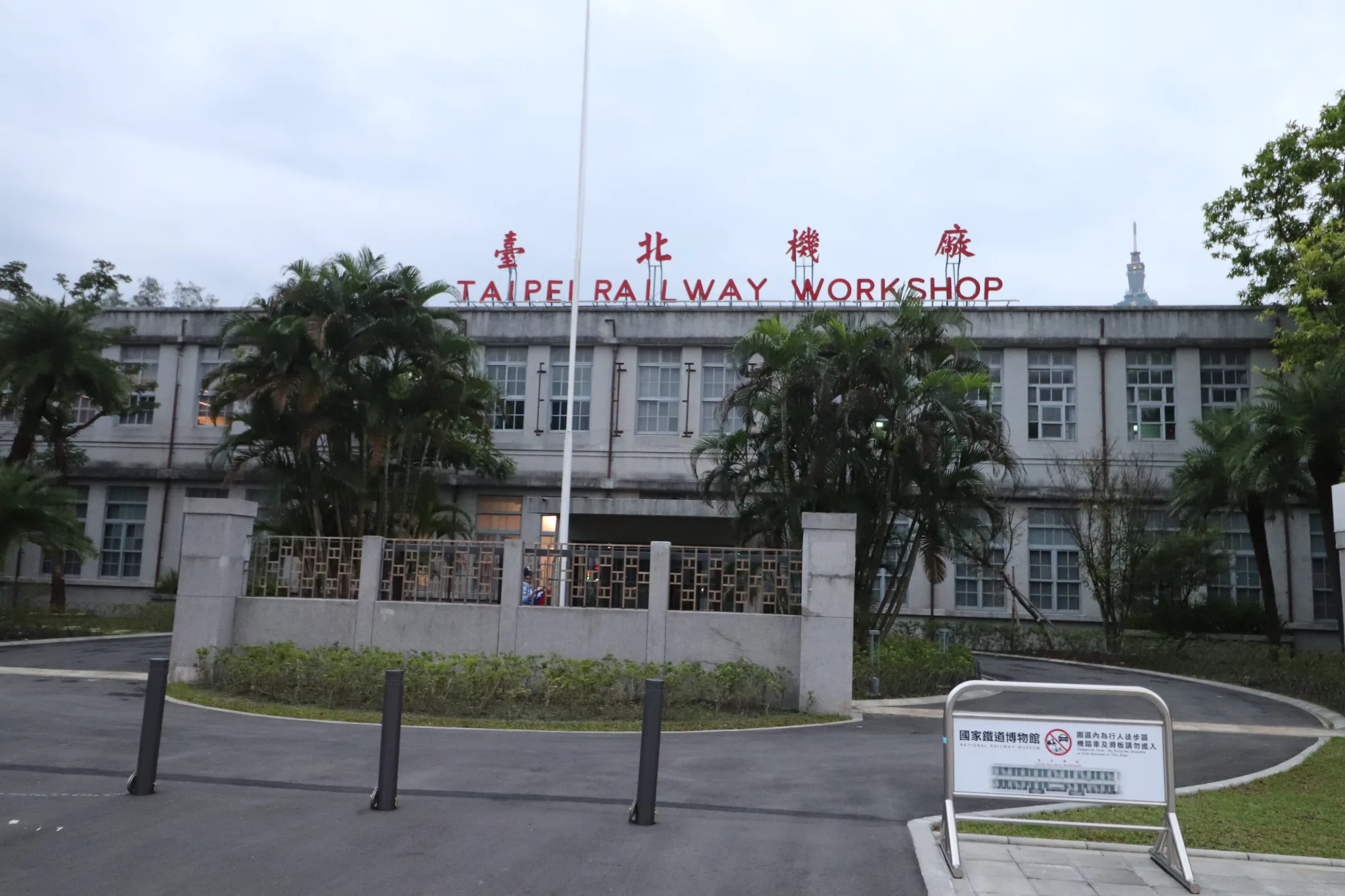
Entrance to the Taipei Railway Workshop 台北機廠.

Across the street, you can see the controversial Far Eastern mall complex being built, which involves a scandal that put former Mayor Ke Wen-zhe in jail.

The old employee entrance to the workshop.
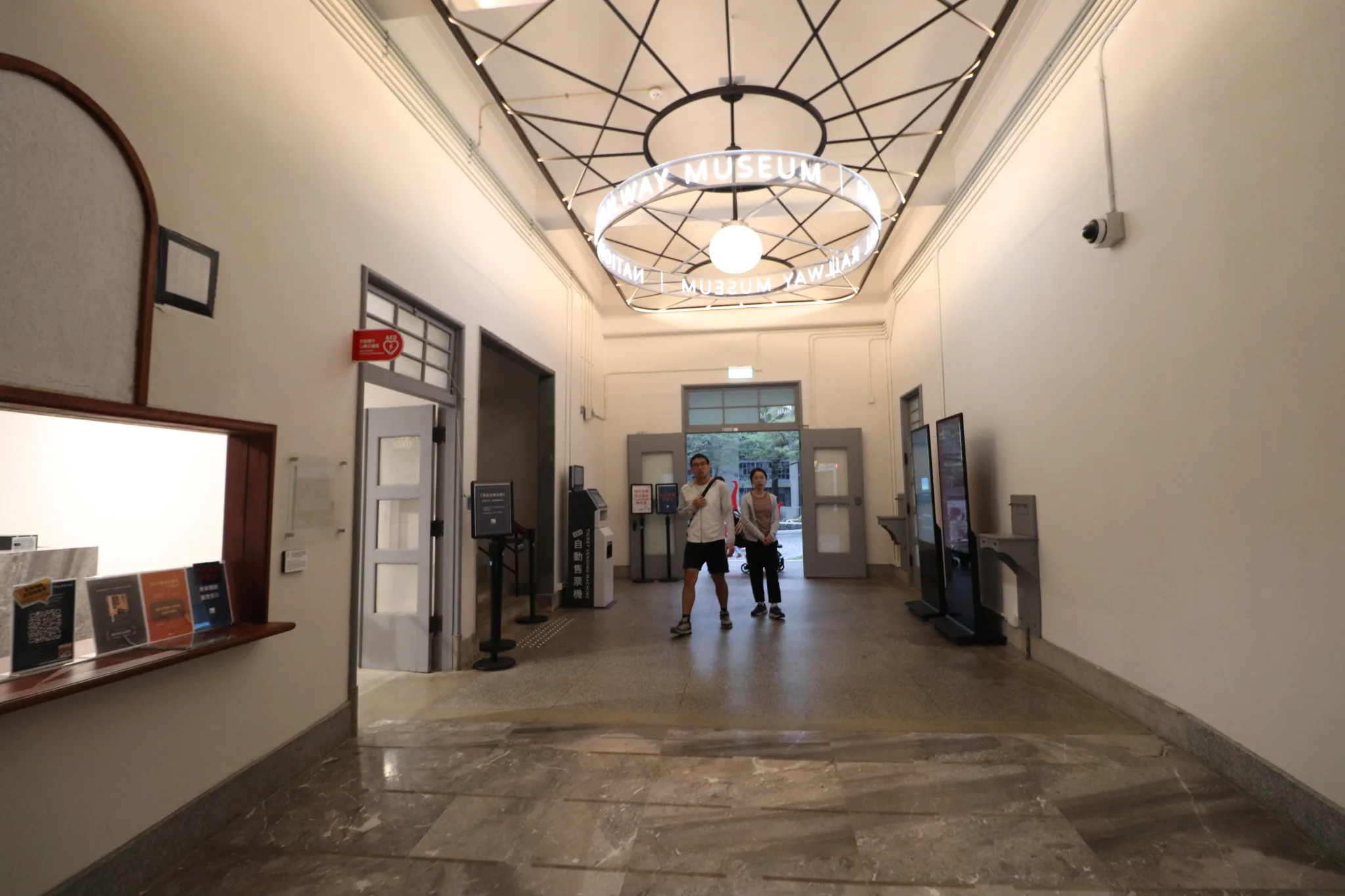
View inside the main entrance.

Window with prices for different areas.

A peek into the railway workshop.

There is a large fountain here in the center courtyard.

There are also paid lockers here if you need to leave your stuff.

You can also get some stamps here.

An exhibit with some historical documents.
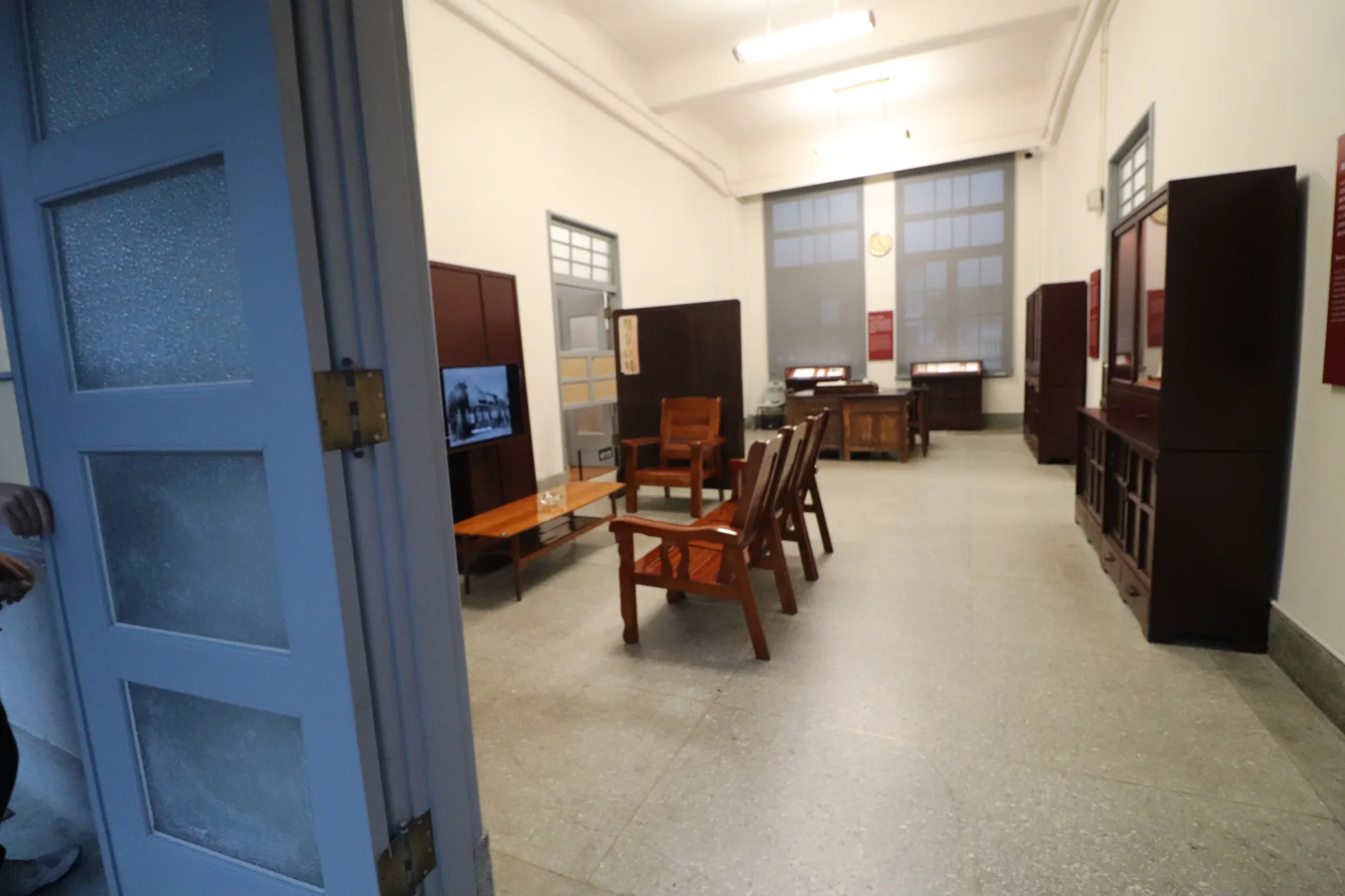
Old Japanese-era offices.

Another historical exhibit.

Here you can see what it was like to ride on a historic train.
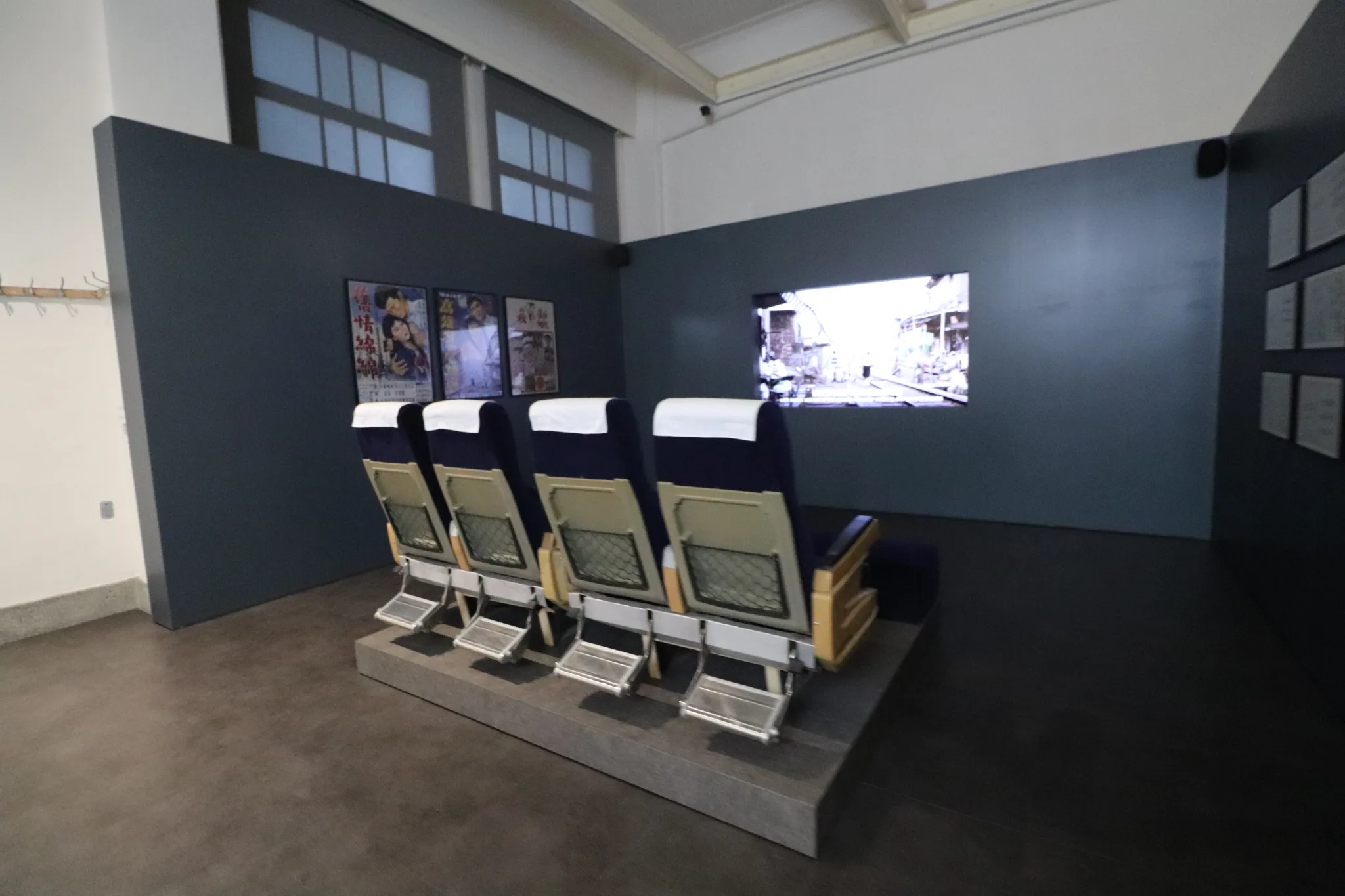
There is also a movie here, but only four seats to sit on.
Child Play Area 親子空間

When we first visited, there was a children’s play area where kids could play with toy trains. However, the play area needed to be reserved in advance.
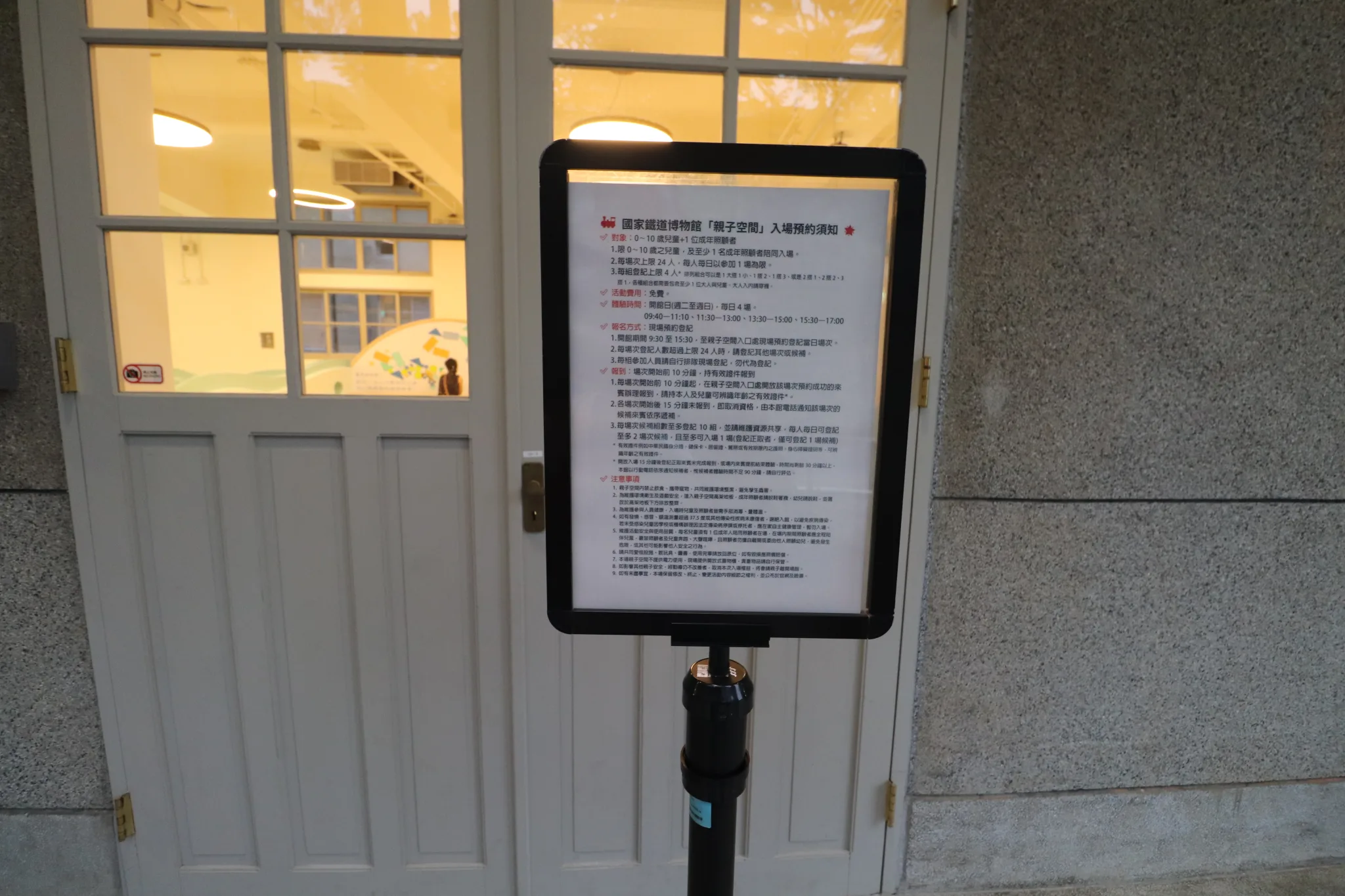
An online reservation was required. However, the second time we visited, the room was undergoing renovations. I am not sure when the room will reopen.

The long walkway in front of the main office building.
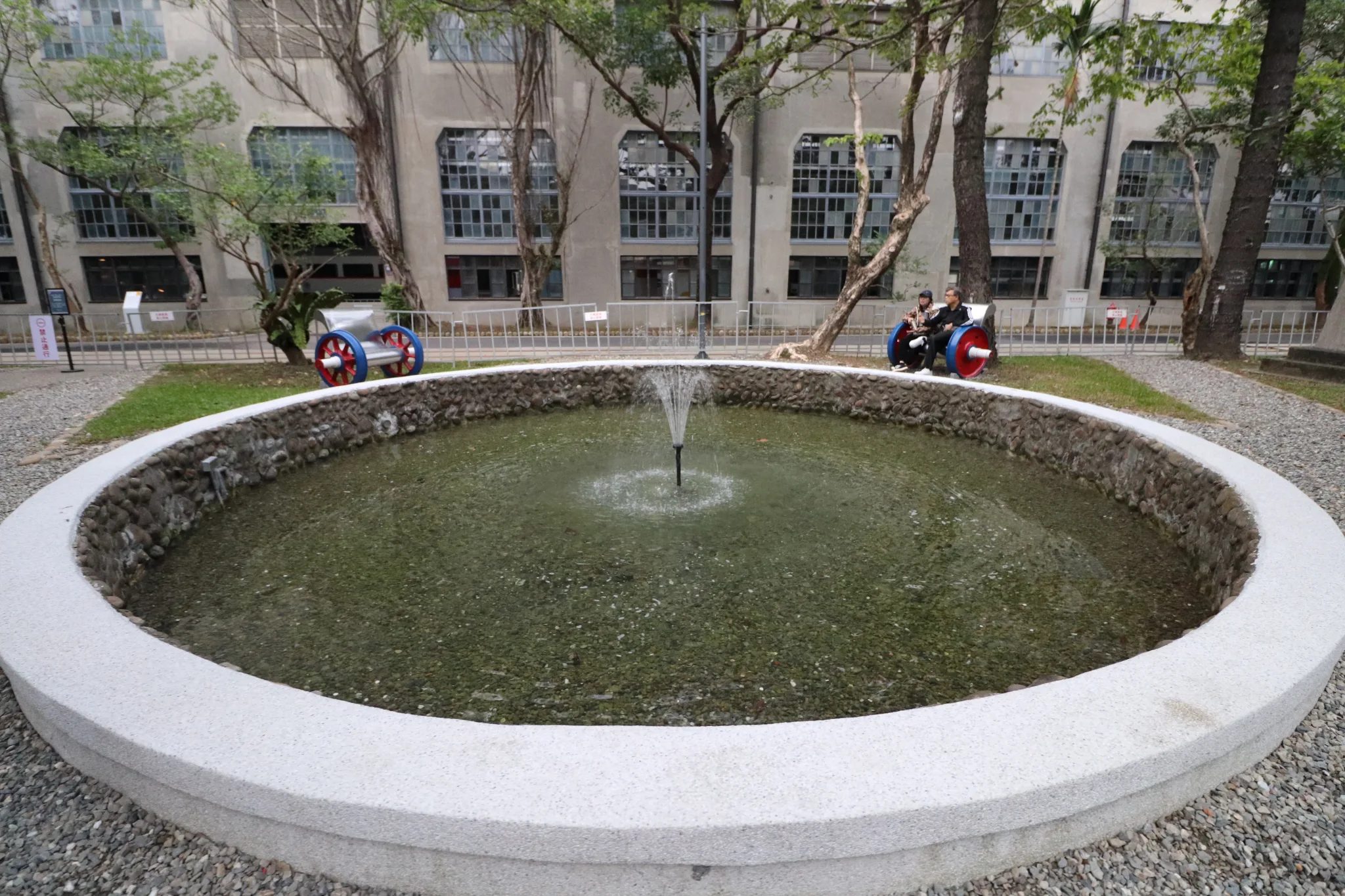
Closer view of the center fountain.

Japanese era spiral drain.
Train Ride 搭小火車

You can line up to ride the train from here. It is also one of the few places in the workshop that has a good view of the Taipei 101.
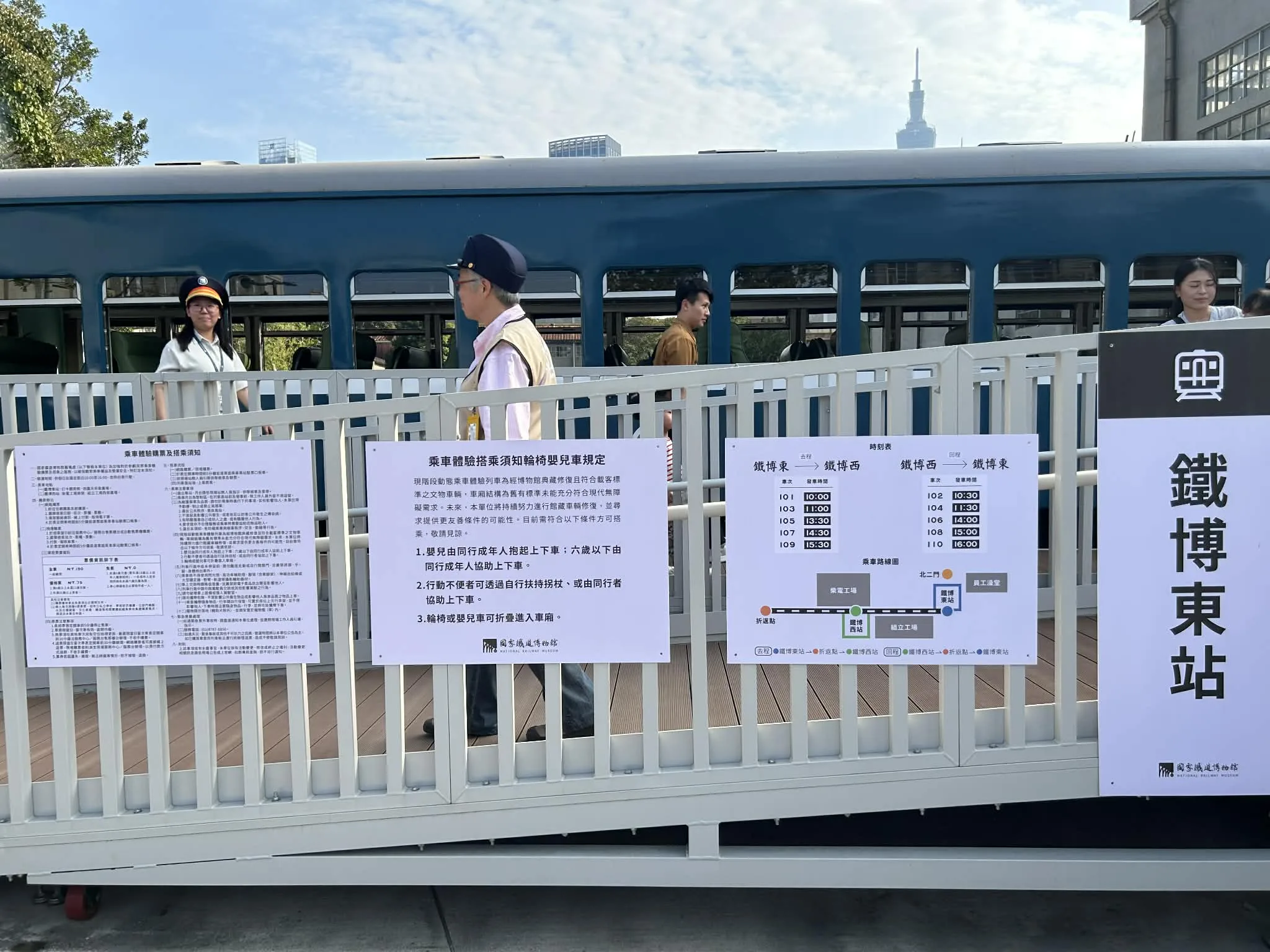
The train only runs a few times a day. The last train takes off at about 3:30. Be sure you get there early so you can be sure that you have a spot on the train.

I got my ticket!

When the time comes, you need to show your ticket to get on the train.

The first time, we were too slow, and we had to watch the train take off on its own.

Someone was happy to be on the train. This train has no air conditioning, only rotating fans.

View from outside the train.
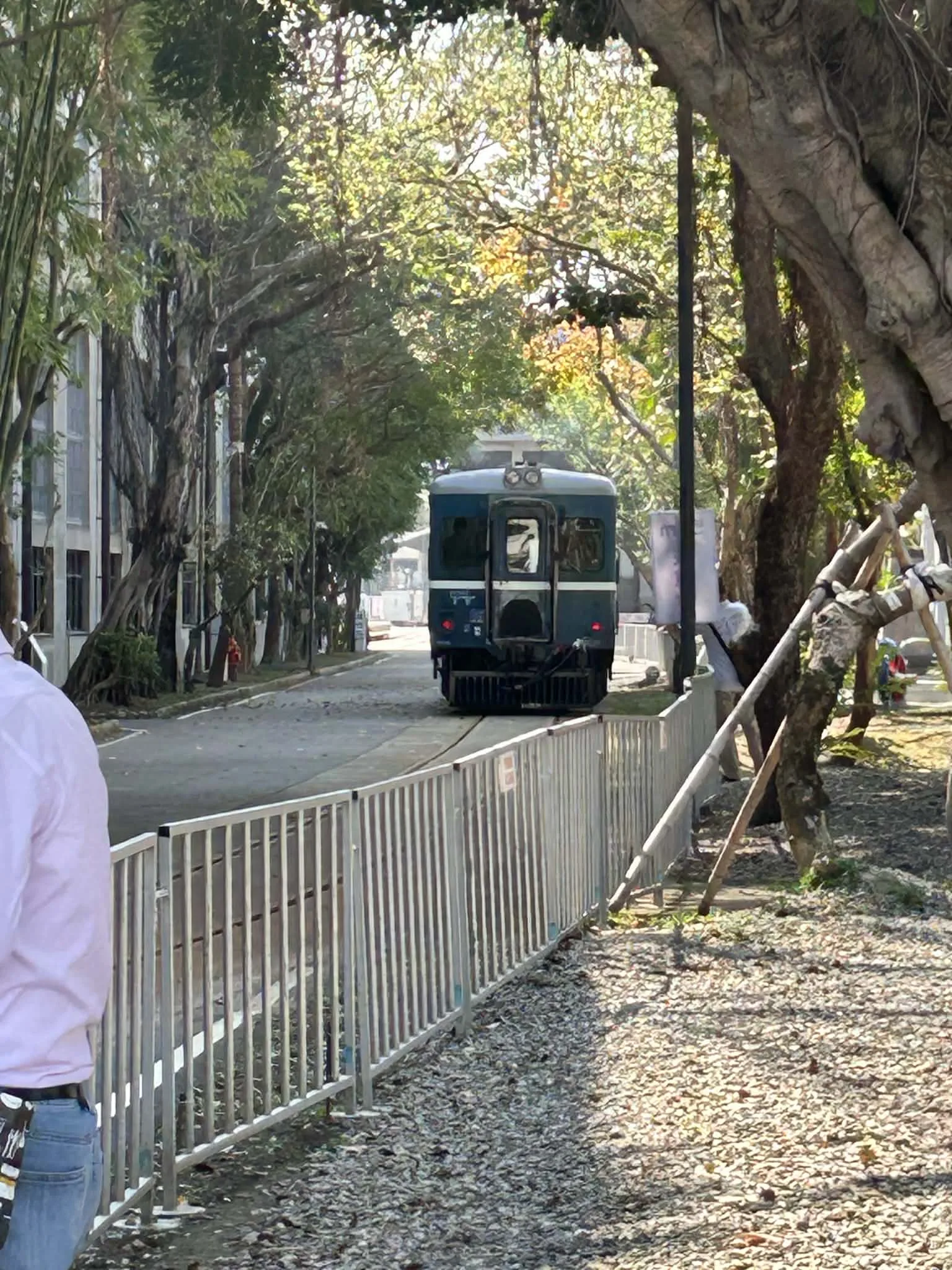
Watching the train go by.

The seats here can turn backwards and flip. But if they face each other, there will be no leg room.

View inside the old warehouse.

Another view from inside the train.
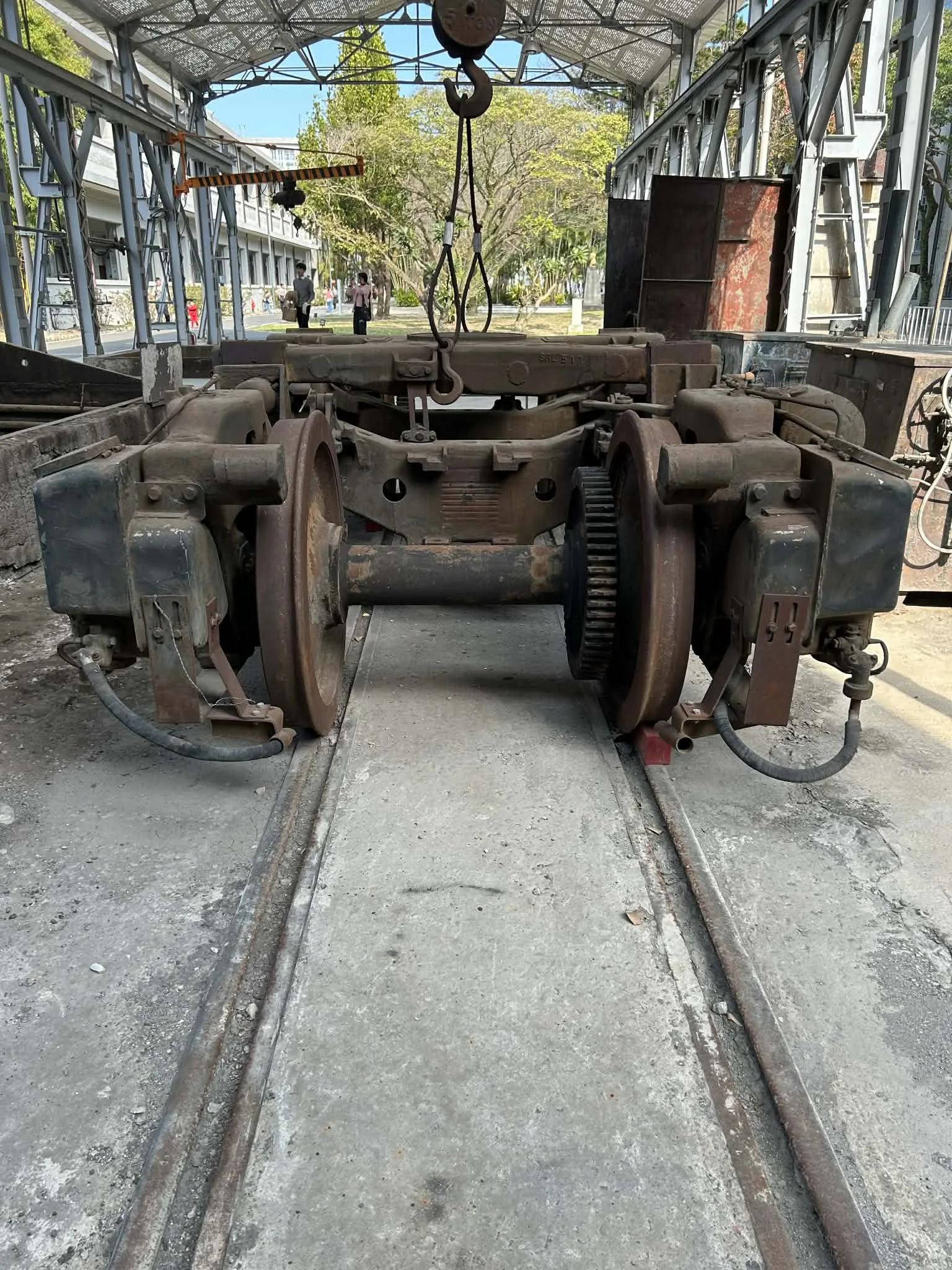
Old railroad wheels.
Employee Bathhouse 員工澡堂
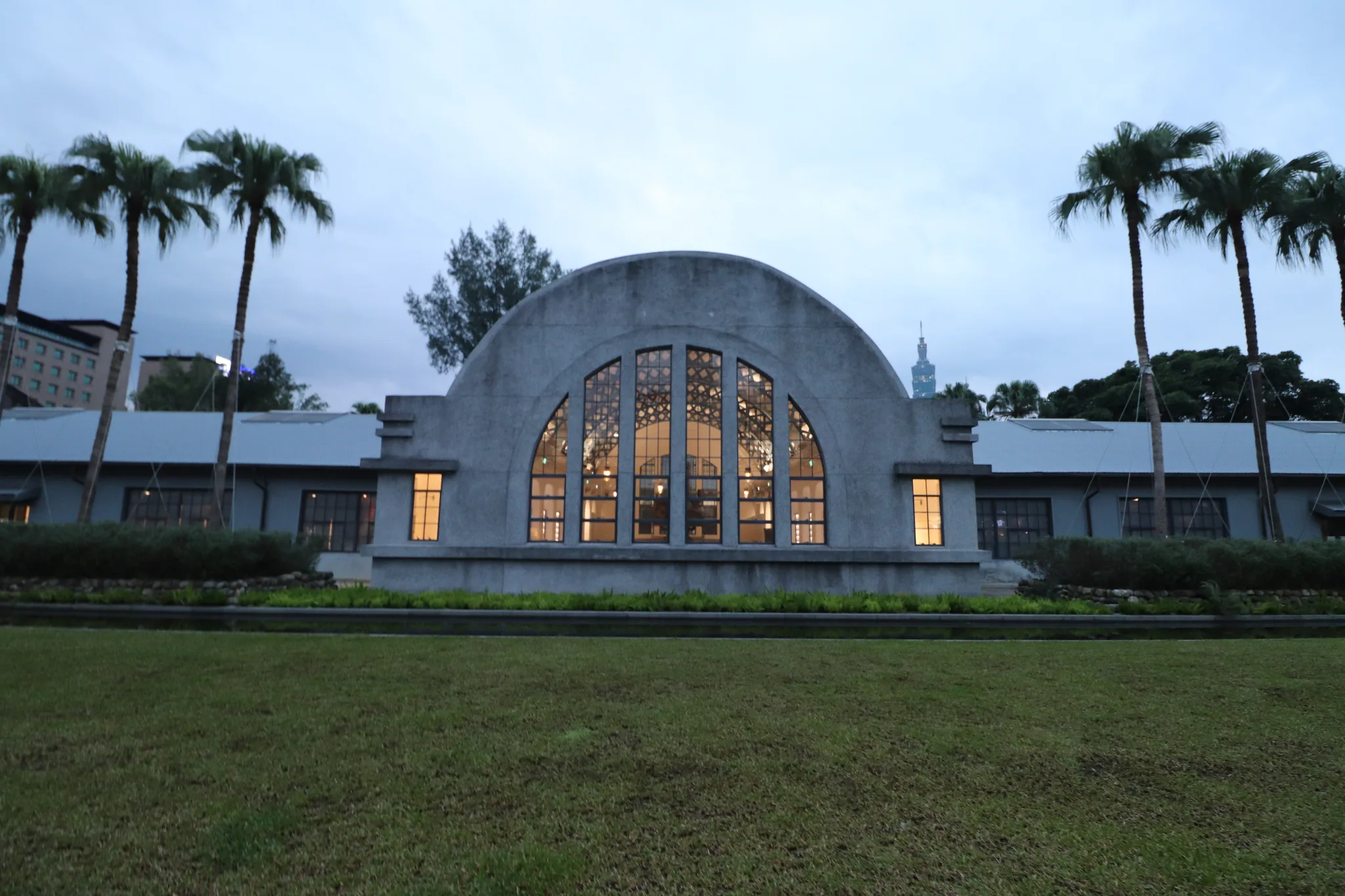
The bathhouse is the most beautiful building on site, and dates back to the Japanese era.

This was a communal bath for the men who worked in the warehouse after they had gotten dirty and sweaty.

There was a boiler here which added hot water to two pools.

Here you can see steam coming out of the machine.

You can also watch a video of naked men taking baths here, just a decade or so ago.
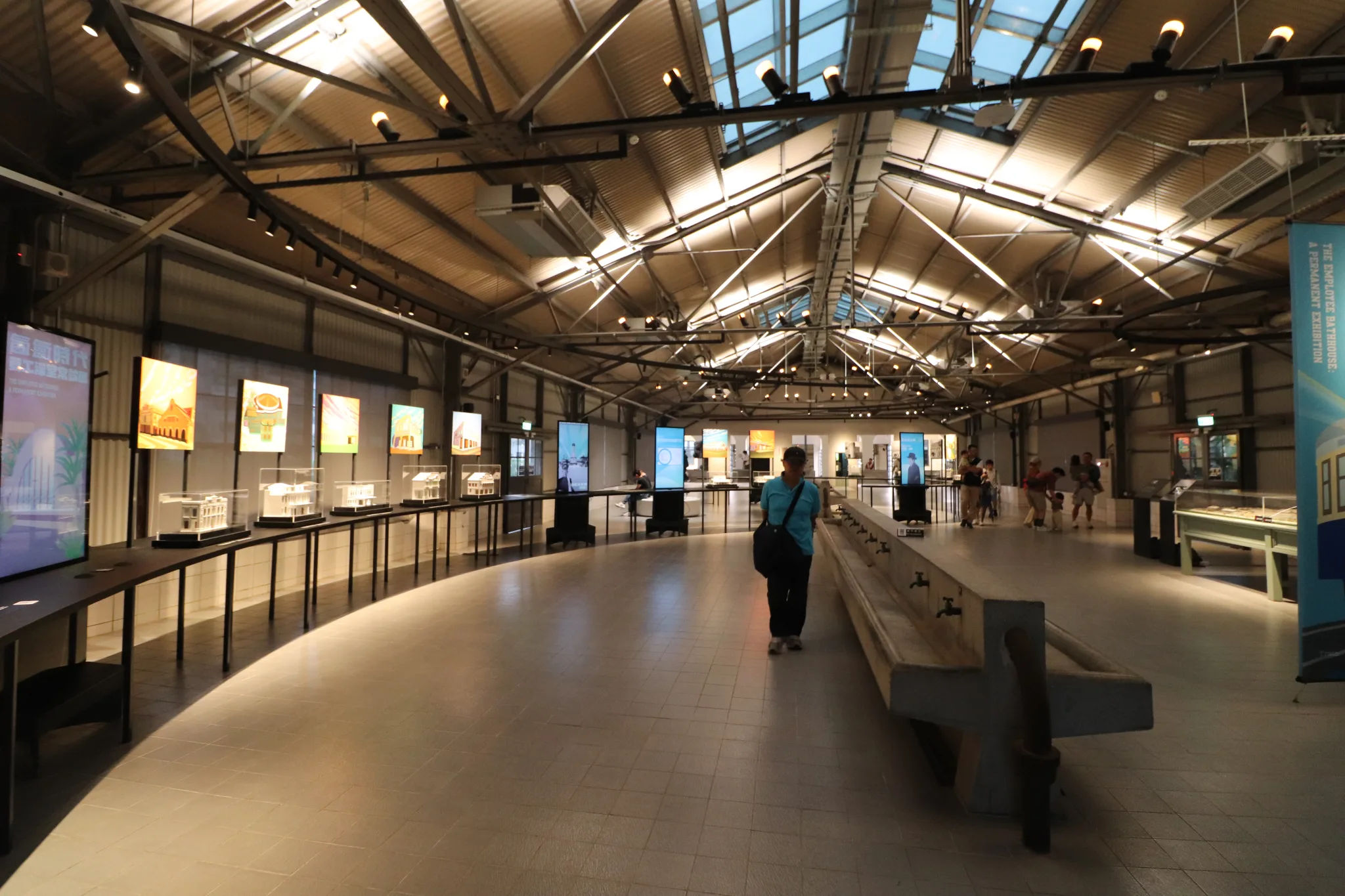
Facets and miniatures.
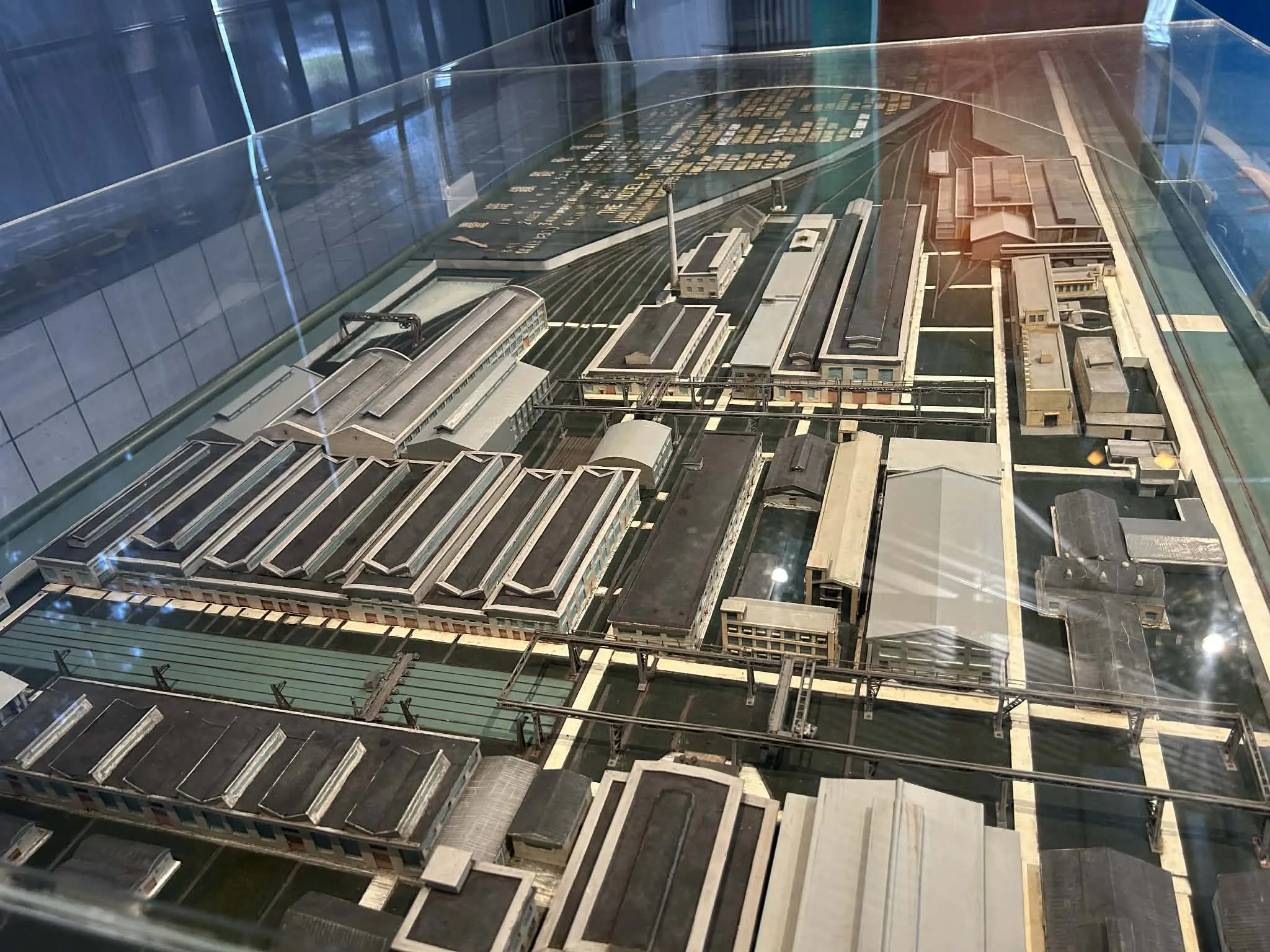
Miniature of the Taipei Railway Workshop.

Map key to the miniature model.

More faucets.

More models of railway-related buildings.
Meeting Hall 大禮堂
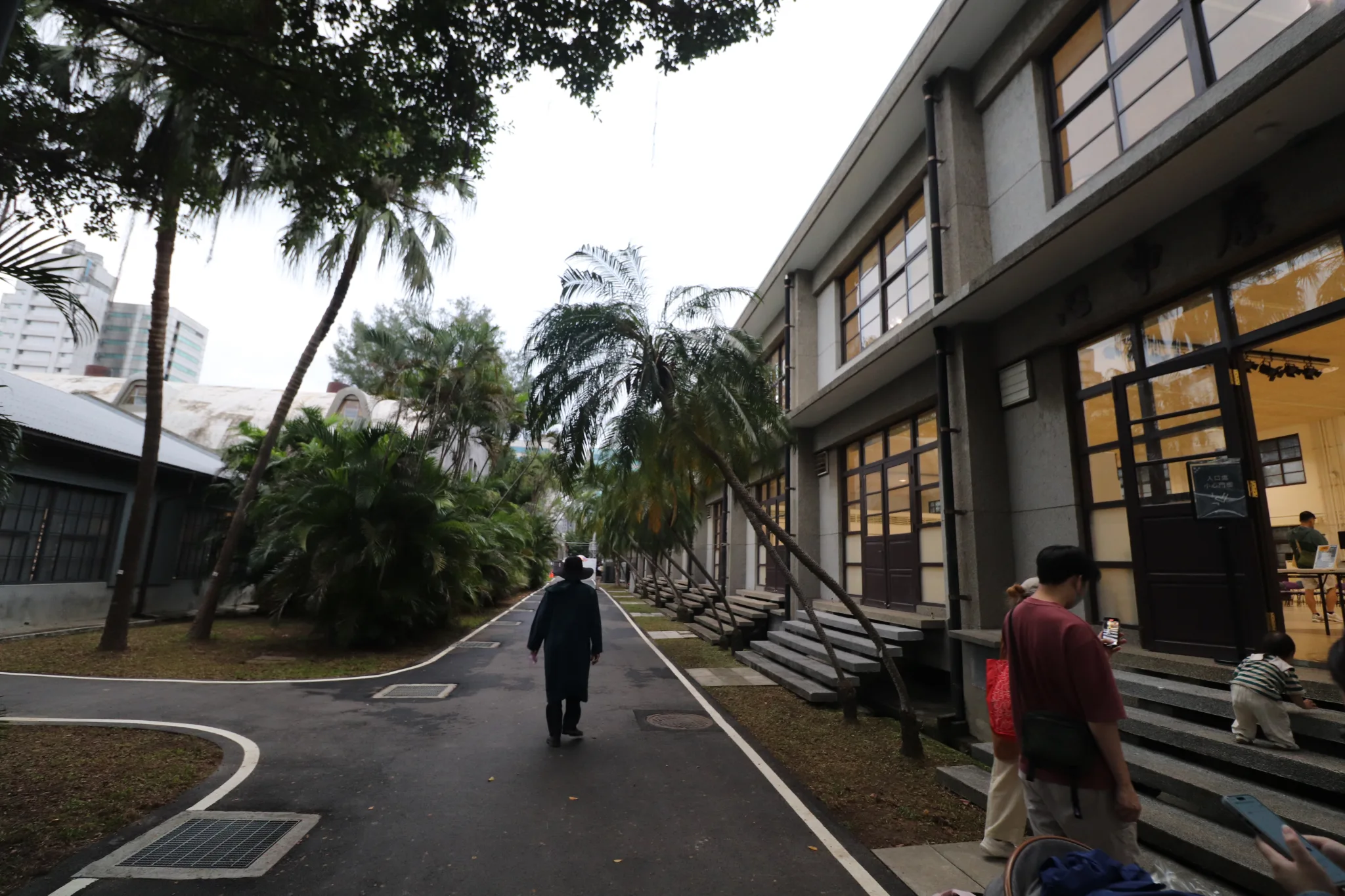
Near the bathhouse is the meeting hall, which has a large space, a gift shop, snacks, and an old kitchen.

There is a big space here, which also has two badminton courts.

They also sell bento boxes, snacks, and drinks here.

There is also a rather large gift shop with lots of cool stuff inside.

Ice cream and popsicles.

There are also places to sit and eat.

More popsicles.

Japanese era map of Su’Ao to Hualien.

Japanese era map of Hualien to Taitung.

Japanese era map of Beitou.

Japanese era map of Kaohsiung.

Japanese era map of Taichung.

Here you can also see a historical kitchen.

This is what a bento lunch box would have looked like back then.

View inside the kitchen!

More drinks and snacks.

Bento boxes for sale.
Gu Renrong Exhibit 古仁榮攝影展覽

Gu Renrong was the most famous Taiwan train photographer of all time. Way more popular than other train photographers, such as Josh Ellis.

Here is a photo of him in front of an old coal train car.
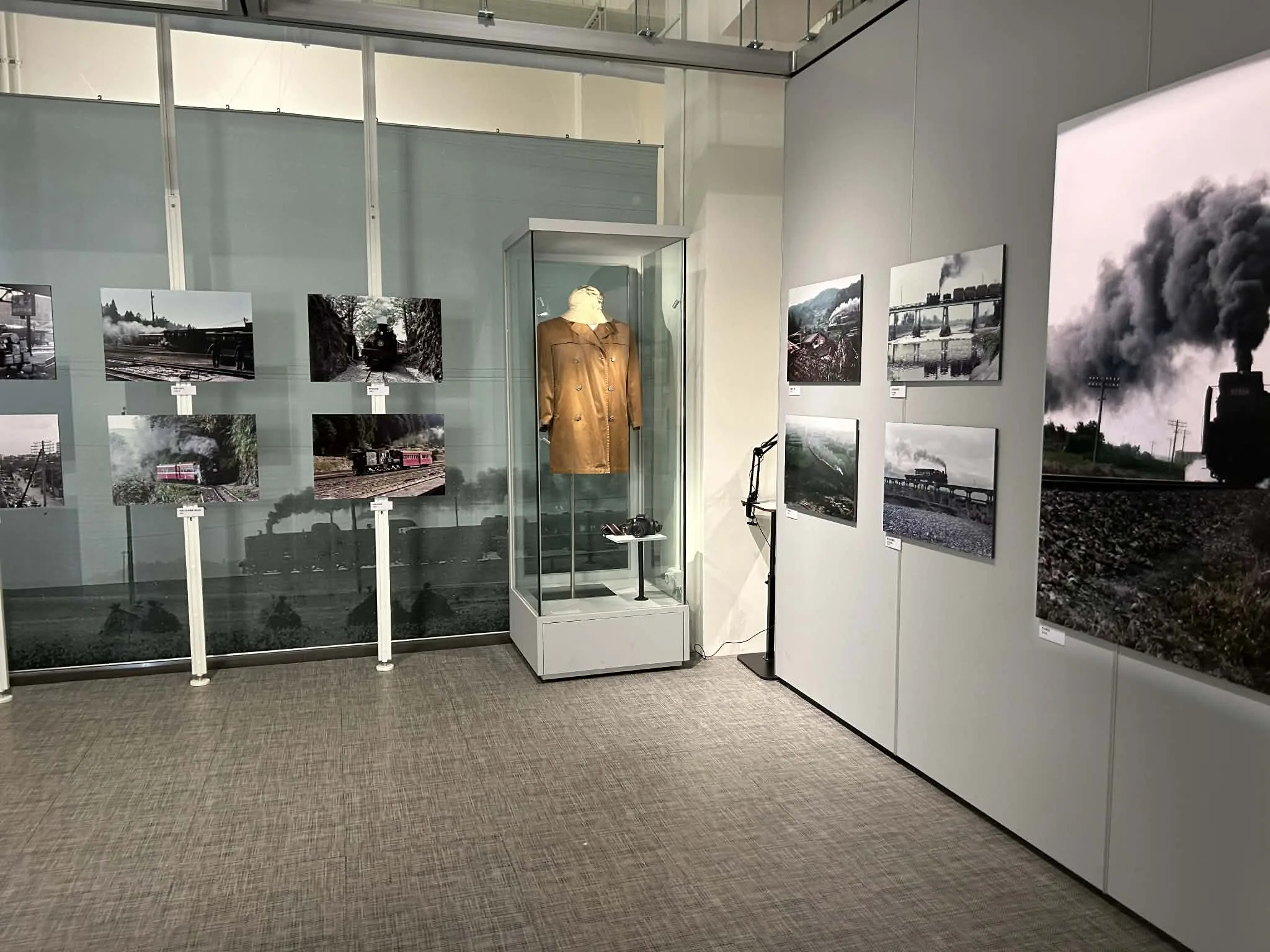
More of his photos can be found here.

More about his life and accomplishments.

Back to the office area.

This office had a sink in it.

Old meeting room.

This is what a Japanese railway bento box would have looked like.

Historical photos and documents.

Customer service area.

An old comic that people would have read on the train.
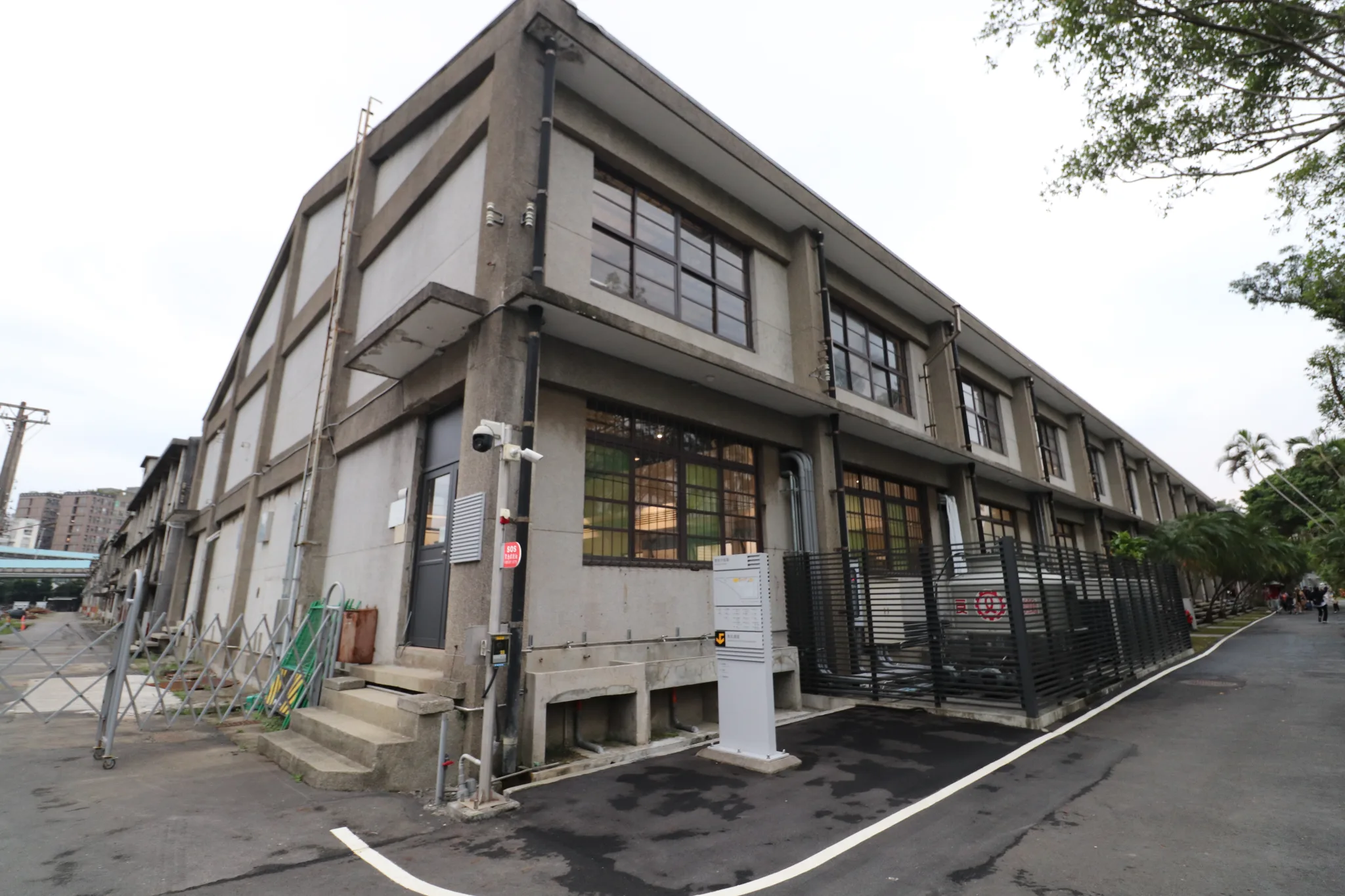
View from outside the meeting hall.
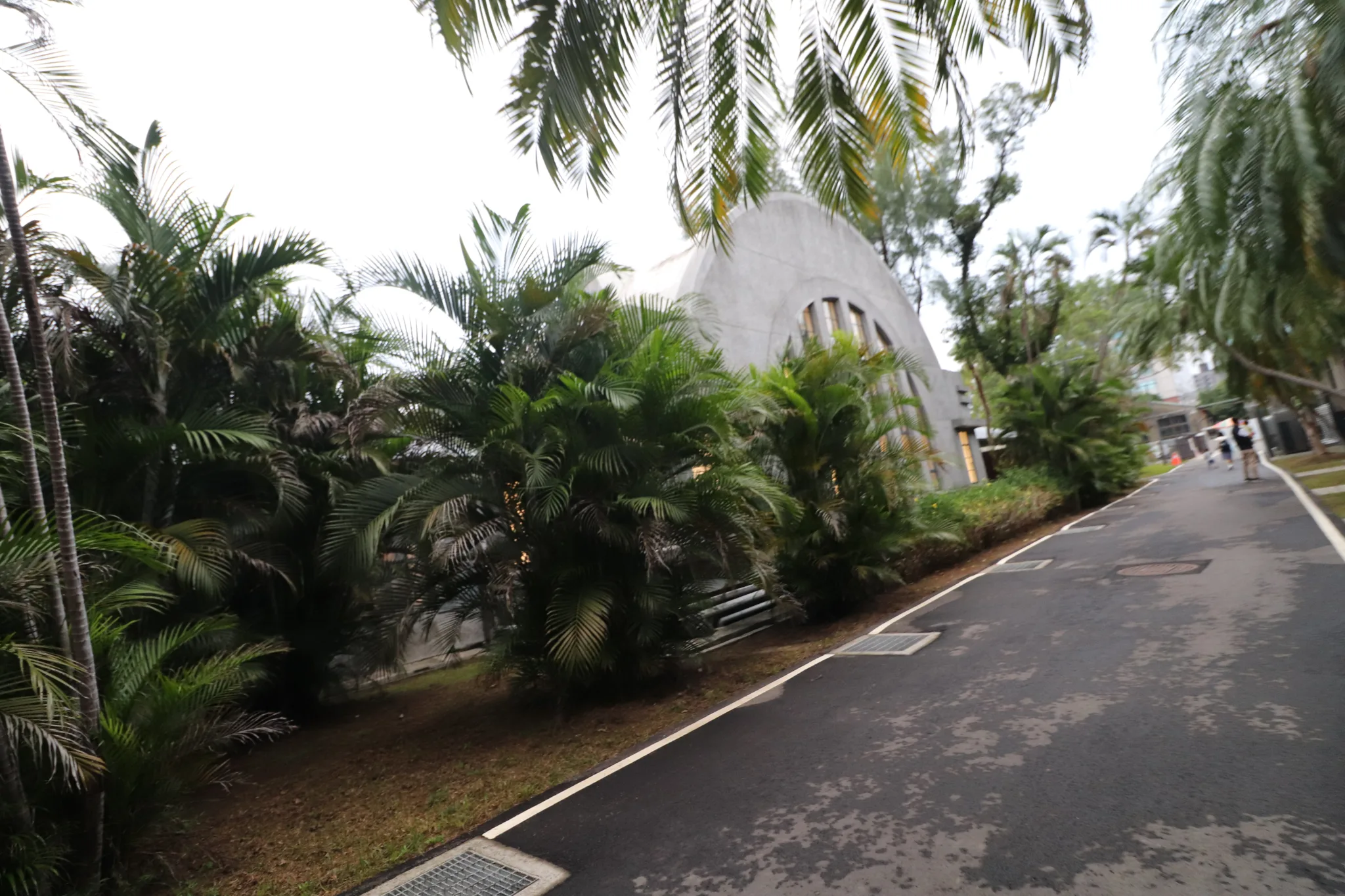
Another view from the bath house.
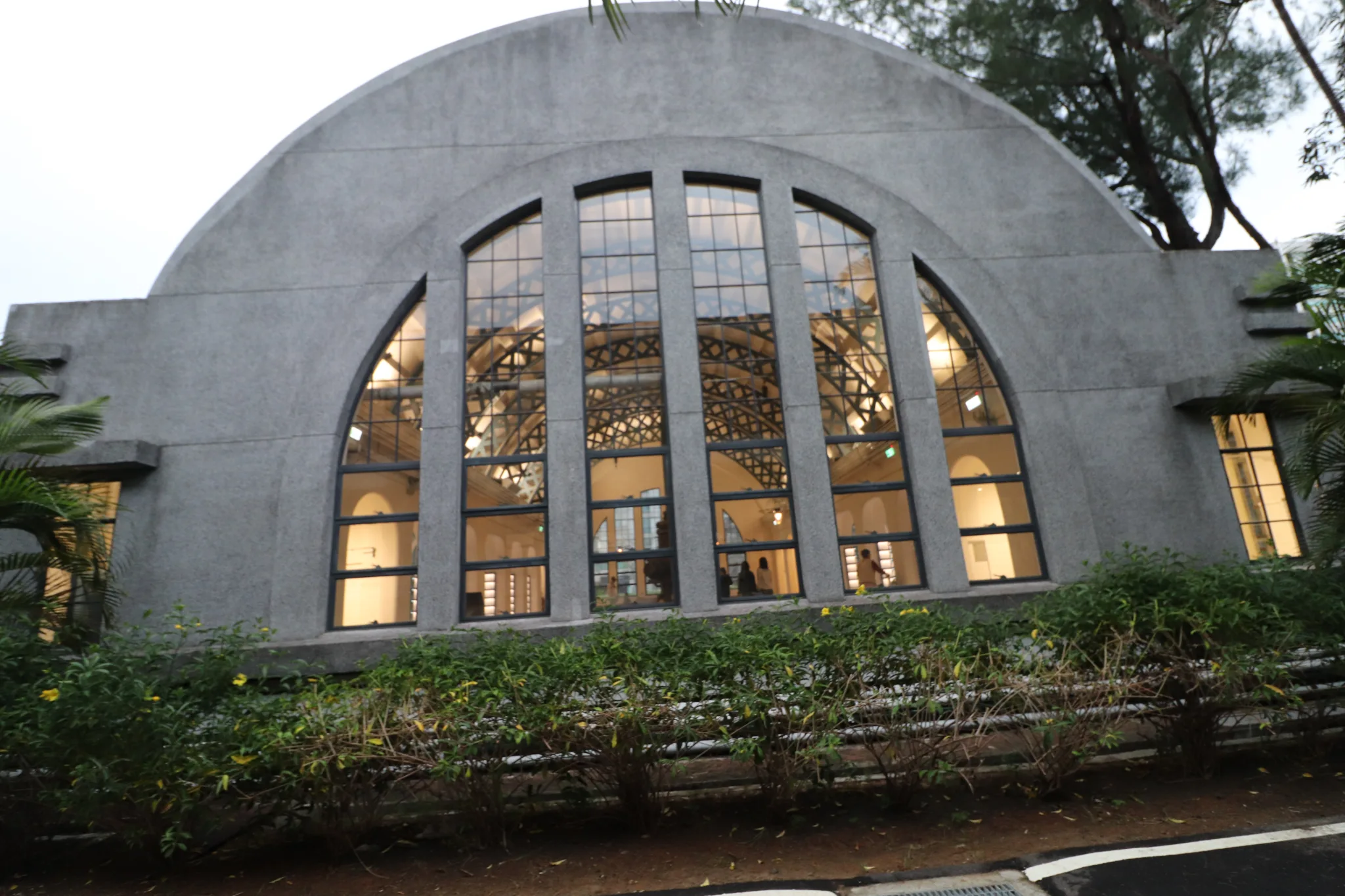
View from outside the bathhouse.
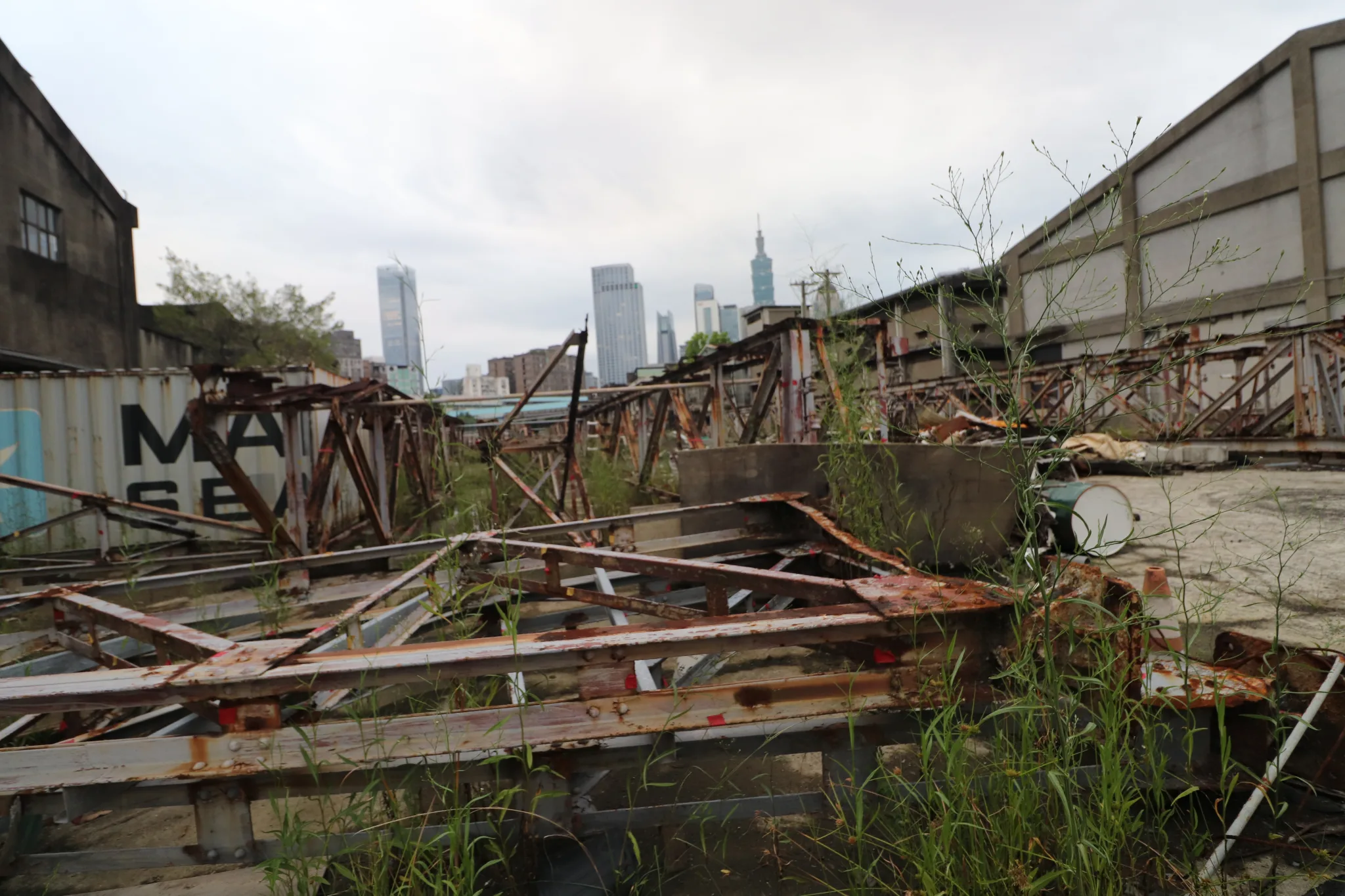
These used to be cranes that carried heavy things. Now they have rusted beyond repair.

Hopefully this area will be restored soon.

There is a pathway here that connects to Keelung Road.
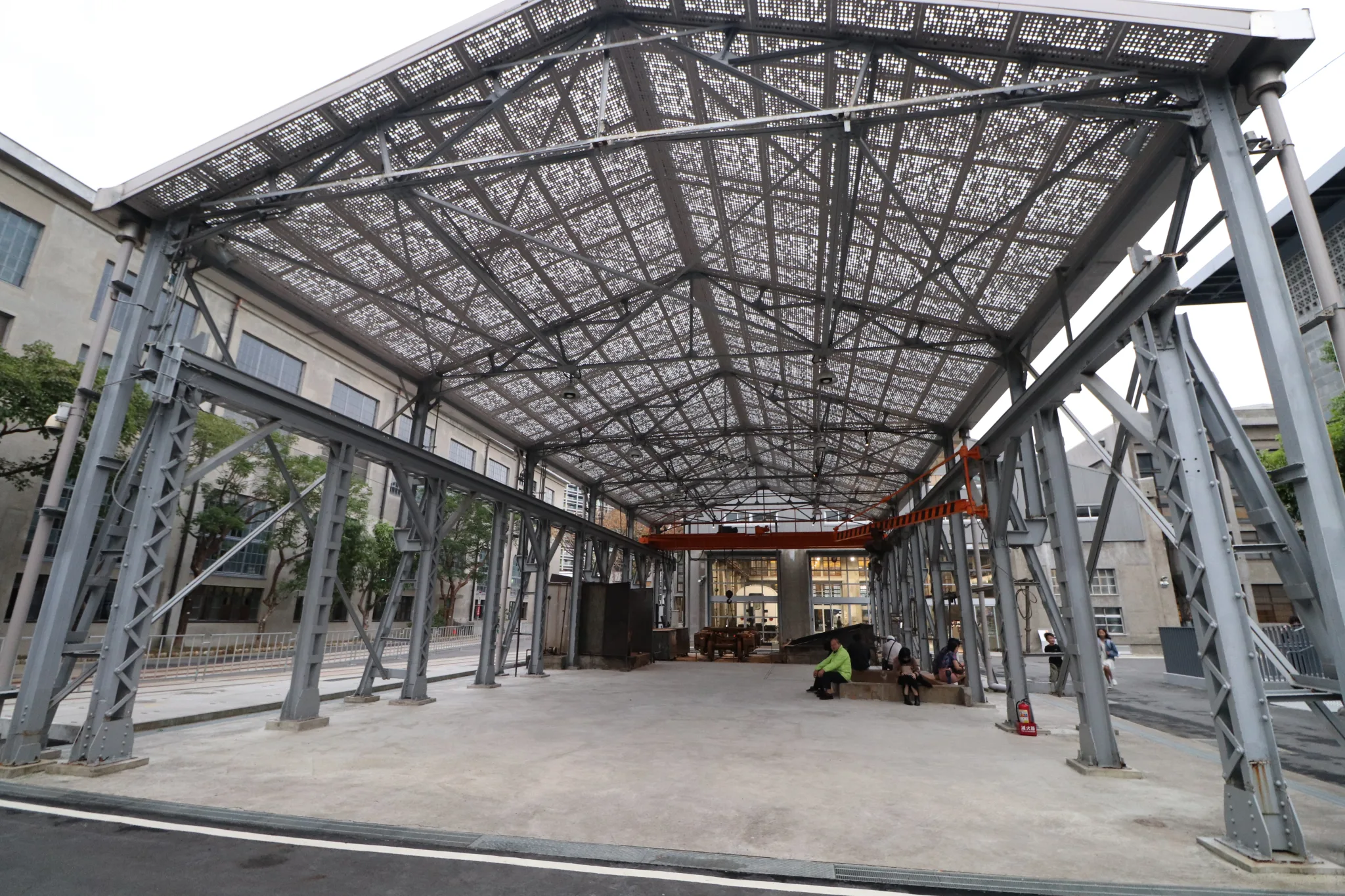
Next, we made our way to the Diesel Train Workshop.
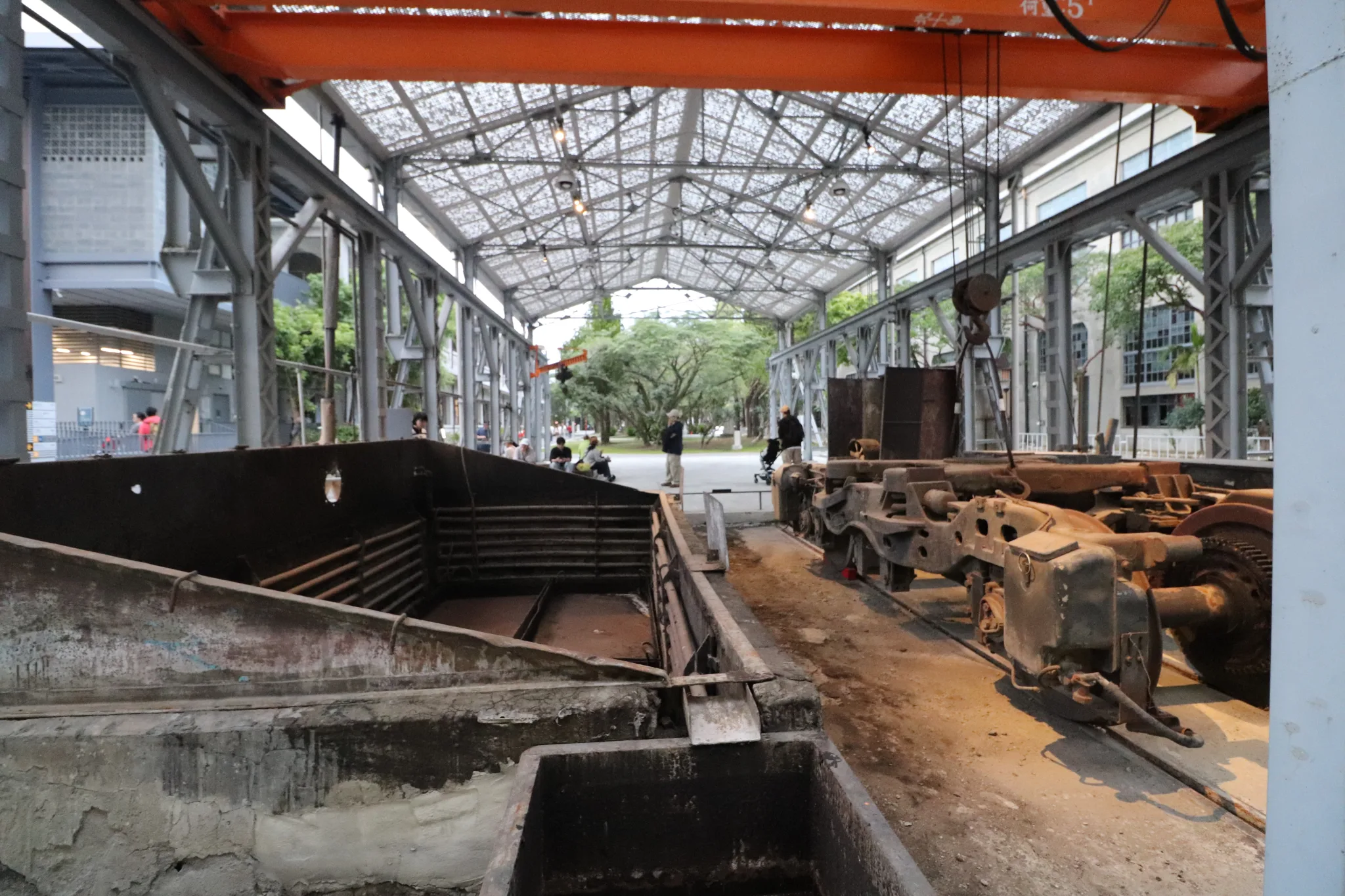
There is a small outdoor workshop in front of it.

There are also bathrooms nearby here.

Outside the diesel workshop, there is one white train on display.
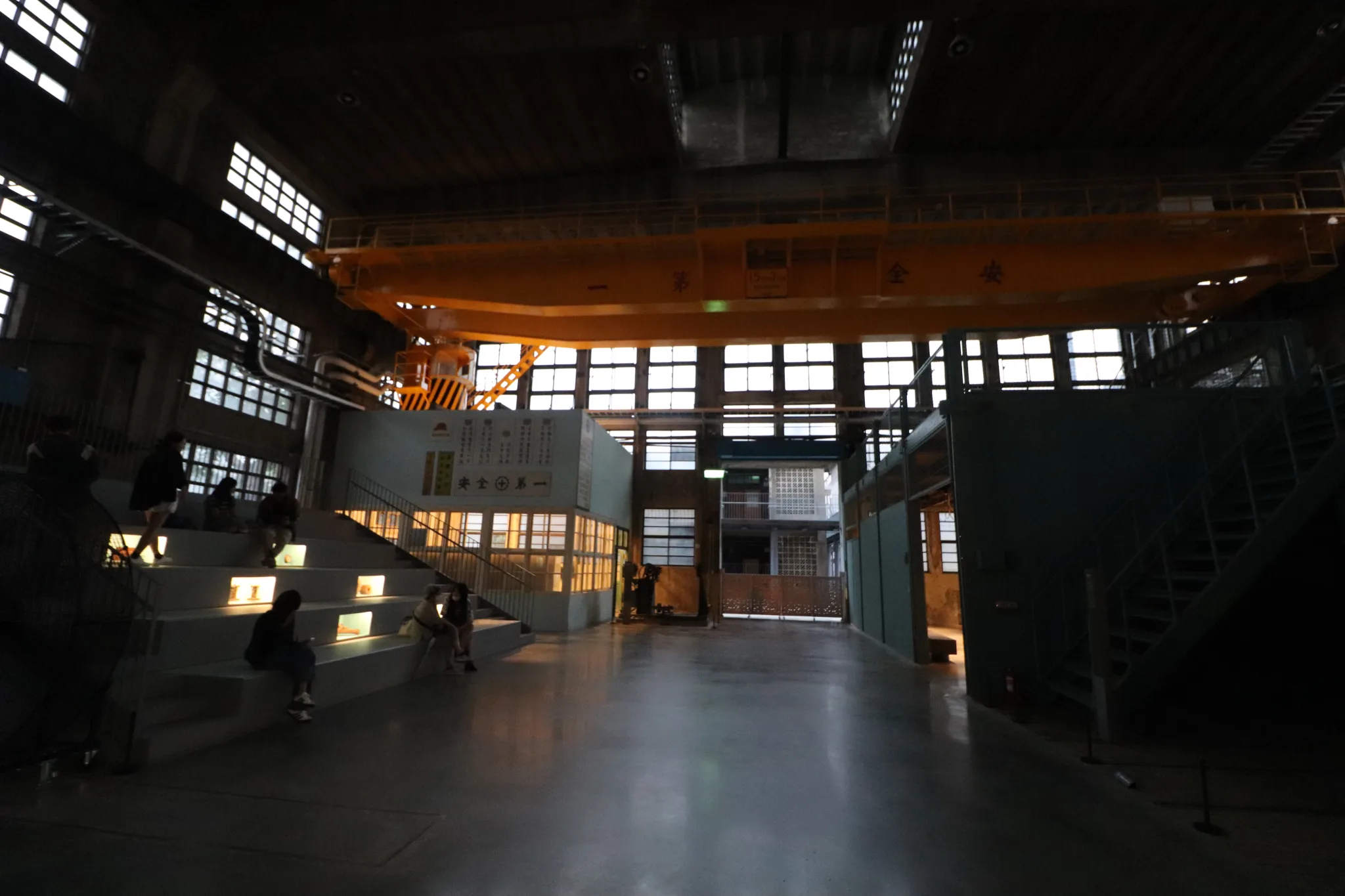
Outside of the paid area, there are a few things to see.

Old safety office.

Seating area with old gears.

Map of the Taipei Railway Workshop. There is a film here.

Next, we explore inside the diesel workshop, which requires an additional ticket to get in.

Gears and shocks are needed for each car.

The insides of a large diesel engine.

Huge diesel engine on display.

Pistons on display.
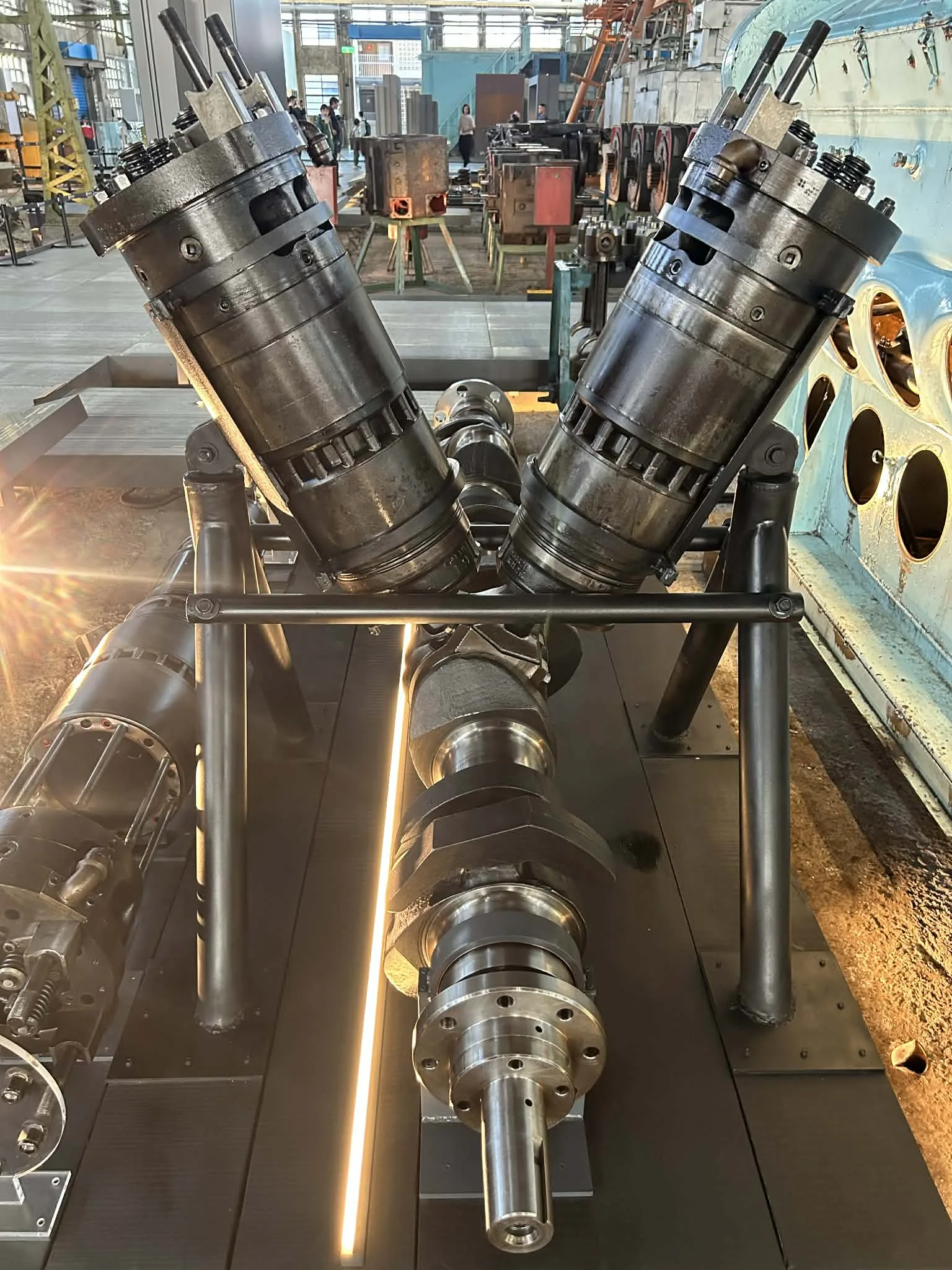
Drive shaft.

Another view of the wheels and parts needed to be serviced.

Inspection codes chart.

Refurbished parts need to go into the varnish tank.

View of the two main engines on display.

Here you can learn more about diesel locomotives in Taiwan.

If you press a button, this will lift up, showing you how electric locomotives receive power.

There is also a really cool hologram video display that happens here. Check out the video below.

Lots of people line up and wait to see the hologram display.

There is also a steam engine here on display.
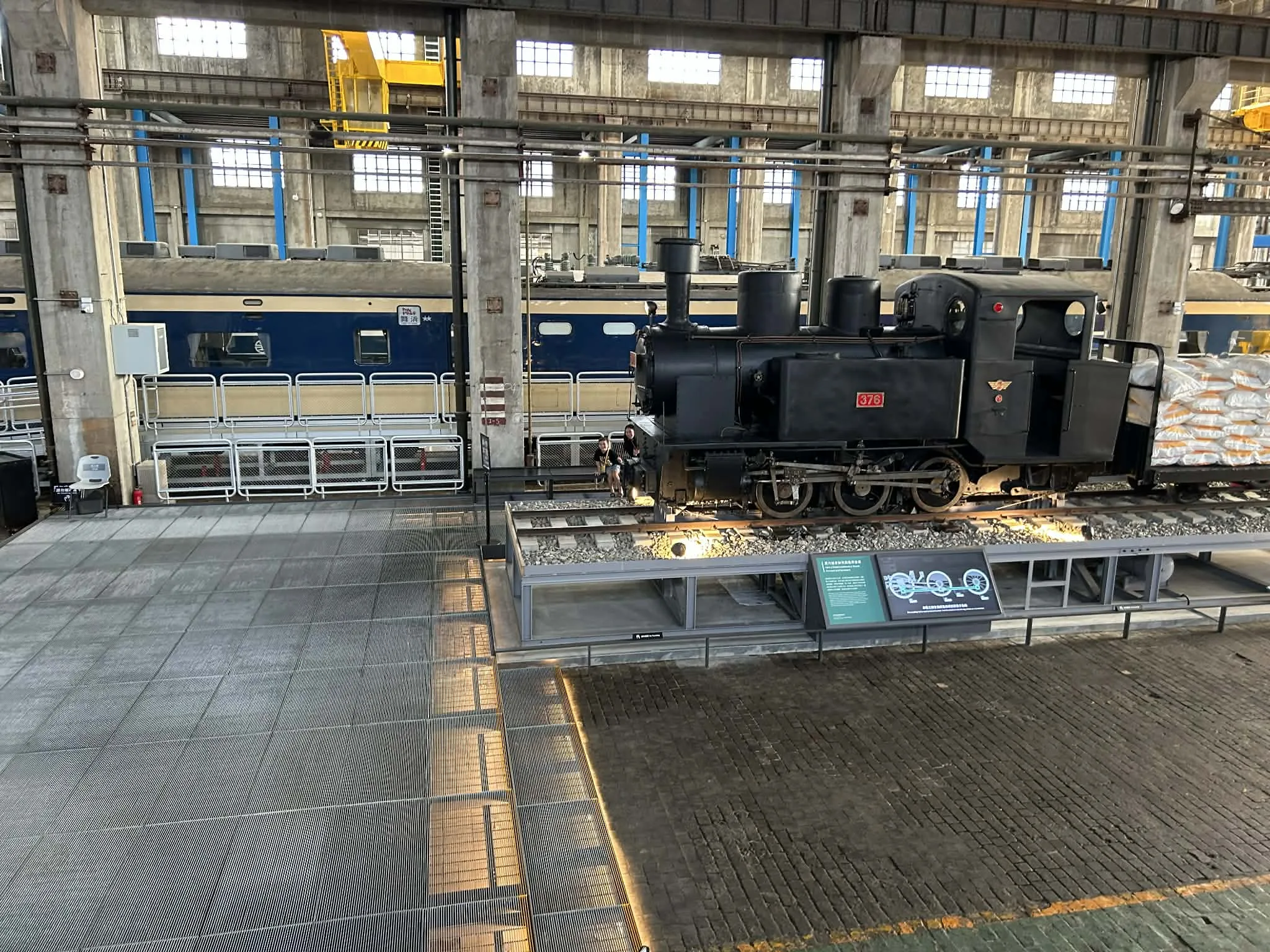
Another view of the steam engine.

The wheels on the steam engine are constantly turning, which is quite mesmerizing.

Another view of the diesel engine here.

More on the history of diesel-electric trains.

Inside an electric motor.

Servicing an electric motor.
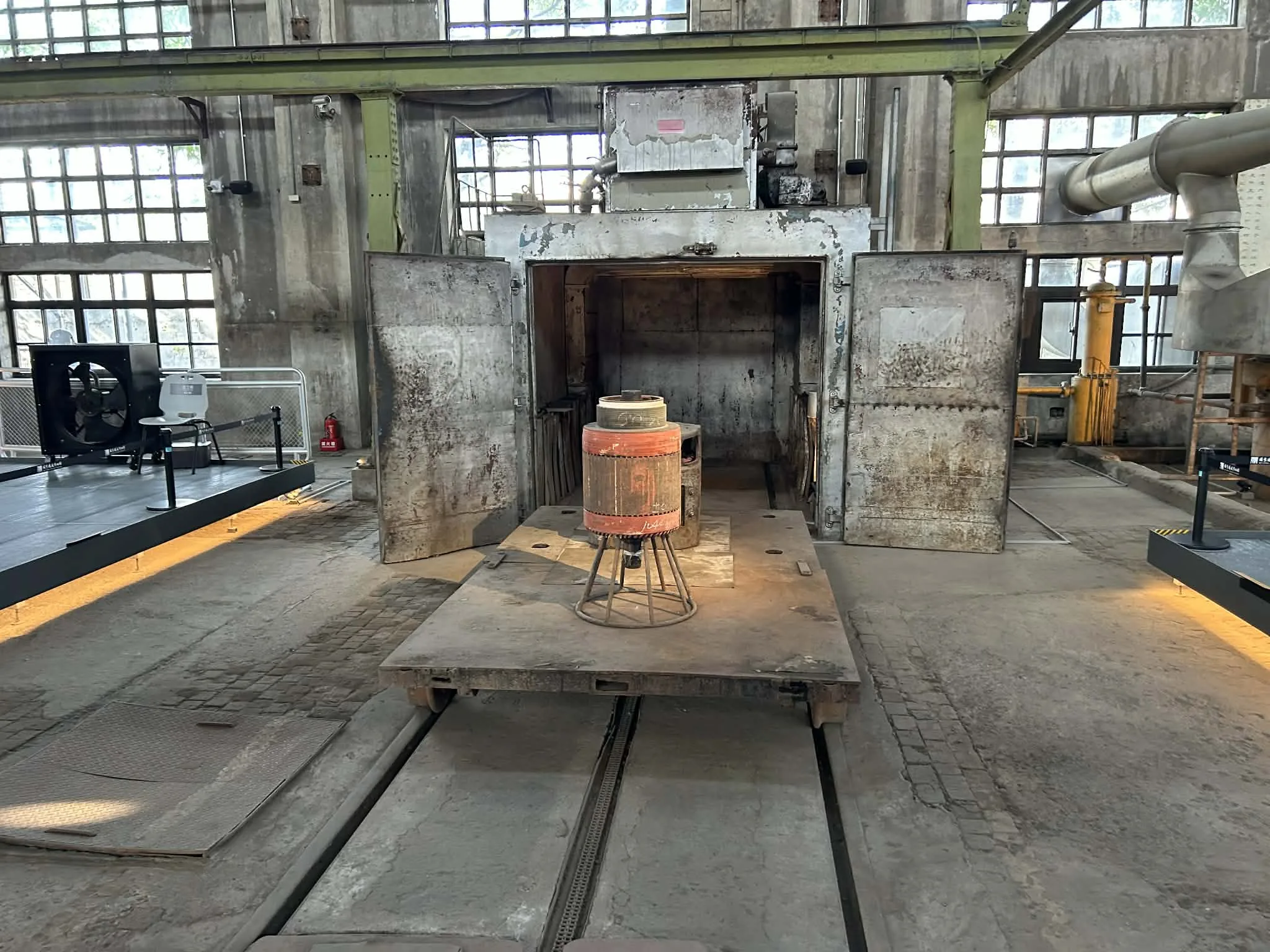
The motor needs to be taken into the kiln for treatment.

In the video, the workers mentioned that during typhoons, the factory would often flood and they would need to move their equipment to high ground.

ROC tank on a railcar.

Wider view of the diesel workshop.

More tools used here.
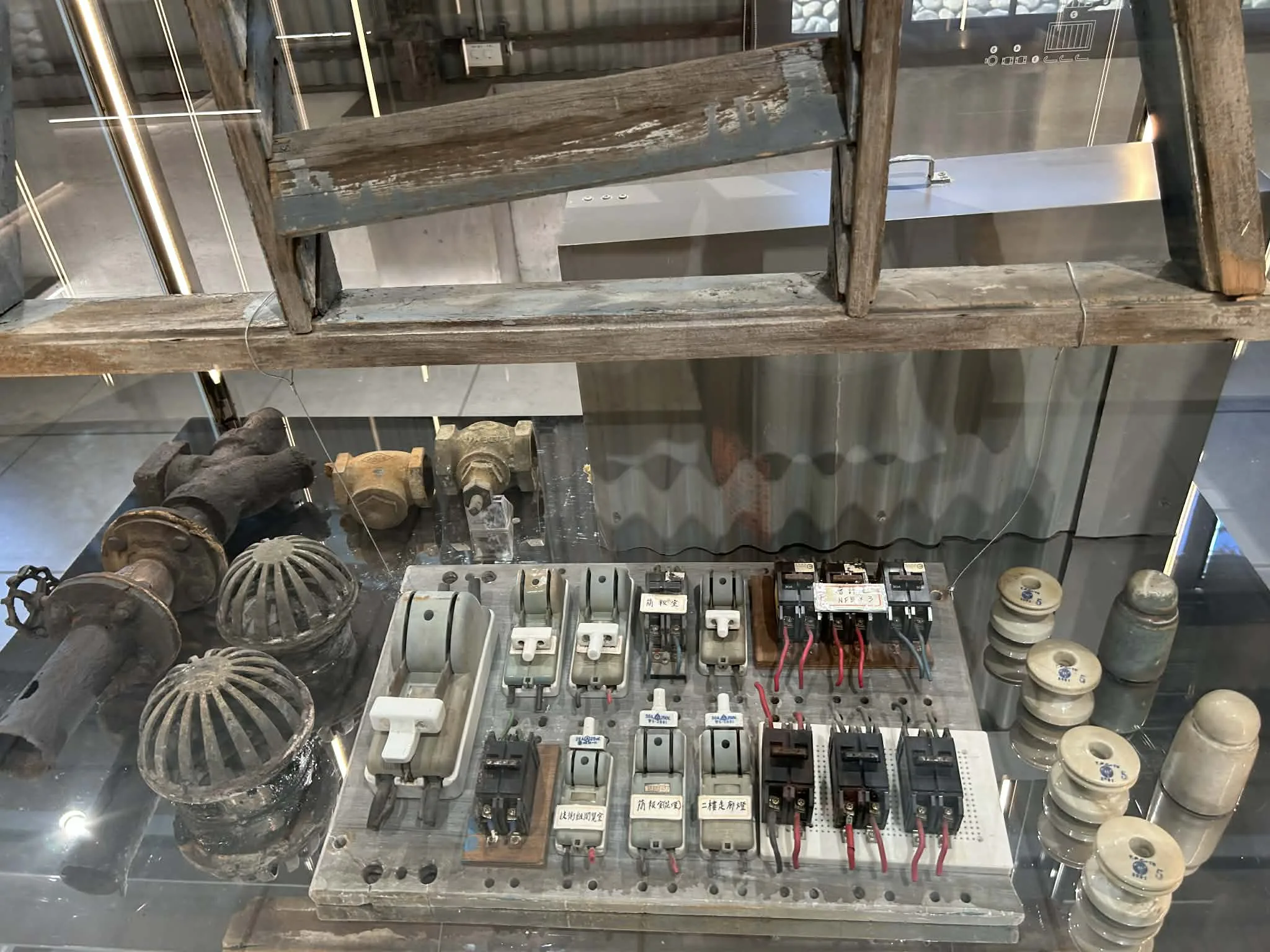
Electrical box once used here.

Another view looking back at the tank.
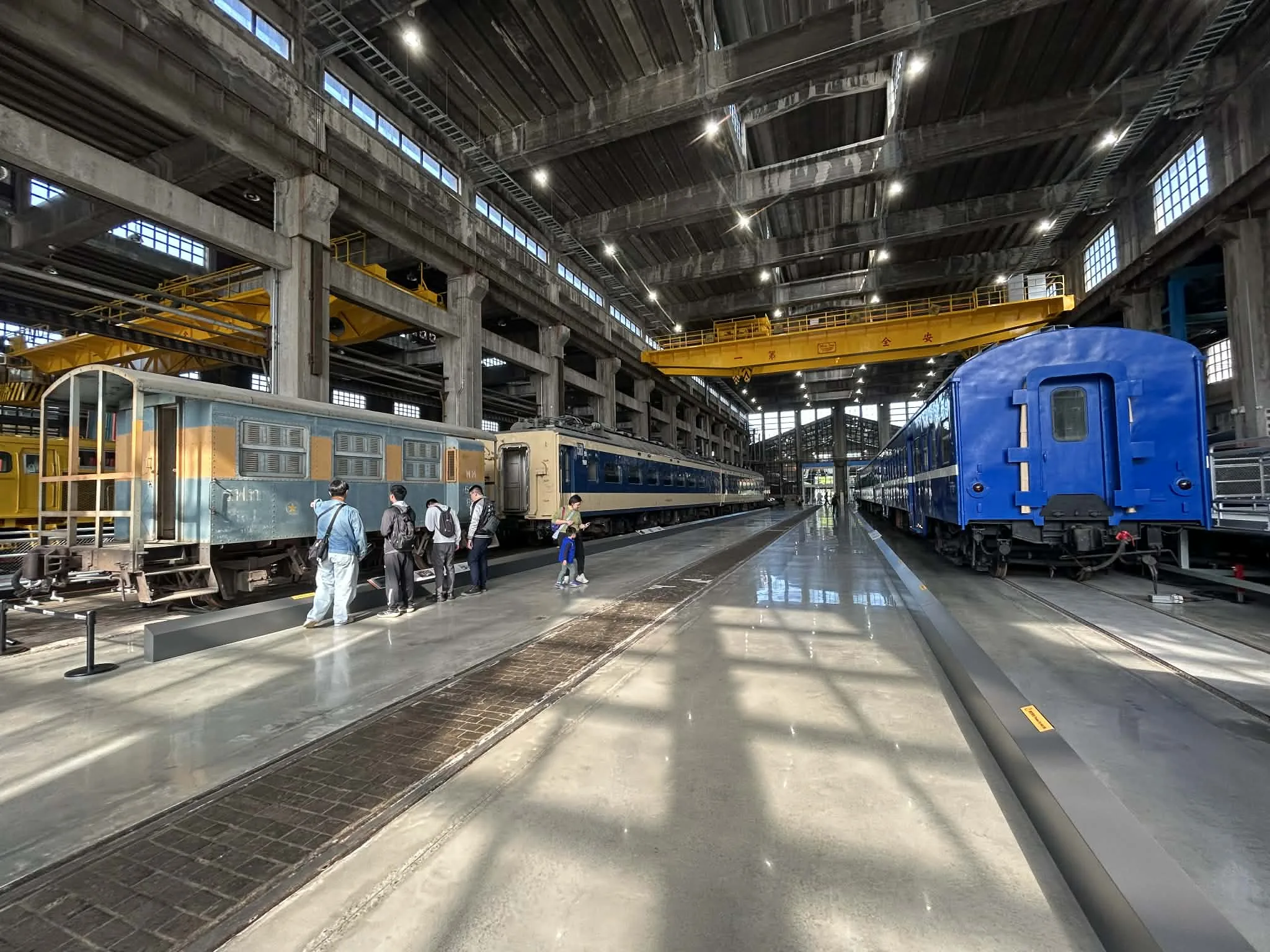
Wider view of the old trains on display here.
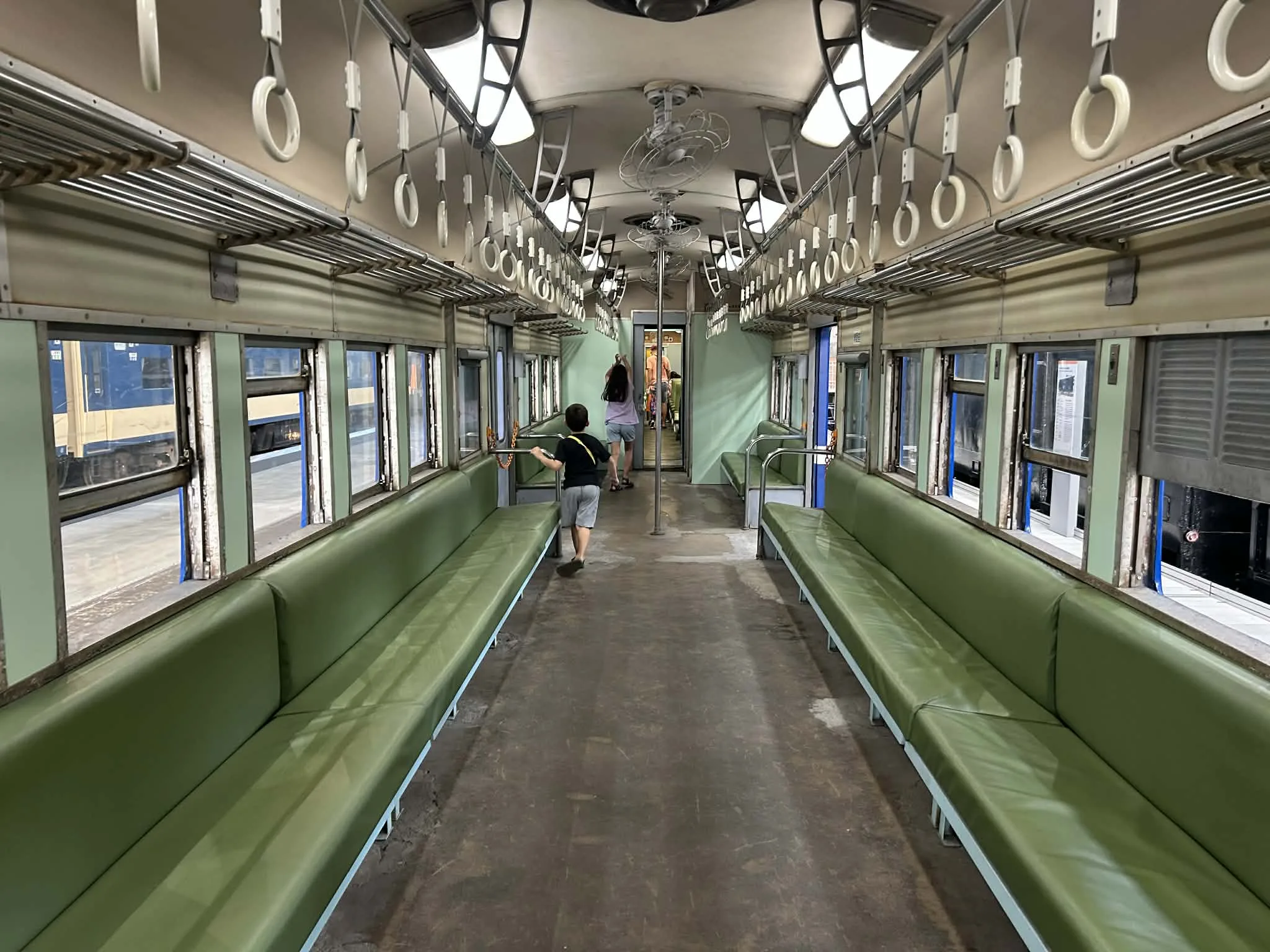
You can enter the blue train here.

This is what the toilets on the train used to be like.

Another view inside the train.

View from outside the train.

View inside one of the sleeper cars.

Display of a dining car.

Photos of the dining car. I think the dining car was on display here for a short time.

Old machinery used in the shop.

A broken peice of train that got smashed and is now on display here.

Some of the quarters on these trains were very cramped.

Train baggage and parcel service.

This is what central Tapei looked like in the 1960s.

View of the Bathhouse during Japanese times. Look how clear the air is! You can see all the way to Neihu!

Another view of what the old Taipei workshop looked like. Hard to imagine fields in what is now downtown Taipei.

Map of Taipei before the Japanese takeover of Taiwan.

Steam trains used in Taiwan during the Qing era and early Japanese times.

Last look inside the diesel workshop. I highly recommend visiting. You can spend all day in there.

People leave at the end of the day.

If you are lucky, there may be some other displays while you are there.

We saw these other trains on display while we were there.
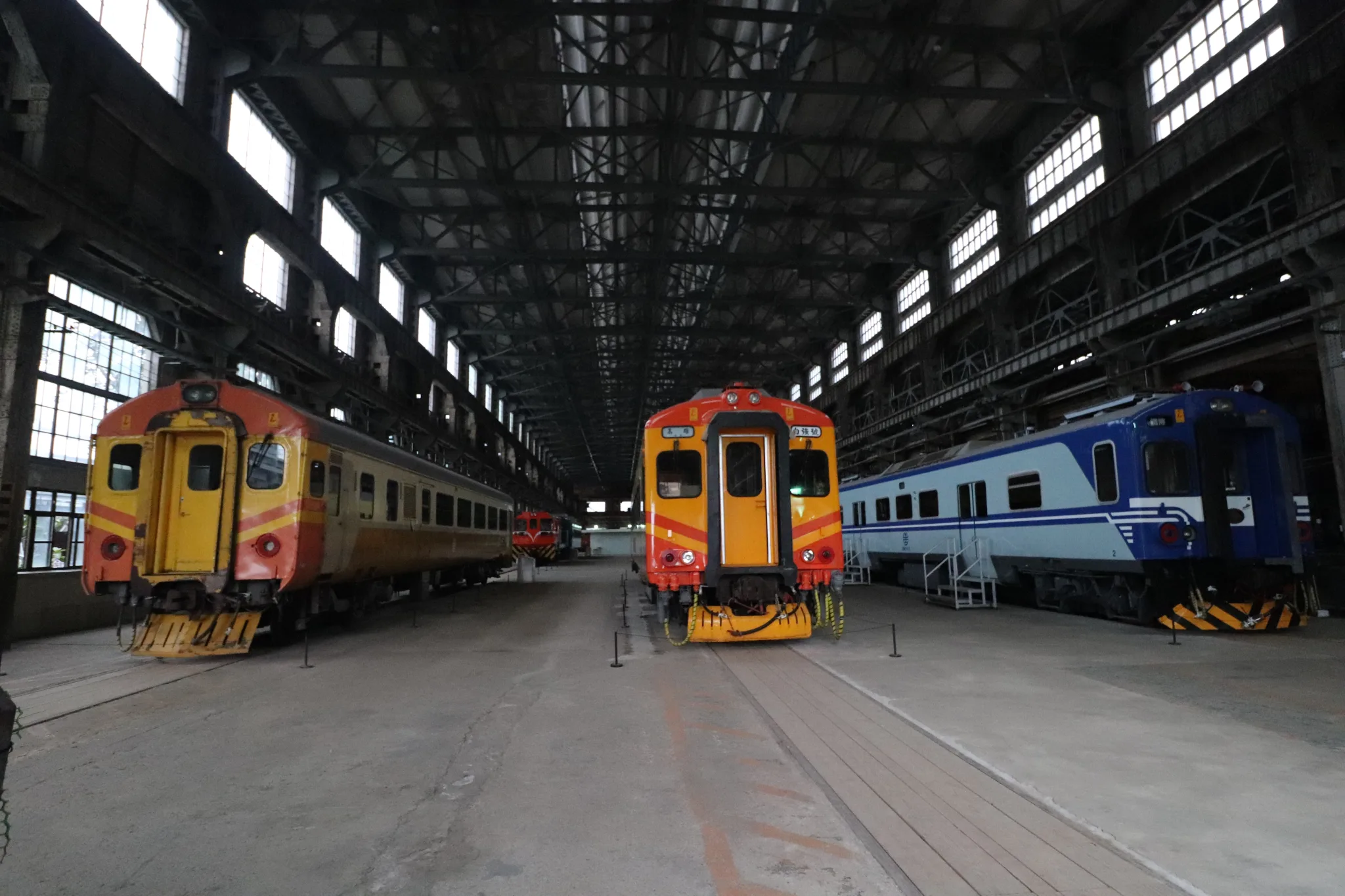
Overall, this museum is definitely worth a visit. I am glad they have restored it, and I look forward to further restorations in the future. Try to get here early in the day so you have time to enjoy it, especially taking the train ride and checking out the diesel electric workshop.
Taiwan Railway Museum – Railway Department Headquarters 國立臺灣博物館鐵道部園區

If you have time, you should also visit the Taiwan Railway Museum (officially National Museum of Taiwan – Railway Department Park) near Beimen, which is perhaps the best railway museum in Taiwan. It is built inside the old Railway Department of the Governor General of Taiwan and features multiple interactive exhibitions, thousands of artifacts, and a large miniature of Taipei’s railway. It is definitely worth a visit on your next trip to Taipei…(read more)
Check out our Taipei Museum Guide here.
Check out our full guide to Taipei here.
Check out our full guide to Taiwan here.