Wanshan Petroglyphs Park in Maolin District of Kaohsiung displays replicas of the earliest known rock carvings in Taiwan, dating back over 4,000 years. However, the real ones require a three-day trek into the mountains with three different permits, so it’s easier to just come to this park in Maolin and enjoy copies of the carvings. Don’t miss it on your next trip to the area.
🏖️ Planning your trip to Kaohsiung? 🐒
Here are some top travel tips for you:
- Best time to visit: Winter when temperatures are cooler and there is less rain
- How to get there: Taiwan High Speed Railway and Inter-City Bus
- Best places to stay: Mingli Hotel or IHI Sandup Hotel which are great value choices located downtown.
- Book tours and activities in Kaohsiung on Klook
- Stay connected with a local SIM
- Rent a car to explore distant sights
Background:
The Maolin Petroglyphs are over 4,000 years old, and some are said to be much older. These rock carvings predate the Rukai Tribe, which has only inhabited this area for a few hundred years. These carvings were only discovered in the 1980’s by researchers, although they have been known by members of Wanshan Village for much longer, who have their traditional hunting grounds near the carvings.
It consists of four locations containing 14 carved rocks and is believed to be associated with the legends of the indigenous Rukai people. According to local legend, a woman named Hoss carved patterns into the rocks while waiting for her husband, who never arrived after she was banished for eating Hundred Pacer Snake considered sacred symbols of ancestral spirits. The carvings were discovered between 1978 and 2002, and the site was officially designated a National Archaeological Site on August 22, 2008. It is culturally and archaeologically significant as Taiwan’s only known group of its kind, although the carvings’ exact age and purpose remain unknown.
Because of the dense jungle and remote location of the rock carvings, it is likely that more rock carvings are waiting to be discovered.
However, in order to see the rock carvings in person, you will need three permits: two from the government and one from the Rukai Elders. There is no road to the rocks, although some people have ridden in Jeeps up the Zhoukou Riverbed. These carvings are also in danger of being defaced or disappearing, so it is best they are protected.
In order to protect the carvings but also bring them closer to the people, Wanshan Petroglyphs Park was formed to let visitors to Maolin see the rock carvings without having to complete a days-long arduous hike.
For more information on the carvings and what a real life hike to see them is like, check out this article in the Taipei Times.
Price:
Free
Hours:
24/7
When to go:
I recommend going in the summertime when the waterfalls have plenty of water and warm temperatures make it a great time to go swimming. In winter, it will be cold, and the waterfalls can dry up.
On the other hand, if you want to go just for hiking, winter would be a better time to go.
If there is a Typhoon, the inhabitants of Maolin will be evacuated, and you should not try to go in for your own safety.
When is Maolin Butterfly Season?
If you are coming to see butterflies, the butterfly migration begins in September and ends roughly in November.
Check out our full Maolin Butterfly Season Guide here.
How to get there:
By Car: Maolin can be reached via provincial highway 27 from Pingtung or Liugui. Once you come to Dajin Bridge, go straight up the mountain. The Wanshan Petroglyphs Park is on the far north side of Wanshan Village, on the highest part of the village. Looking for scooter rental in Kaohsiung? You can check out Klook here or KKday here to search for options. You can also check out our scooter rental guide here.
If you are looking for car rentals, you can search Qeeq here, KKday here, or Klook here. You can also check out our car rental guide here.
By Bus: You can take a bus there but I don’t recommend it. It’s a 3-hour bus ride from Pingtung Bus Station. If you can rent a car or scooter it is about a 1 1/2 hour drive from Kaohsiung. You can book tickets to travel to Kaohsiung via inter-city bus on Klook here.
You can book tickets to Kaohsiung via high-speed rail (HSR) on Klook here or KKDay here.
Book tickets via the normal train (TRA) on Klook here.
You can also book a Kaohsiung Travel pass here.
Where to Stay:
We have stayed at and recommend Chao She Hotel (you can book on Agoda here, Booking.com here) IHI Sanduo Travel Hotel (you can book on Agoda here, Booking.com here), and Mingli Hotel (you can book on Agoda here, Klook here) which are three inexpensive and high-quality choices in downtown Kaohsiung. I also have stayed at and recommend Kaohsiung Meinong Rabbit Paul Homestay B&B (you can book on Agoda here, Booking.com here), a quiet B&B in rural Meinong, and Chengching Lakeside Resort (you can book on Agoda here, Booking.com ) and the Grand Hotel Kaohsiung (you can book on Agoda here, Booking.com) which both offer breakfast buffet and free entrance into Chenqing Lake Park. I have also stayed at the 85 Sky Tower which offers great views of the city; you can search for rooms in the 85 Sky Tower on Agoda here, Booking.com here)
Find out more about where to stay in our Taiwan hotels guide or search for the best hotel deals in Taiwan here. We recommend booking through Agoda here, which provides the best quality selection of accommodation on the islands.
Tours:
You can find more tours and activities in Kaohsiung such as Pier 2, Meinong Hakka Museum, Hamasen Railway Museum, Suzuka Circuit Park, i-Ride Kaohsiung Visual 5D Flying Theater, National Science and Technology Museum , Senya Village Restaruant, Austin Land, Ski School Indoor Ski Slope, and many more on Klook here or KKday here.
Map:
The park is up the hill from Meiya Convenience Store before you turn off to Meiyagu.
Our Journey:
I personally had wanted to travel to the Wanshan Petroglyphs for a long time. However, the red tape, as well as the long hike into the mountains, made it difficult. On my last trip to Maolin, I discovered the Wanshan Petroglyph Park, which is not on Google Maps. I wanted to share it with everyone like me who wants to see the carvings but does not want to take a three-day trek into the mountains for it.
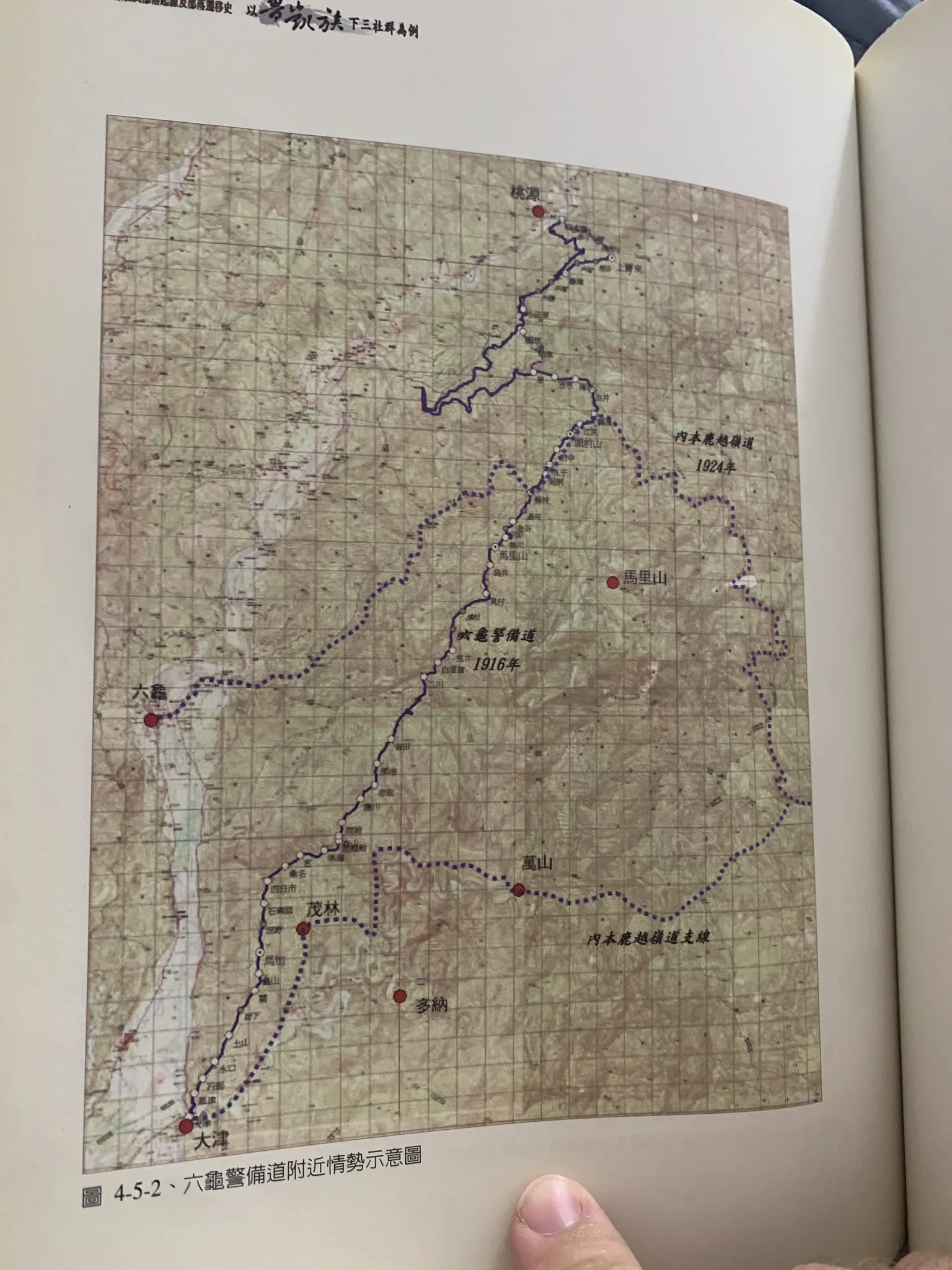
The map here shows that there was once a path from Maolin village to Wanshan, which bypassed Duona altogether.
Also I think during the dry season they just walked on the riverbed or took their own hunting paths between villages.
It’s kind of a shame that Wanshan Village was moved to its current location, because it would be great to have more roads going further in…but it is what it is.
It’s an even bigger shame they banned logging and let the logging roads return to nature.
I mean, logging is a renewable resource; you can still protect the ecology; trees grow back. And now the government has to pay Aborigines 60,000 NT per hectare per year to not cut down trees.
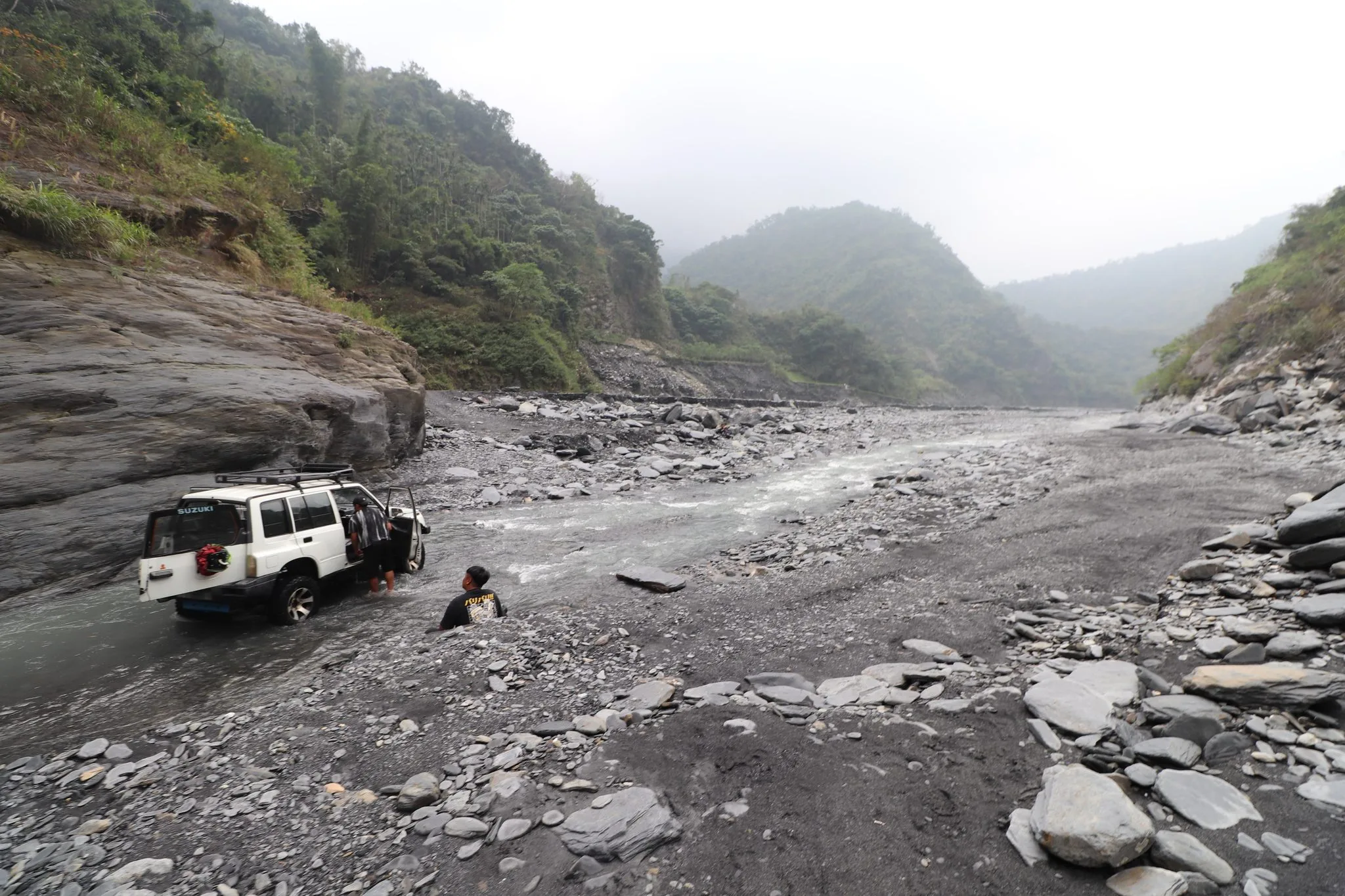
We did not attempt to walk to the Wanshan Petroglyphs, but this is what that journey would have been like: a long walk or Jeep ride along the Zhuokou Riverbed.
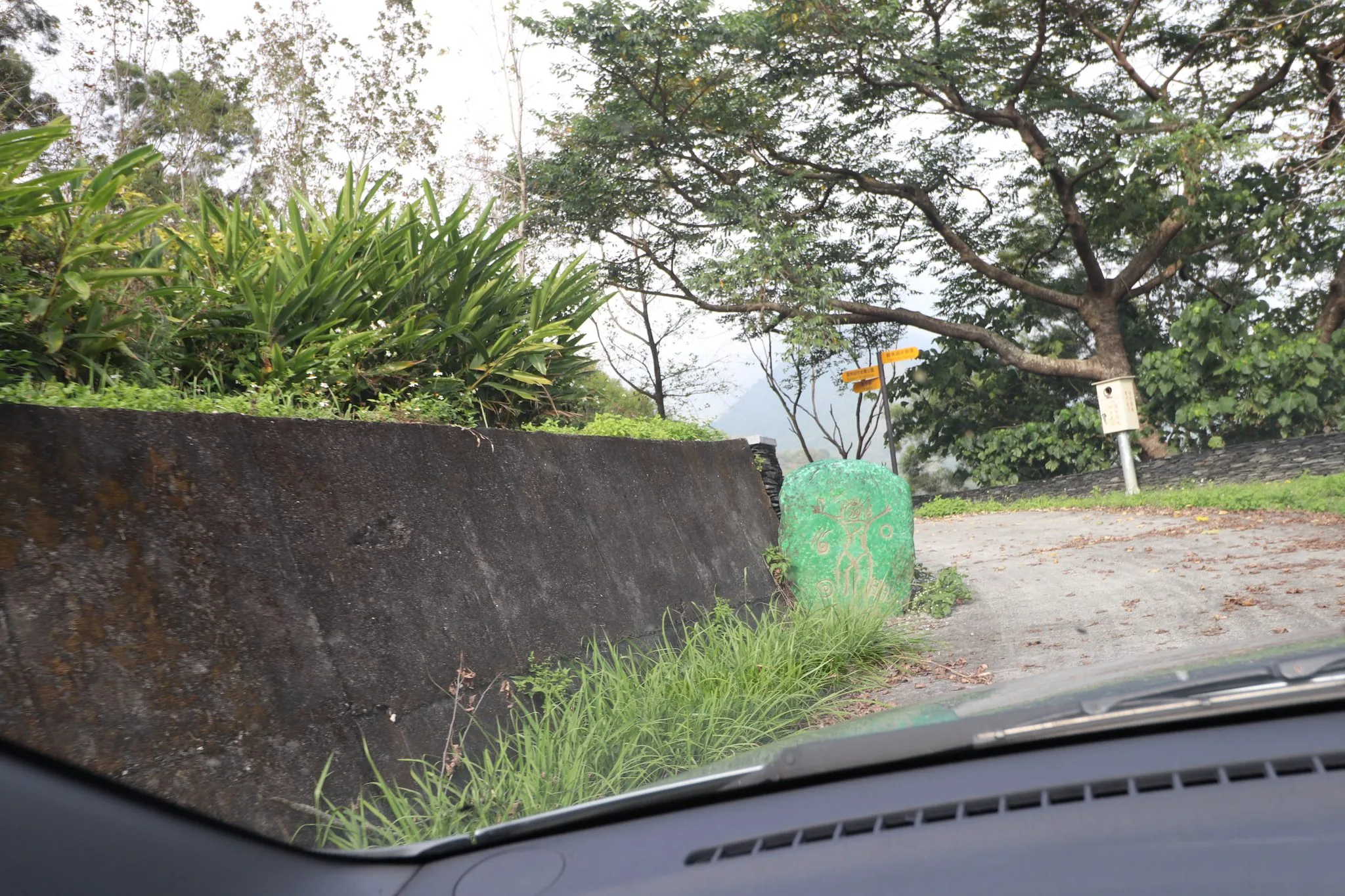
Nowadays, you can see the petroglyphs with a short drive on a paved road.
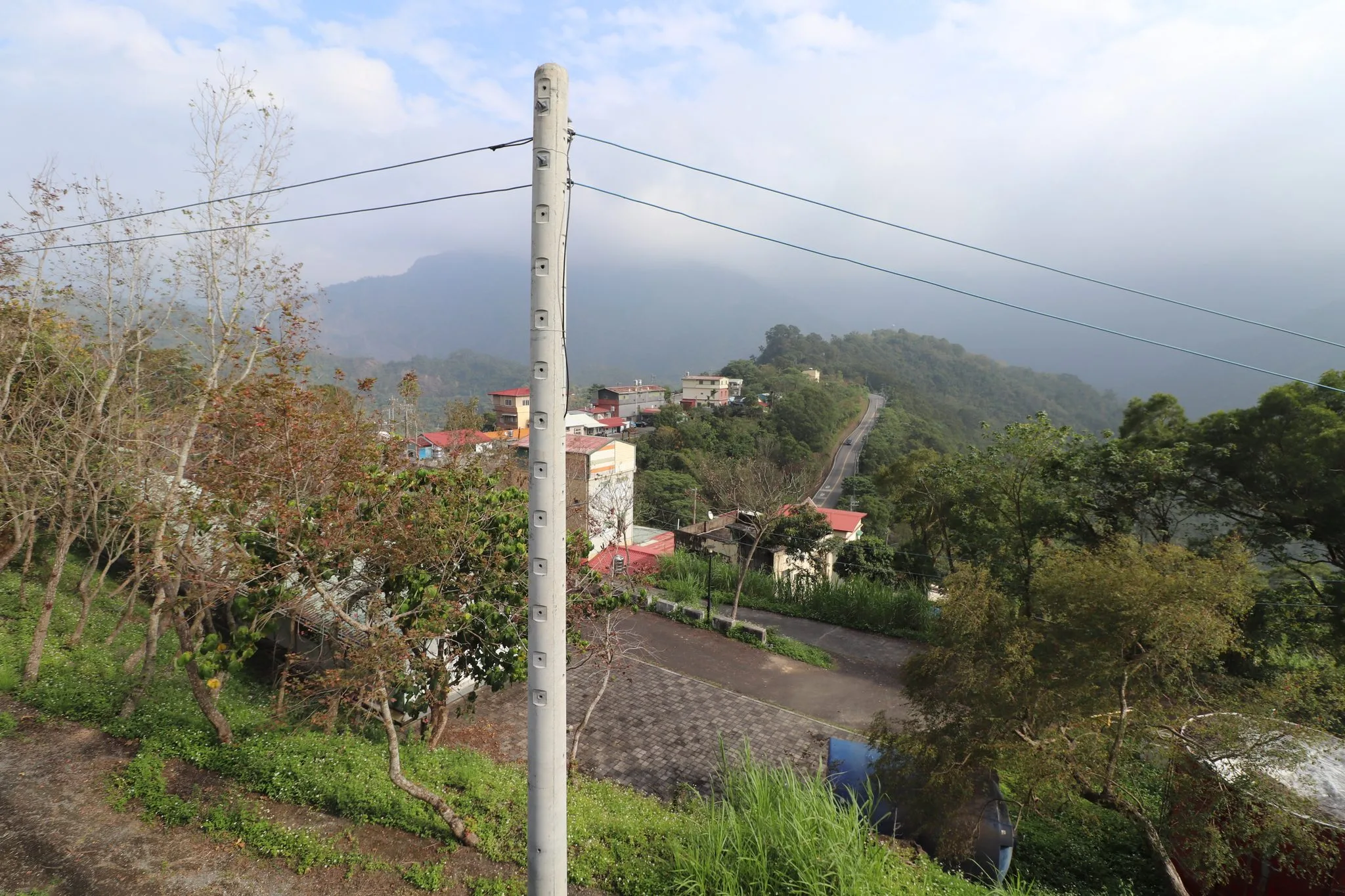
View from above Maolin Village at the Wanshan Petroglyphs Park.
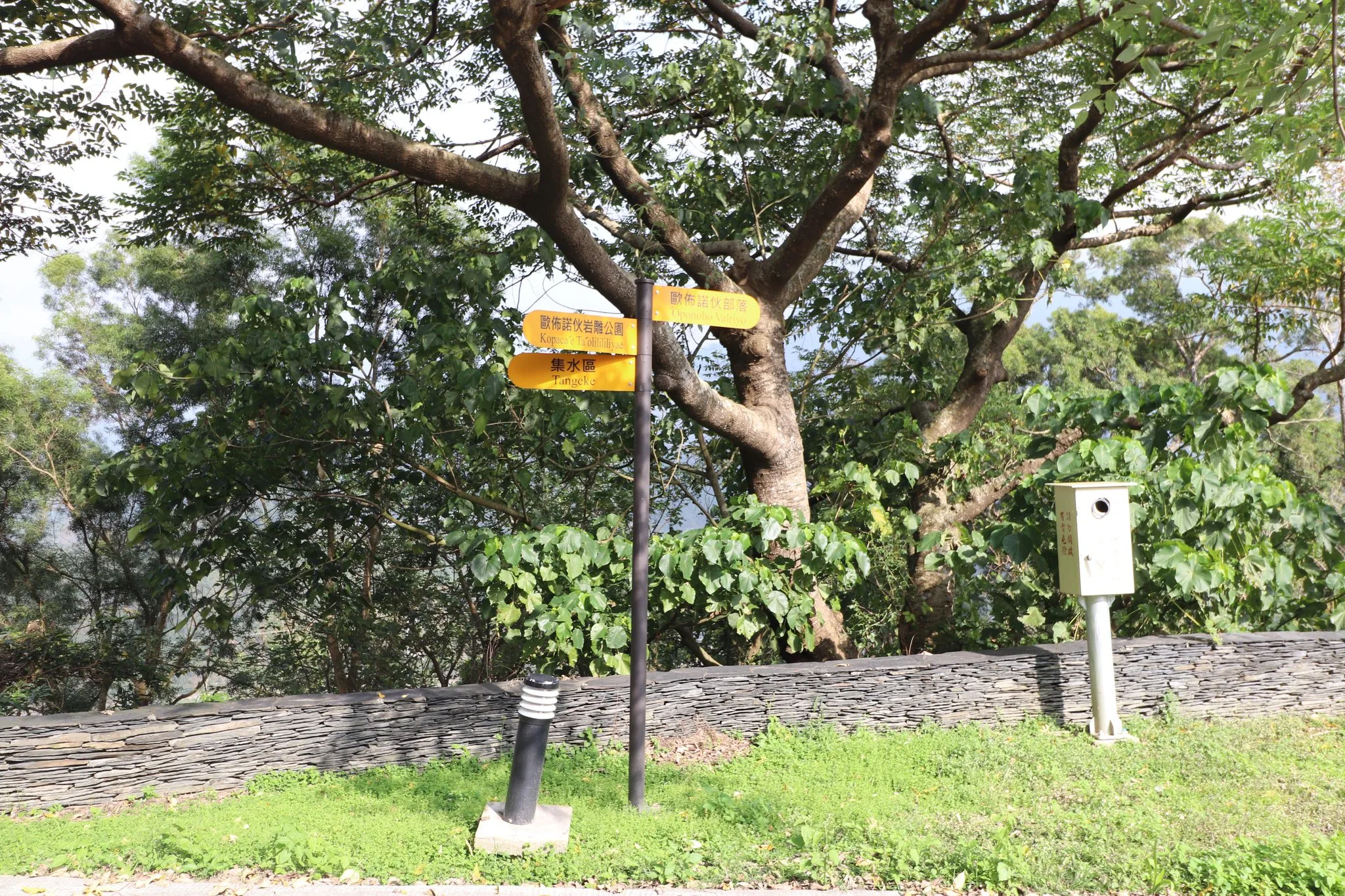
There are lots of road signs that point to this place, so it is not hard to find.
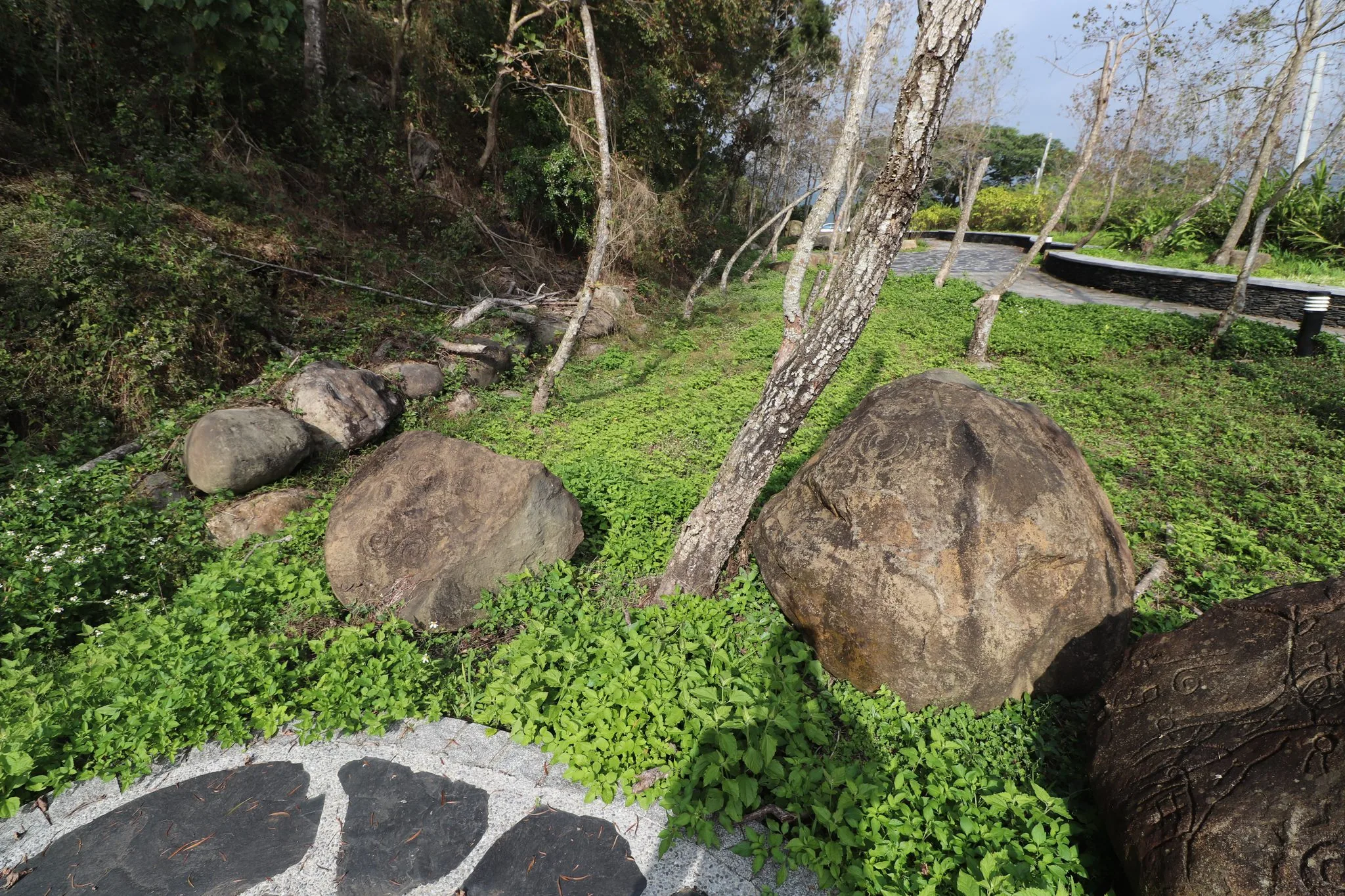
Here, there are many rocks with the same carvings as those found deeper in the mountains.
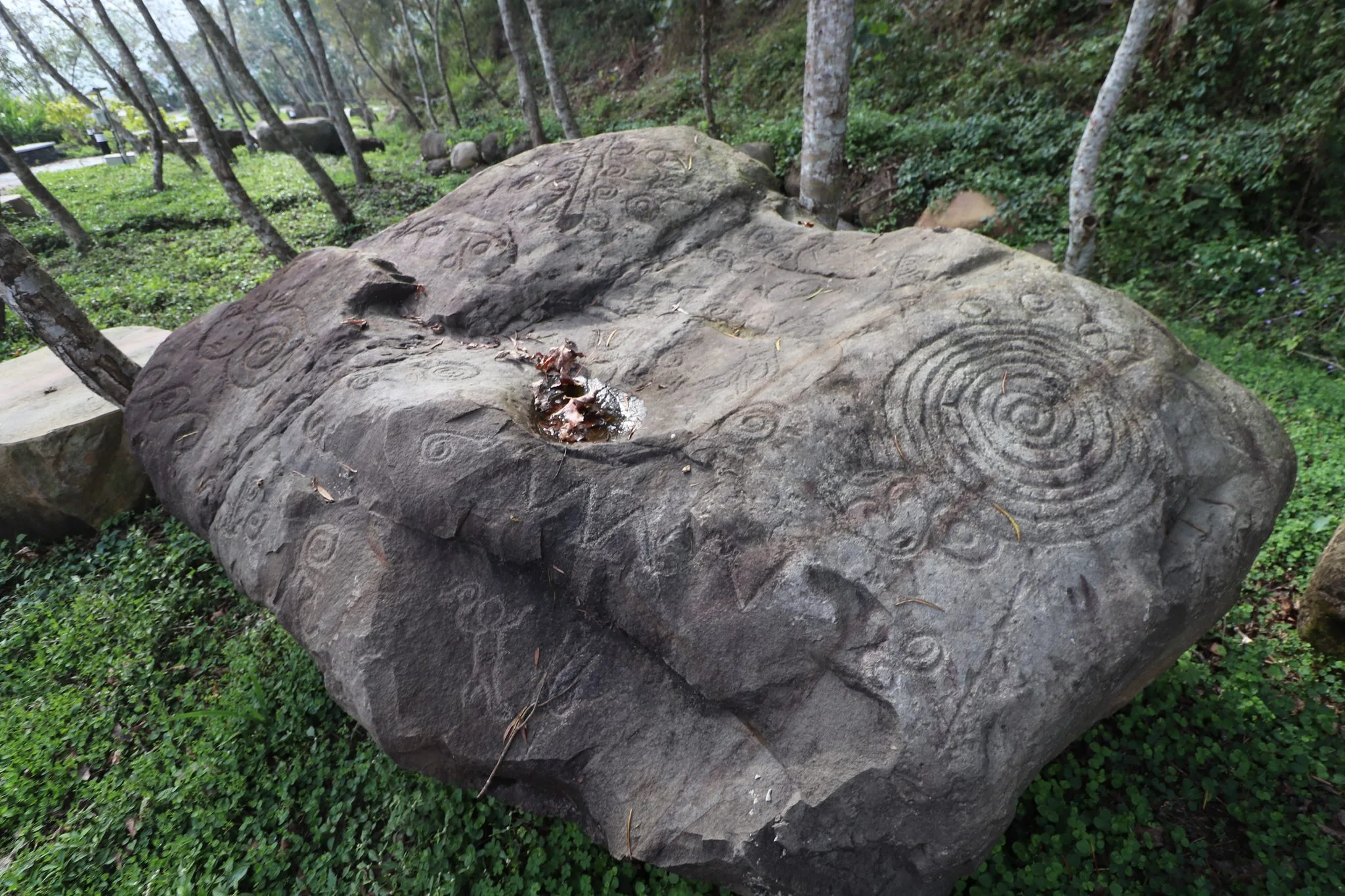
The most famous of the carvings is this one, a carving of a face and a long snake. Members of the Wanshan tribe say that this carving may be related to a story of a woman from another tribe who was banished for eating the Hundred Pacer Snake, which is sacred to the Rukai Tribe (the Rukai Tribe believes they are descended from the Hundred Pacer Snake). As a punishment, she was banished by the tribe and waited for her husband near the rock. When her husband never came, she left this carving in the rock. The Wanshan tribe only has a story about this rock carving, and does not have any other stories or knowledge about other rock carvings.
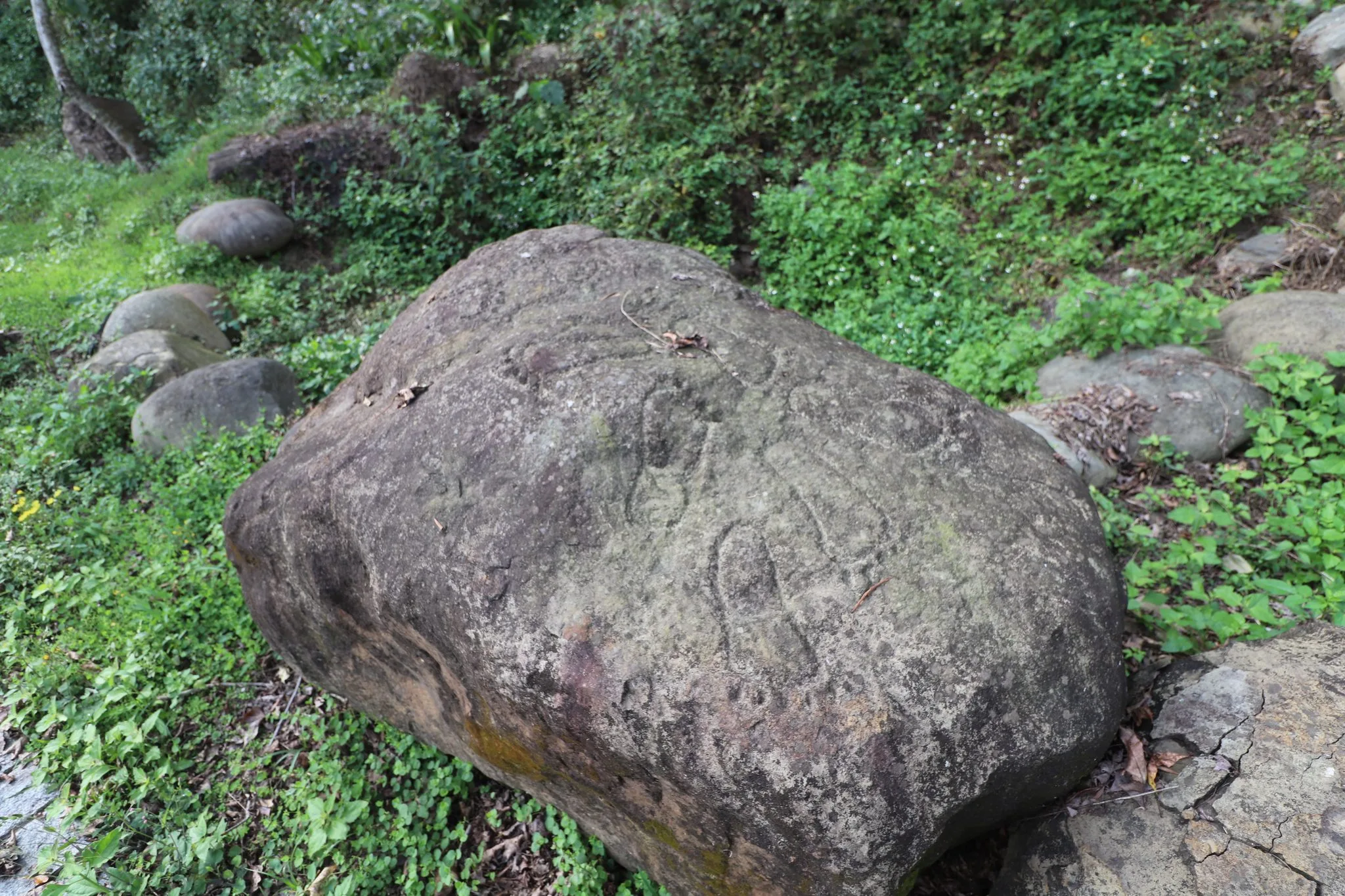
Here are replicas of footprint carvings.
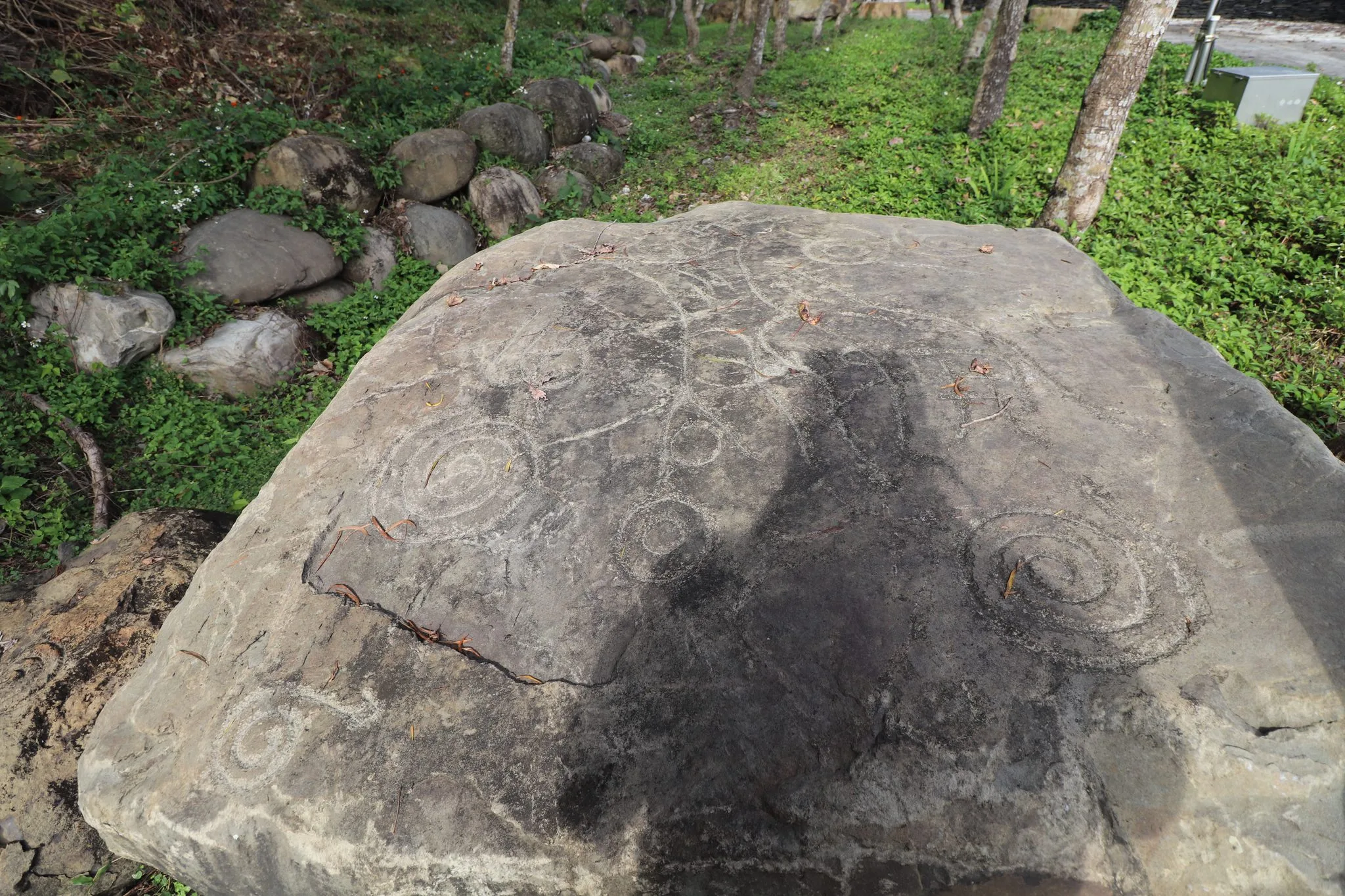
Some archaeologists think that these carvings were made by hunters who stopped by the large rocks to rest and make a fire. The oldest of these carvings predate the Rukai Tribe, and probably date back to some of the earliest peoples in Taiwan.
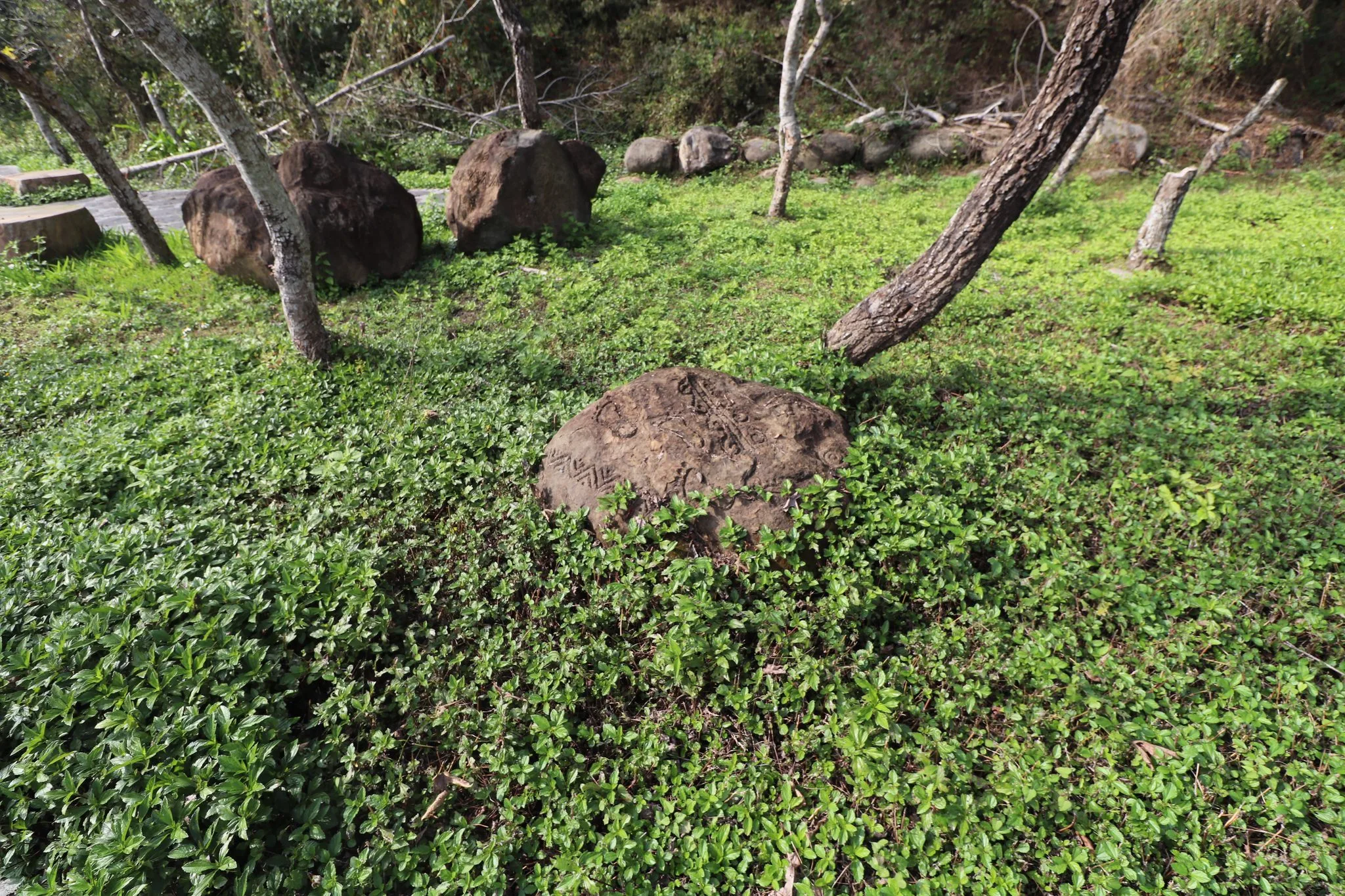
Another rock with traditional patterns and designs.
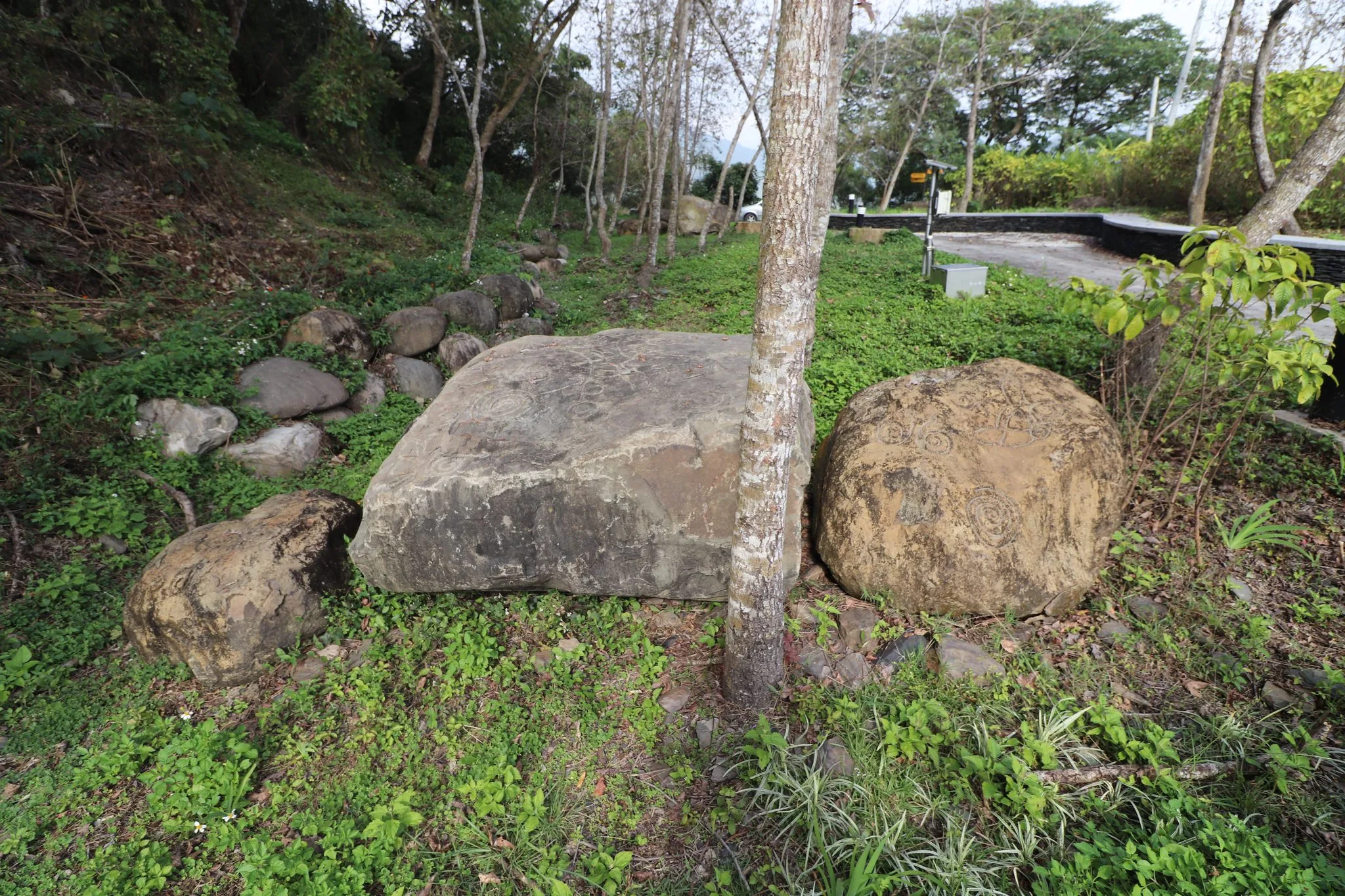
The park has a winding path to walk along and enjoy the carvings.
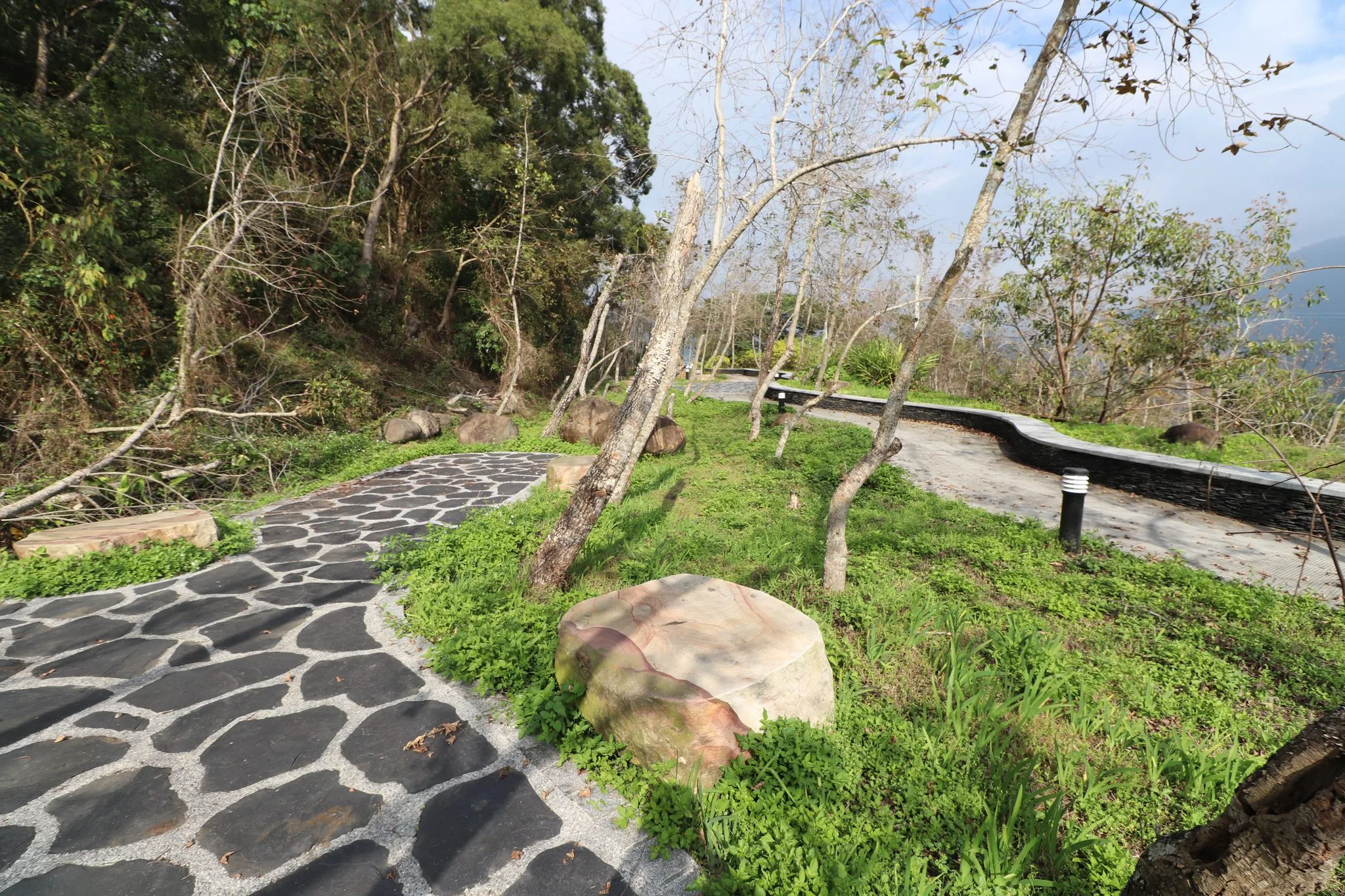
Even though these rocks aren’t the real thing, it is as close as it gets.
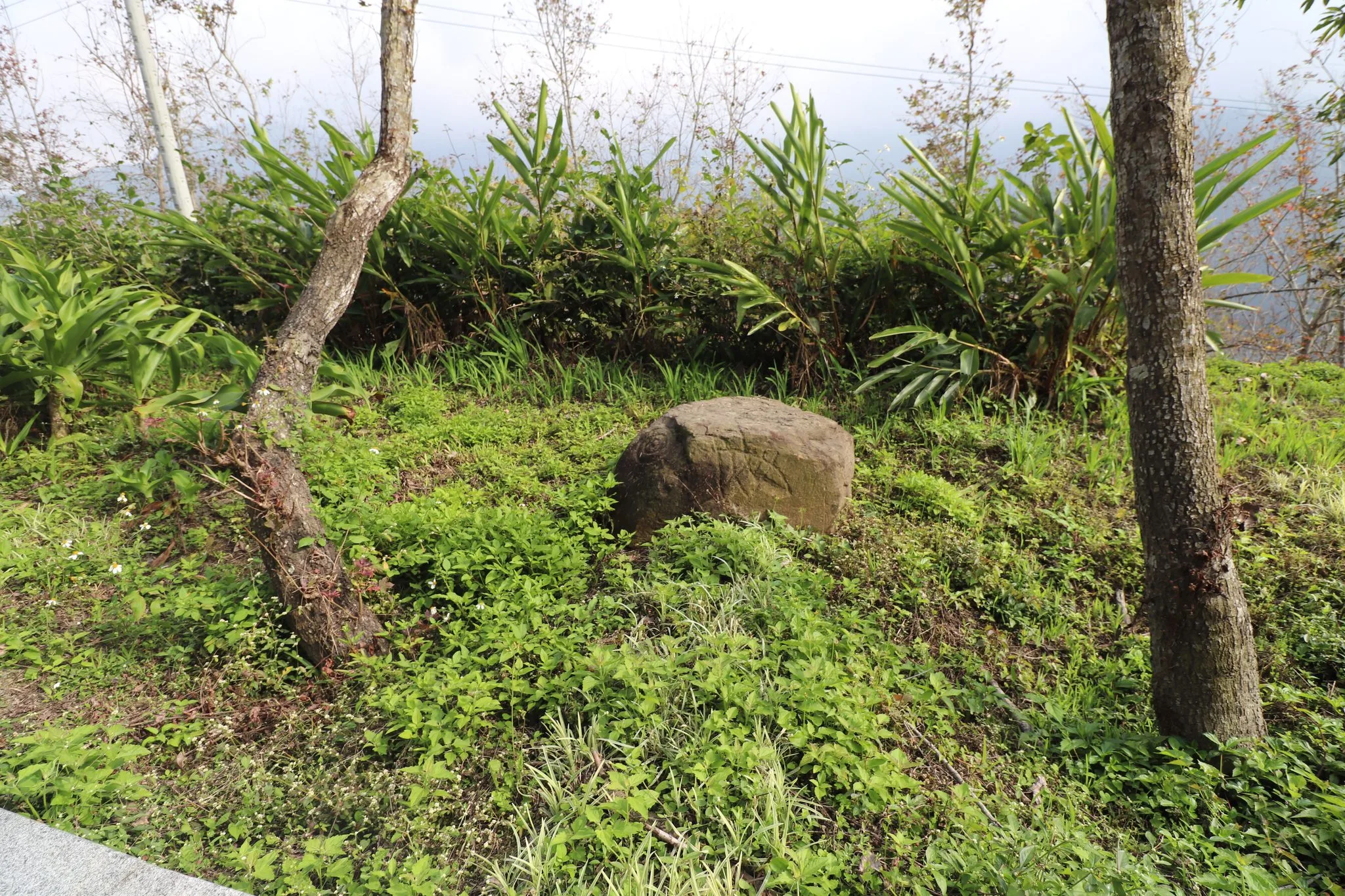
I have to admit, after coming here, I still want to see the original carvings, but the government is making it hard to go there for a reason. The rock carvings need to be protected and preserved for future generations.
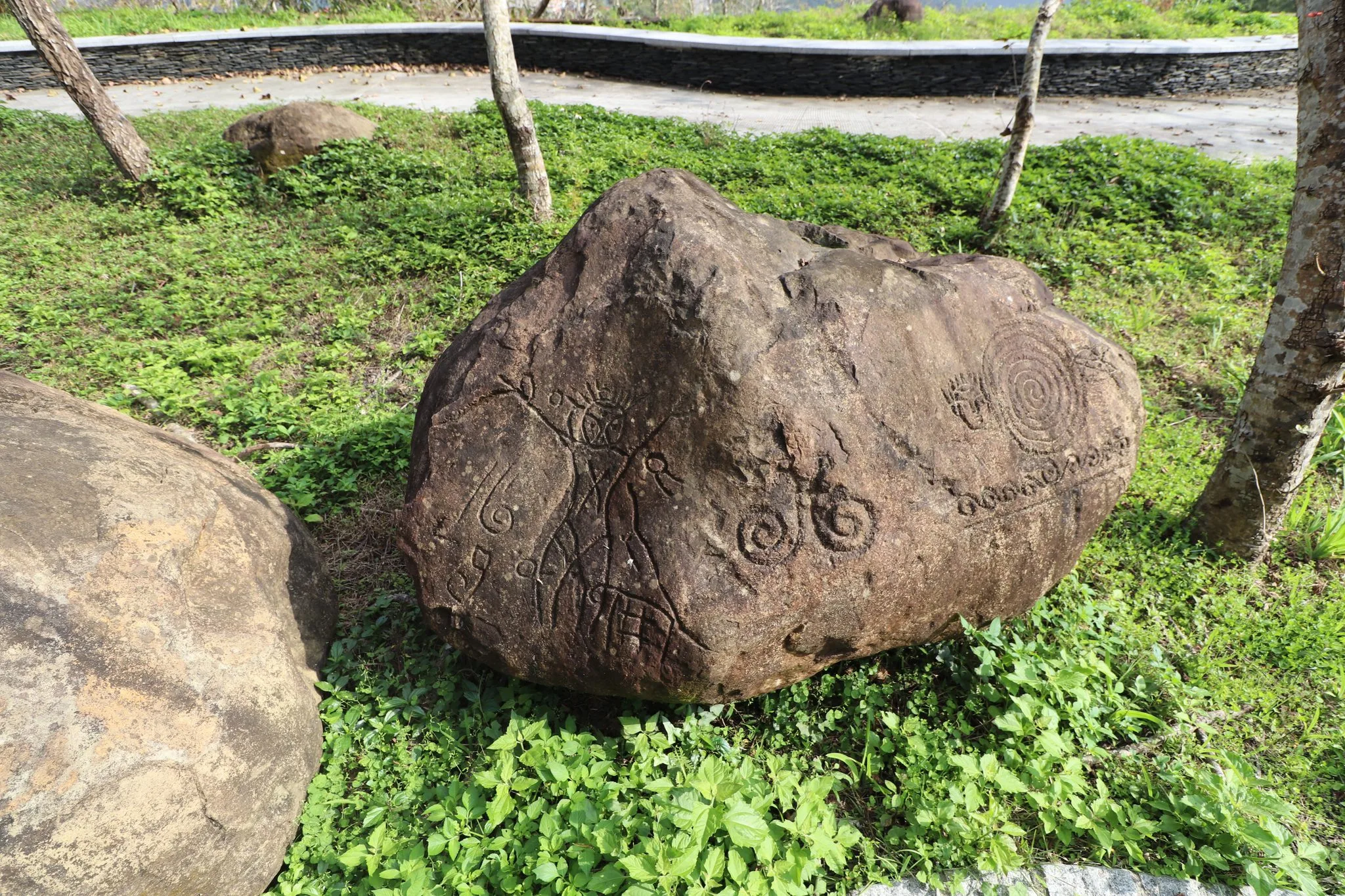
Another rock with similar carvings.
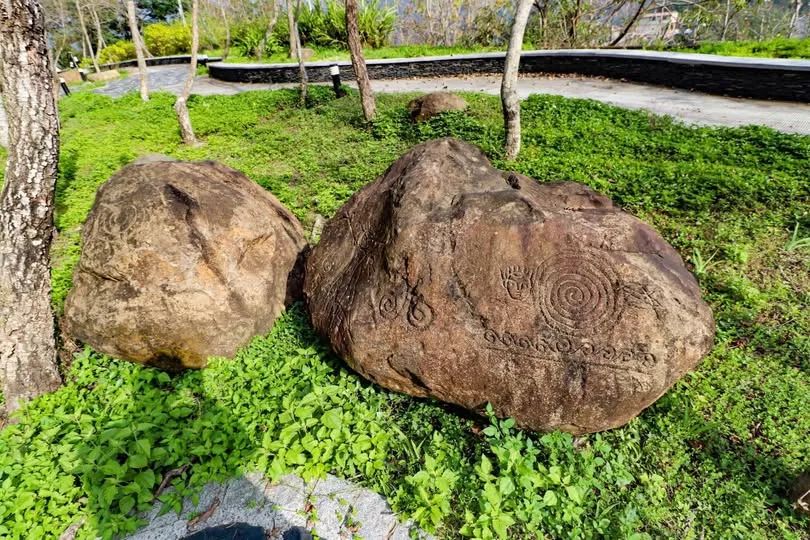
I am glad that these rocks are being preserved, and at the same time I wish we knew more about the people who made them. I will be looking forward to more discoveries about Taiwan’s ancient inhabitants.
Also, be sure to check out our full guide to Maolin here.
You can check out our full travel guide to Kaohsiung here.
You can also check out our full travel guide to Taiwan here.