
The Wushe Incident (aka Mushe Incident or Wushe Rebellion) was one of the largest uprisings against the Japanese during their colonial control over Taiwan, as well as one of the last major uprisings. As part of the rebellion, 134 Japanese were killed, and 354 Seediq Indigenous people were killed in retaliation, which all took place from 27 October to December 1930. In the aftermath, the Japanese changed their policies regarding their control of the Japanese population. This memorial in Ren’ai Township, also known as the Mona Rudo Memorial Park 莫那魯道紀念公園, in Nantou, remembers the brave indigenous warriors who lost their lives during this event.
🛥️ Planning your trip to Nantou? ⛰️
Here are some top travel tips for you:
- Best time to visit: Winter or Autumn when it is less rainy
- How to get there: Taiwan Railway and Inter-City Bus
- Best place to stay: Kirin Villa or Jenq Yang Hotspring Hotel
- Book tours and activities in Nantou on Klook
- Stay connected with a local SIM
- Rent a car to explore distant sights
Background:
The Wushe Incident (Seediq: Mkuni Paran; Japanese: Musha jiken) was an armed indigenous uprising against Japanese colonial rule that occurred in 1930 (Shōwa 5) in Wushe, now Ren’ai Township, Nantou County, Taiwan. It was led by Mona Rudao, headman of the Mahebo community, who united several Seediq villages in retaliation for long-standing grievances against Japanese administration — forced labor, cultural bans (such as tattooing and tooth filing), restrictions on hunting and firearms, unfair wages, and abusive conduct by police — and for immediate provocations including the “insulting toast” incident on October 7, 1930. The rebels attacked the model Japanese settlement of Wushe and massacred many Japanese officials and civilians during a school sporting event; the colonial authorities responded with overwhelming military force (troops, police, artillery, aircraft and — controversially — poison gas and incendiary bombs) and by enlisting rival indigenous groups. Although the Seediq initially scored significant tactical successes and seized weapons, they were ultimately outmatched: their leader Mona Rudao committed suicide, many fighters and noncombatants died (including hundreds who chose collective suicide), survivors were captured or forcibly relocated to the “Kawanishi” (Chuan–Chung–Shan) settlement, and whole communities were decimated. Official reports counted large numbers of Japanese casualties and dozens of Japanese military and police dead; Seediq losses included those killed in battle, by bombardment, by allied indigenous forces, by self-strangulation, and in captivity. The Wushe Incident — the last major armed anti-Japanese uprising by Taiwanese indigenous peoples during the colonial period — shocked the Japanese government and international observers, prompted changes in colonial aboriginal policy and personnel (including the resignation of Governor Ishizuka Eizō and other officials), and has since been commemorated and examined in literature, comics, and film (notably Wei Te-sheng’s Seediq Bale).
The Wushe Incident Memorial Park was established in 1952, and Mona Rudao’s Tomb was relocated here in 1974.
Price:
Free
Hours:
24/7
Cherry Blossom Season:
Cherry Blossoms can be seen in the park from February to late March. Check out our full guide to Cherry Blossom Season in Taiwan here.
How to get around Nantou:
As always, we recommend renting a scooter as the best way to see Taiwan. However, you can also a great deal of Miaoli by taking the train to Taichung and then switching to an inter-city bus, or local bus. Getting around in a car is also a convenient option as there is plenty of parking pretty much everywhere in this less crowded county.
Scooter Rental: Looking for scooter rental in Nantou? Search Klook here or KKday here to search for options. You can also check out our scooter rental guide here.
Car Rental: If you are looking for car rentals, you can also search Qeeq here, Klook here, KKday here. You can also check out our car rental guide here.
By Bus: You can book tickets to travel to Nantou via inter-city bus on Klook here.
By Train: You can book tickets to Taichung via high speed rail (HSR) on Klook here or KKDay here, or book tickets via the normal train (TRA) on Klook here, then switch to a bus to Nantou.
Bicycle Rental: Cycling is the best way to enjoy Taiwan’s landscapes if you have the time and energy. Looking for bicycle rentals in Taiwan? You can search on KKday here and search for tours on Klook here. You can also check out our Taiwan cycling guide here.
Tours:
There are many tours and activities available in Nantou such as river Tracing, paragliding, Shanlinxi Forest Recreation Area 杉林溪, Cona’s Chocolate Castle, Shuiyuan Suspension Bridge, JOJOZOO Park, and Aowanda Forest Recreation Area.
You can find more tours of Nantou on Klook here or KKday here.
Where to Stay:
We have stayed at and recommend Jenq Yang Hotspring Hotel (you can book on Agoda here, Booking.com here, Trip.com here, or Klook here), a hot spring hotel near the mystical Lushan hot spring, and Maple Leaf Holiday Villa (you can book on Agoda here, Booking.com here, Trip.com here, or Klook here), a lodge with a great view and within walking distance of Cingjing Farm. I also have stayed at and recommend Kirin Villa (you can book on Agoda here), a mountain resort in Puli near Sun Moon Lake.
Looking for a hotel? Find out where to stay in our Taiwan hotels guide or search for the best hotel deals in Taiwan here. We recommend booking through Agoda here, which provides the best quality accommodation on the islands.
Map:
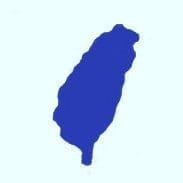
Please see the map above.
Our Journey:
I have driven past the Wushe Incident Memorial Park about a dozen times (to get to Qingjing Farm), but I have only stopped and visited there once. It is not a very big park, but it marks a very important historical event now known thanks to a popular film. The park is located in Wushe Village, where the events took place. It also overlooks the original battlefield area.
Frankly, it is not surprising that the KMT would want to honor an anti-Japanese uprising, even though they too set up an opressive government in Taiwan.

When you first visit, there is a large white arch there to greet you.

Walkway with Mona Rudao in the center.

Bronze statue of women and children fleeing.

Wushe Incident Anti-Japanese Memorial Monument and Seediq Hero Shrine (Memorial Park)
In 1952, the government built the Wushe Incident Anti-Japanese Memorial Monument on this site to commemorate those who sacrificed their lives in the uprising. The government later designated this as a protected memorial area.
In 1930, Mona Rudao led the Seediq people in an armed resistance against Japanese colonial rule — the Wushe Incident. The Japanese responded with overwhelming military force, leading to the deaths of over 600 Seediq people, including women and children.
In 1933, the Japanese government reinterred the remains of both Japanese police officers and indigenous warriors at this site and built a Shinto shrine.
After World War II, in 1952, the Nationalist government reconstructed the area and renamed it the Wushe Incident Anti-Japanese Memorial Monument.
Later, in 1970, Mona Rudao’s remains were reburied here. On October 27, 1973, the government held a public memorial ceremony to honor him and all who died in the incident.
Today, this site preserves the memory of the Seediq people’s courage and their struggle for freedom.

Close-up on the Mona Rudao statue.

Memorial spire with Mona Rudao’s grave behind it.

Mona Rudao Memorial Park (莫那魯道公園)
In 1930, the Seediq leader Mona Rudao led his people in the Wushe Incident, an uprising against Japanese colonial oppression. Although the movement ended in tragic loss, it came to symbolize the Seediq people’s unyielding courage and their pursuit of freedom and dignity.
After World War II, the government began to recognize the historical and cultural importance of the Wushe Incident. To commemorate Mona Rudao and the Seediq people who sacrificed their lives, the authorities established this memorial park in the 1970s.
On October 27, 1974, Mona Rudao’s remains were reburied here in a solemn ceremony. Since then, the site has served as a place for descendants and visitors to pay tribute and reflect on the spirit of resistance and unity.
The park’s central structure—the Memorial Archway (忠靈祠牌樓)—was built to honor Mona Rudao and his fellow warriors. It stands as a lasting symbol of their bravery and devotion to their homeland.
Erected by Nantou County Government.

Gravestone of Mona Rudao.

Close-up on Mona Rudao’s grave.
莫那魯道烈士之墓
Tomb of the Martyr Mona Rudao
烈士莫那魯道,生於清光緒二十九年,為霧社賽德克族馬赫坡社人。
The martyr Mona Rudao was born in the 29th year of Emperor Guangxu’s reign (1903), a member of the Mahebo community of the Seediq tribe in Wushe.
抗日事件領導人之一,於民國十九年(1930)霧社抗日起事,
He was one of the leaders of the anti-Japanese Wushe Uprising in 1930,
為民族生存自由而奮鬥犧牲。
fighting and sacrificing for the freedom and survival of his people.
事後殉難,其精神永垂不朽。
He gave his life after the uprising; his spirit and courage will live forever.
特立此墓,以勵後裔。
This tomb is erected to honor his memory and inspire future generations.
中華民國六十二年三月五日
March 5, 1973, Republic of China (ROC Year 62)

Gravestone and tomb.

Steps above Mona Rudao’s grave.

Map of Ren’ai village.

The scenery on the road up and down from Wushe is amazing.
Renjeiguan 人止關

Here you can find some stone tablets at Renzhiguan.
Renjeiguan, a natural gorge in Nantou County between Puli and Wushe, was historically the border between Han settlers and the Seediq people. During Japanese rule, it became the site of the 1902 Battle of Renjeiguan, where Seediq warriors repelled Japanese forces. The area later came under Japanese control after years of conflict. Geologically notable for its thick sandstone layers, it’s now a scenic site but remains prone to landslides and flooding due to unstable terrain.

Another view of the river at Renzhiguan.

A cyclist speeds down the highway.
Check out our full guide to Nantou County here.
Check out our guide to Taiwan here.